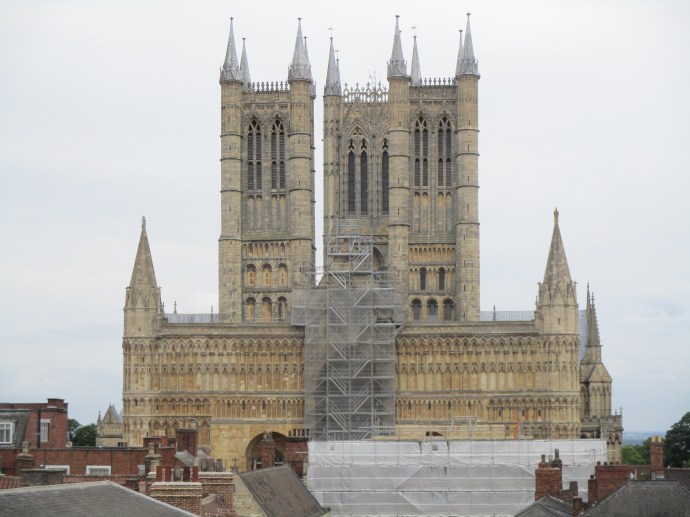
Lincoln is only an hour or so away from Nottingham so I decided to take a trip there recently and bought a joint ticket to both the Cathedral and Lincoln Castle which was well worth the price of £18. An easy-ish walk from the railway station (there is a steep hill involved though buses are also available) some of the Cathedral was under scaffolding when I visited but that didn’t detract from the impressiveness of the building.
Lincoln Cathedral
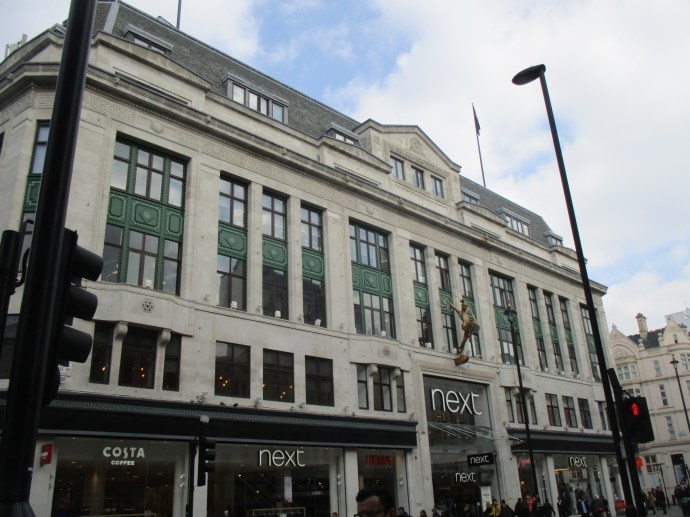
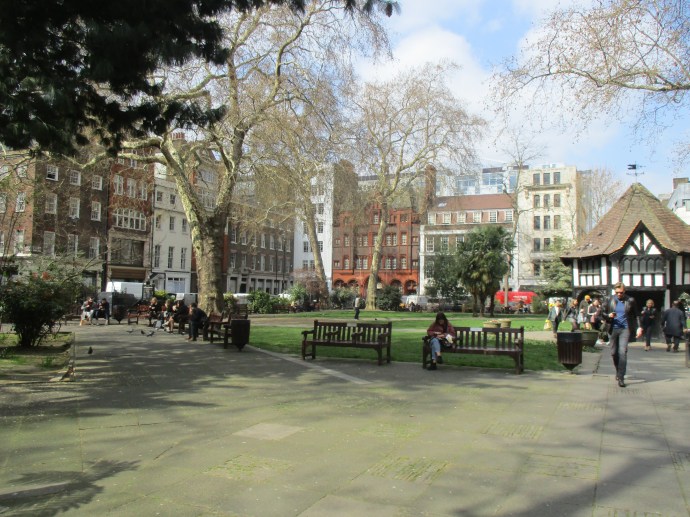
Soho Square, London
Soho Square was built in the 1670s when it was called King Square after Charles II, and a statue of him can still be found there. It’s possibly the earliest square in London to be built around a purposely laid out enclosed garden. It used to be a very fashionable residential area.
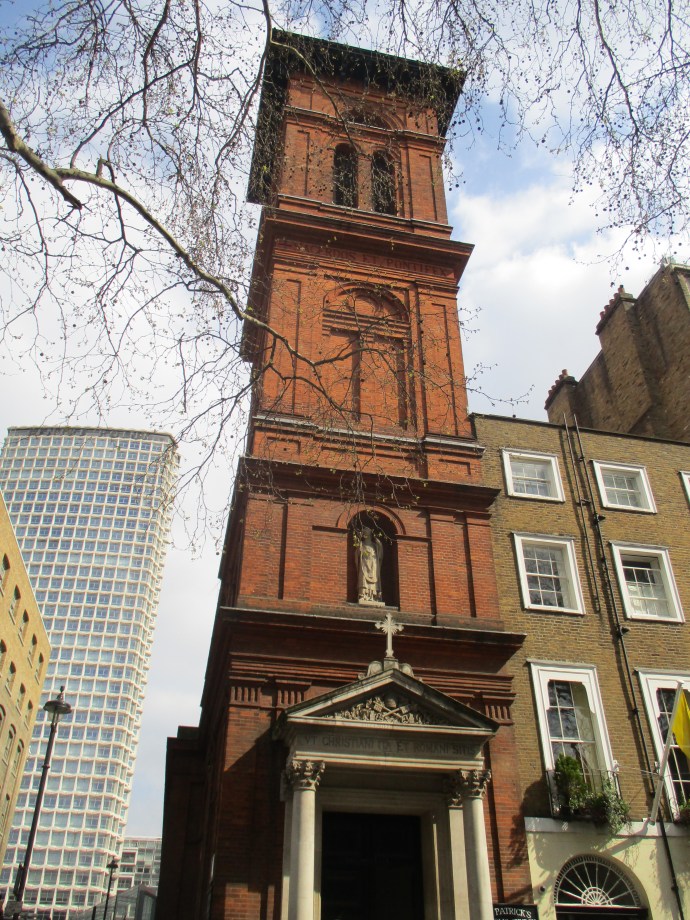
St Patrick’s Catholic Church, Soho Square
On a recent trip to London I had some hours to kill and decided to take a look at St Patrick’s Catholic Church, Soho Square.
Sycamore Park, Nottingham
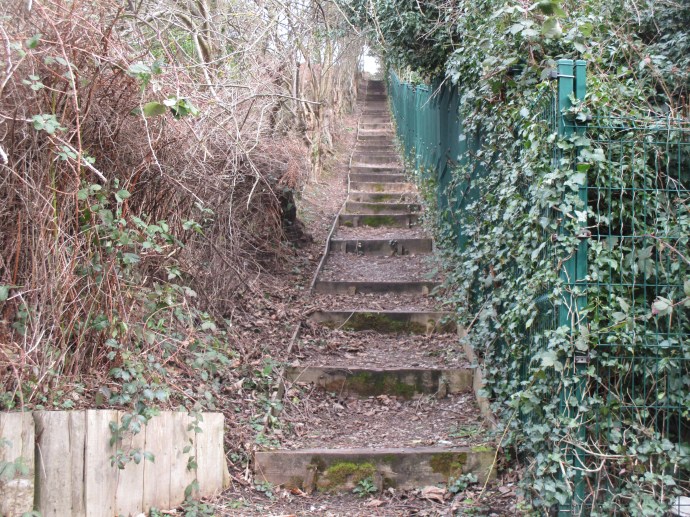
Earlier this year I took a walk around Sycamore Park in Nottingham. There’s not a great deal to see there, but there were some people taking advantage of the basketball court. What we did enjoy was discovering these steps, leading up past St Ann’s Allotments on the right (not accessible from here).
Hine Lodge, Nottingham
Opposite Coppice Park is Hine Lodge. This used to the gardener’s lodge for the Old Coppice Hospital (formerly the Coppice Asylum) a psychiatric hospital that like the Lodge was designed by T. C. Hine and his son G. T. Hine. The Coppice Hospital was constructed between 1857 and 1859 for typically middle class private patients and has since been converted into residential flats. The Lodge is also now a private cottage and since these photos were taken I’ve noticed that some renovation works appear to have taken place.
Coppice Park, Nottingham
Coppice Park is one of Nottingham’s oldest parks, next door to St Ann’s Allotments. The Coppice was a great wood which was given to the city as a mark of favour by King James I in 1615. The name comes from the practice of “coppicing”, a woodland management technique of repeatedly felling trees and allowing them to regrow in order to create a sustainable supply of timber – in this case for fuel and construction work around Nottingham. It was made a recreation ground in 1904.
St Pancras Renaissance Hotel
When the Midland Railway commissioned William Barlow to design St Pancras Railway Station they also wanted a spectacular front to the building and the designs of George Gilbert Scott were selected, even though he far exceeded the cost and scope of the original commission. Gilbert Scott, whose other designs included the Foreign and Commonwealth Office and restorations of Worcester Cathedral and Lichfield Cathedral, wanted a building with the presence of an ornate palace in the Gothic Revival Style, and he certainly succeeded.
Highgate Cemetery East
Unlike Highgate Cemetery West, the East side is self-guided – you are given a map which marks the most notable people buried there and then left to explore at leisure. The East Cemetery was opened by the London Cemetery Company in 1860. The aim of the cemetery was to maximise space, which is why it was designed with less ornate decoration and buildings then the West Cemetery.