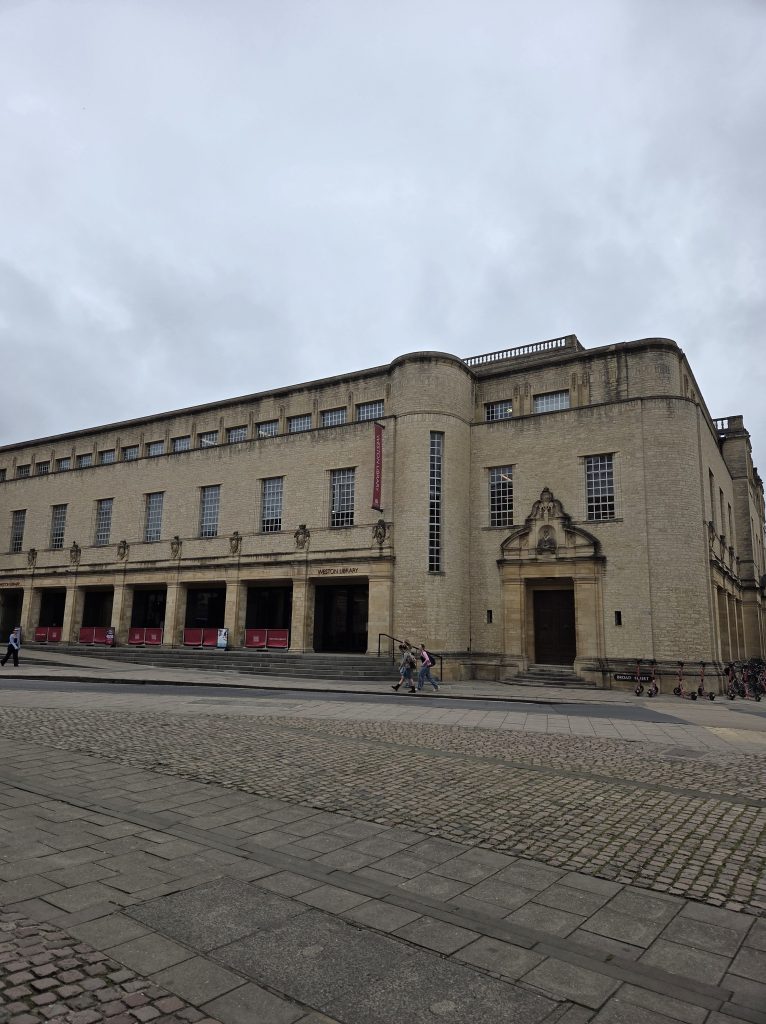
The Weston Library is part of the Bodleian Libraries and is where you go to book on the day tours – many areas of the Bodleian can only be accessed by members of the public via official tours (I’ll talk more about the process of booking in a later post where I talk about the tours I went on). It is also an exhibition space which had three free exhibitions on when I visited.
The first thing I encountered in the main hall wee these statues of Polyhymnia (muse of Rhetoric) and Calliope (muse of epic poetry), along with Clio, muse of history (not pictured) which were removed from the top of the Clarendon Building in 2023 for conservation – by the time of posting they should have been put back. The Clarendon is an admin building for the Bodleian not open to the public but used to be where the Oxford University Press was based.
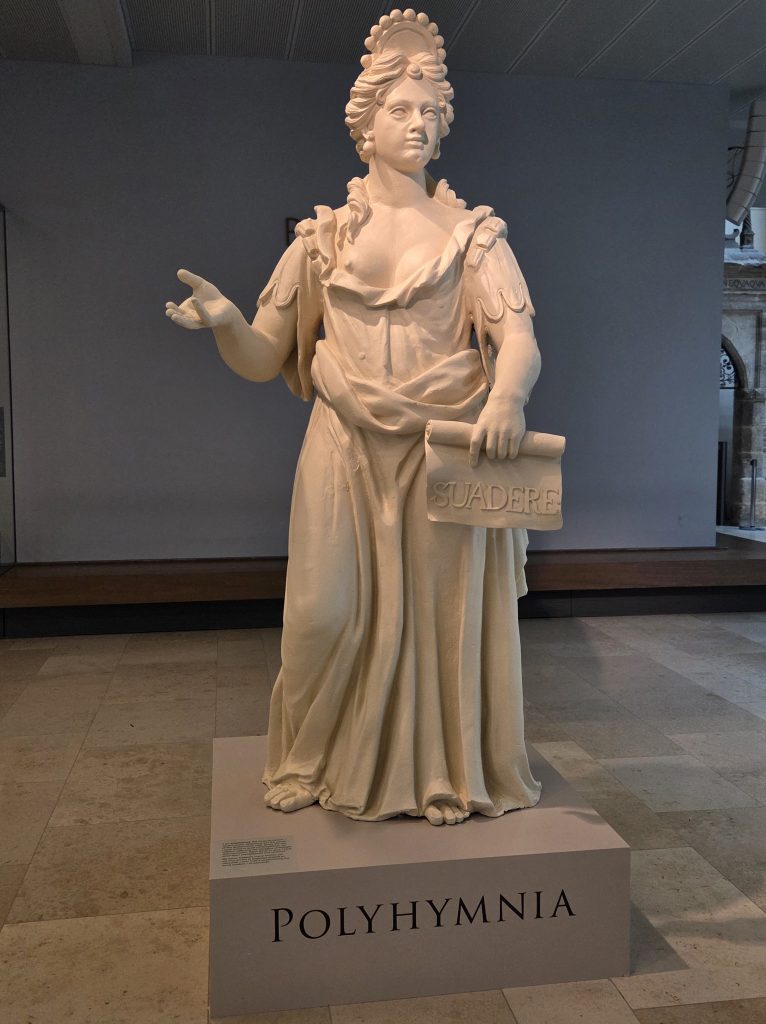
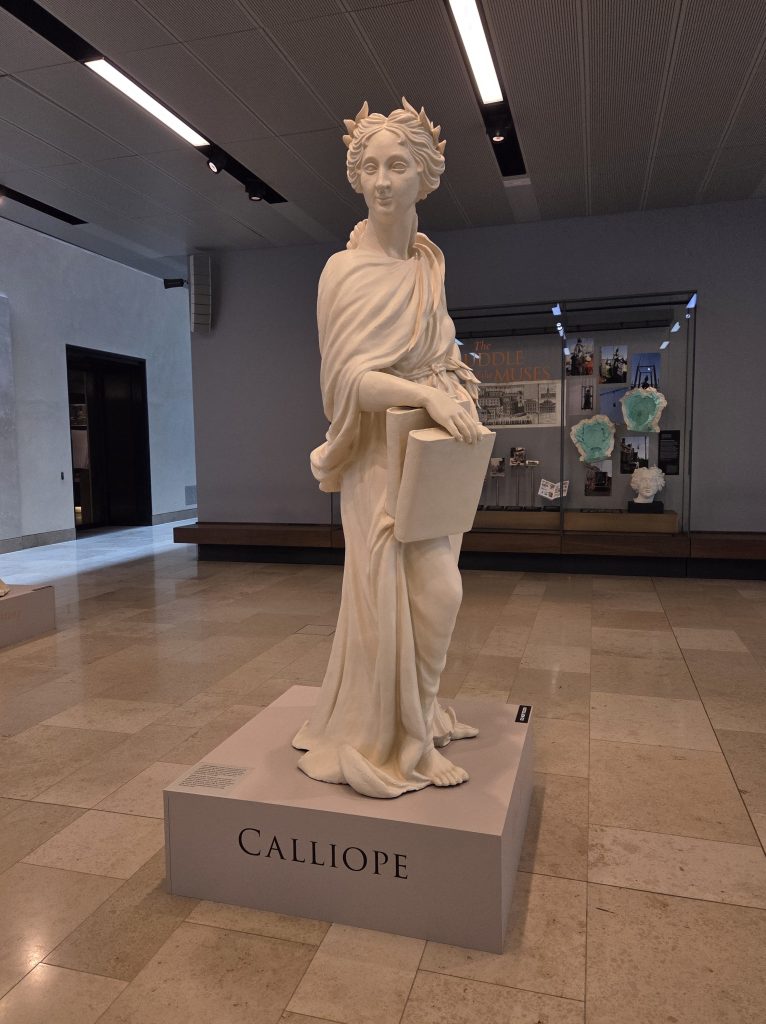
It’s quite fun to see these statues close up which you’d normally only ever see from a considerable distance. Made by James Thornhill there are nine muses in total and they were placed on the building in 1717. Not all are the original however, Polyhymnia is, but Callope is a lead reproduction.
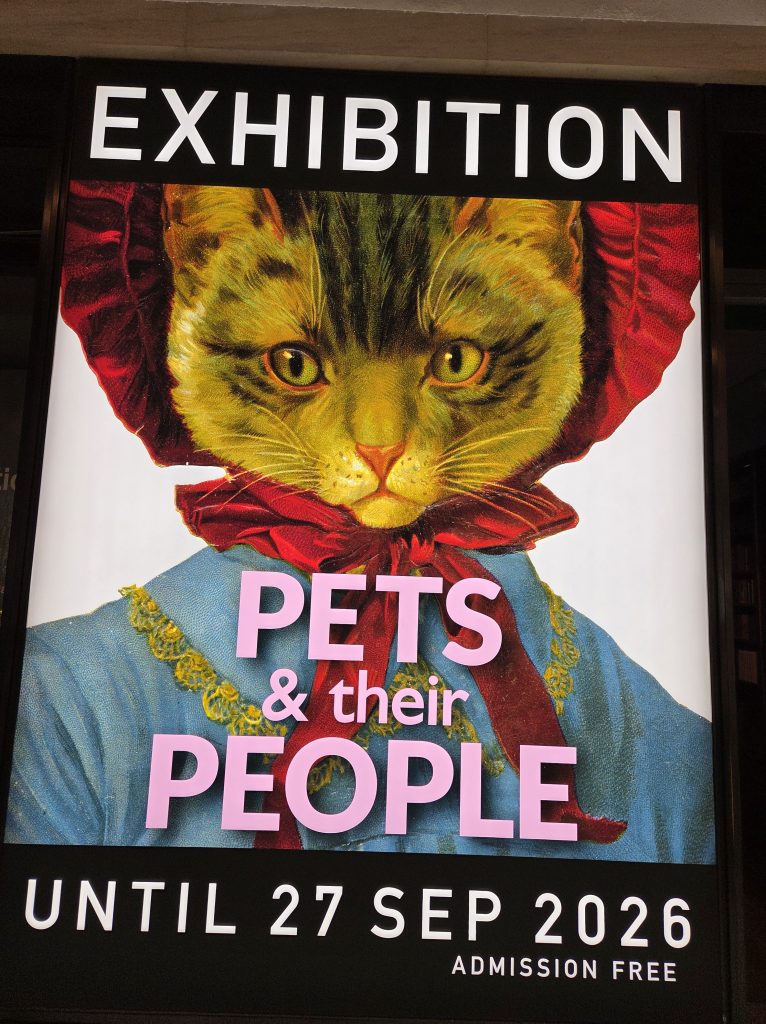
Next up I visited the Pets and their People Exhibition which finished at the end of September. It was a fun exhibition exploring the relationship between humans and their pets through photos, videos, paintings and books.
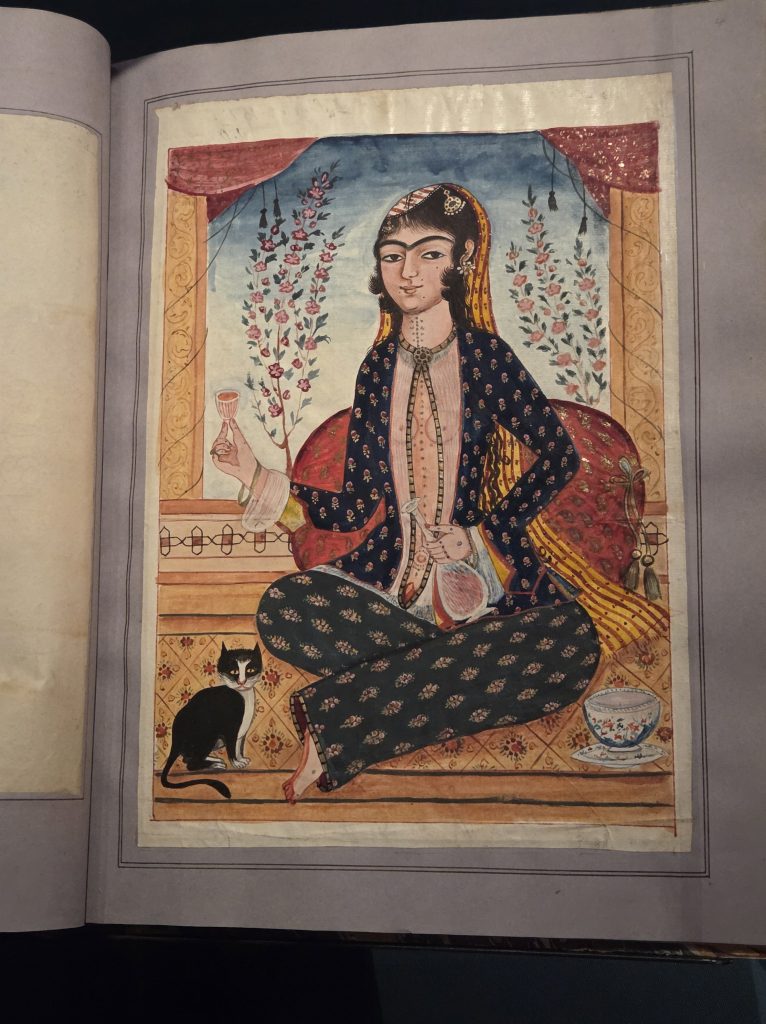
I particularly liked this painting of a Persian Qajar (Iranian) and her cat dating from the 17th to 18th century.
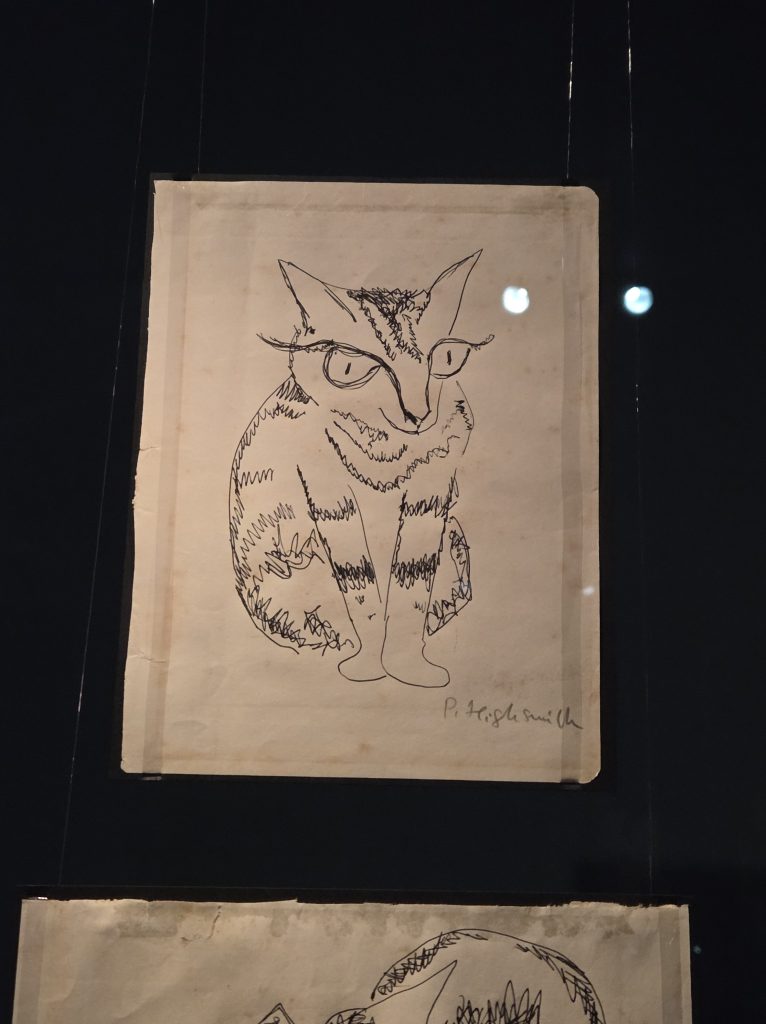
Then there’s the author Patricia Highsmith’s drawings of her cat. Author of The Talented Mr Ripley among many others she once said she much preferred cats to people, a sentiment I’m sure we can all relate to at times.
Also on display is the Dickin Medal which was rolled out firstly in World War II to animals that had displayed conspicuous gallantry or devotion to duty while serving or associated with any branch of the Armed Forces. During the war 32 pigeons, 3 horses, a cat and 18 dogs received the medal.
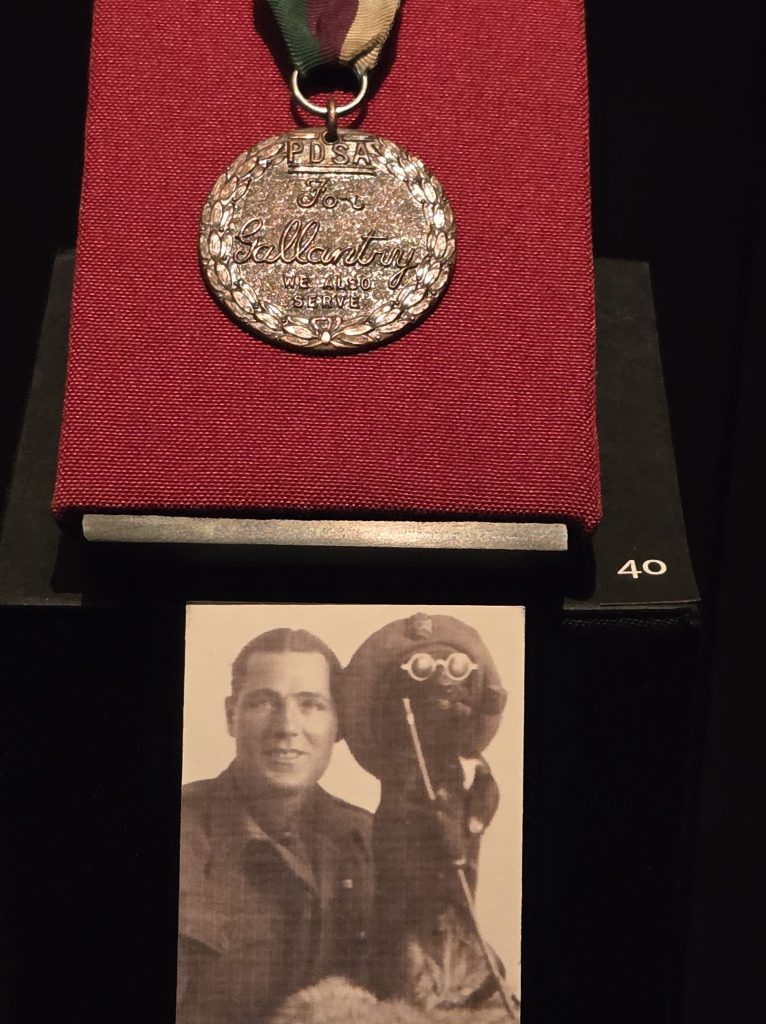
The pictured dog, Tich, is the recipient of this particular medal, adopted as the mascot of the 1st Battalion, King’s Royal Rifle Corps. Supposedly she liked to smoke cigarettes but is pictured here with a pipe. It’s also likely that the picture shows her some time after death, having been taxidermied.
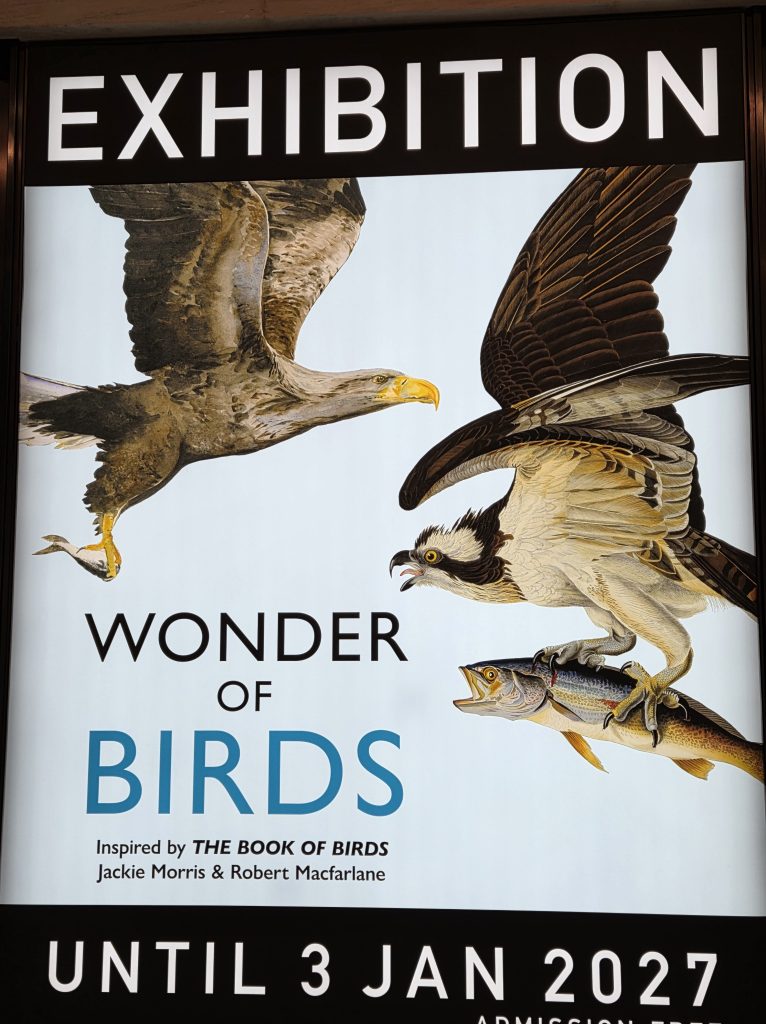
Next up was the Wonder of Birds exhibit, on until 3 January 2027. Based on a newly published book called The Book of Birds by Jackie Morris and Robert Macfarlane, the exhibition highlights artwork of birds, sounds of birds and even nests and eggs.
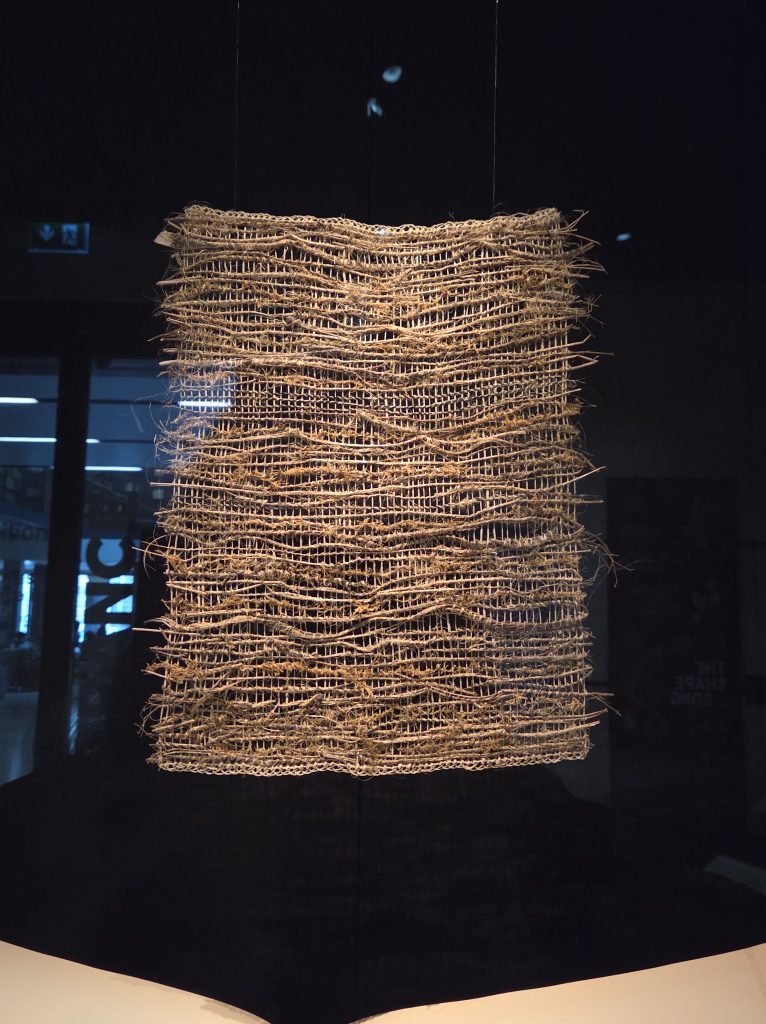
This believe it or not is the nest of a long-tailed tit, albeit a deconstructed one. Both parents weave it together using moss, lichen, grass and cobwebs, then line the inside with feathers.
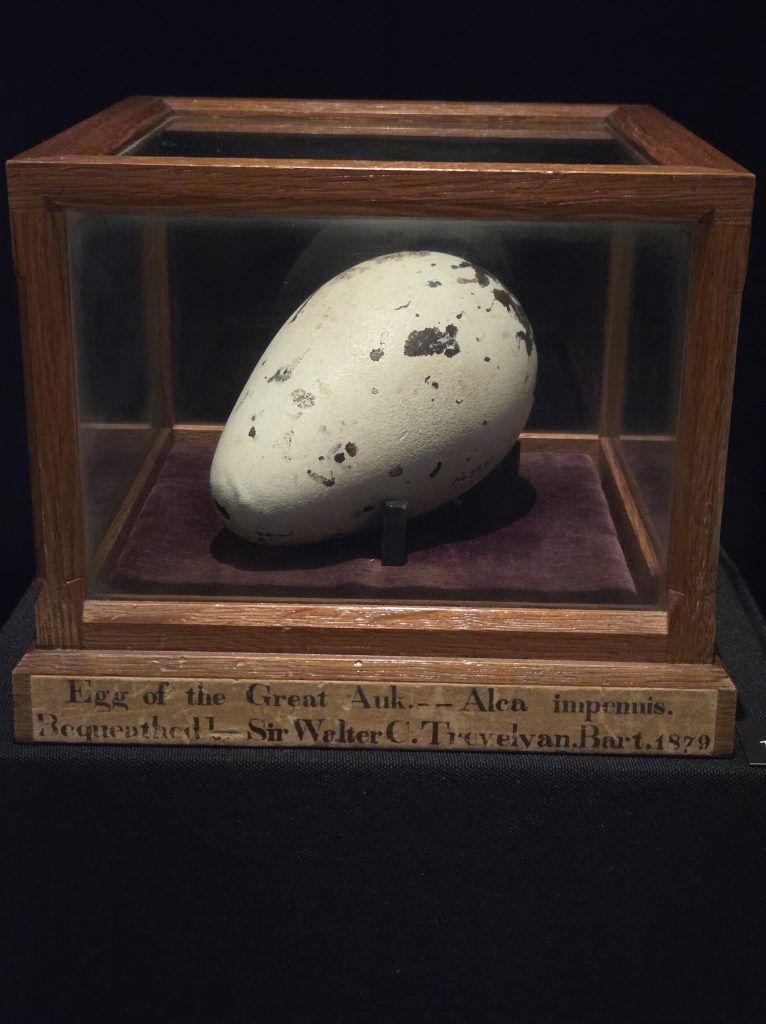
You can’t help but feel quite sad at seeing this Great Auk egg on display. Great Auk’s were large flightless seabirds that are now extinct, largely due to the fact that they were slow and unwieldy on land making them the perfect target for sailors who killed them in large numbers for their feathers, meat and eggs.
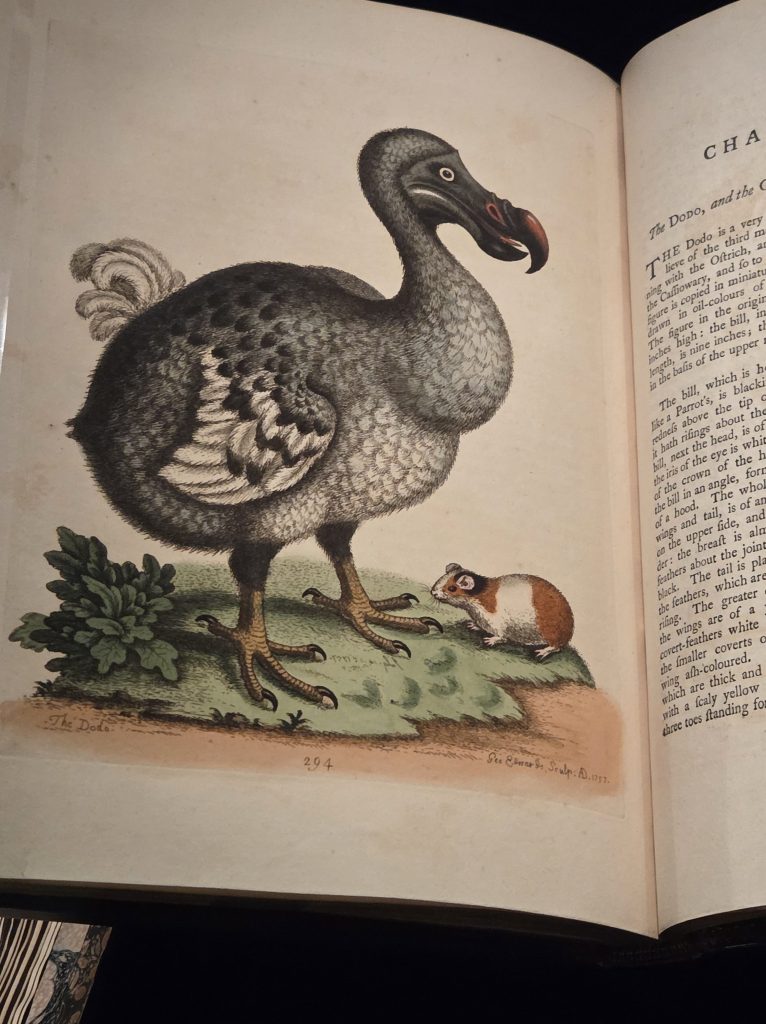
There is also some lovely bird artwork on display including this dodo. Interestingly the only remaining tissue specimen from a dodo is held at Oxford’s Natural History Museum (subject of a later post).
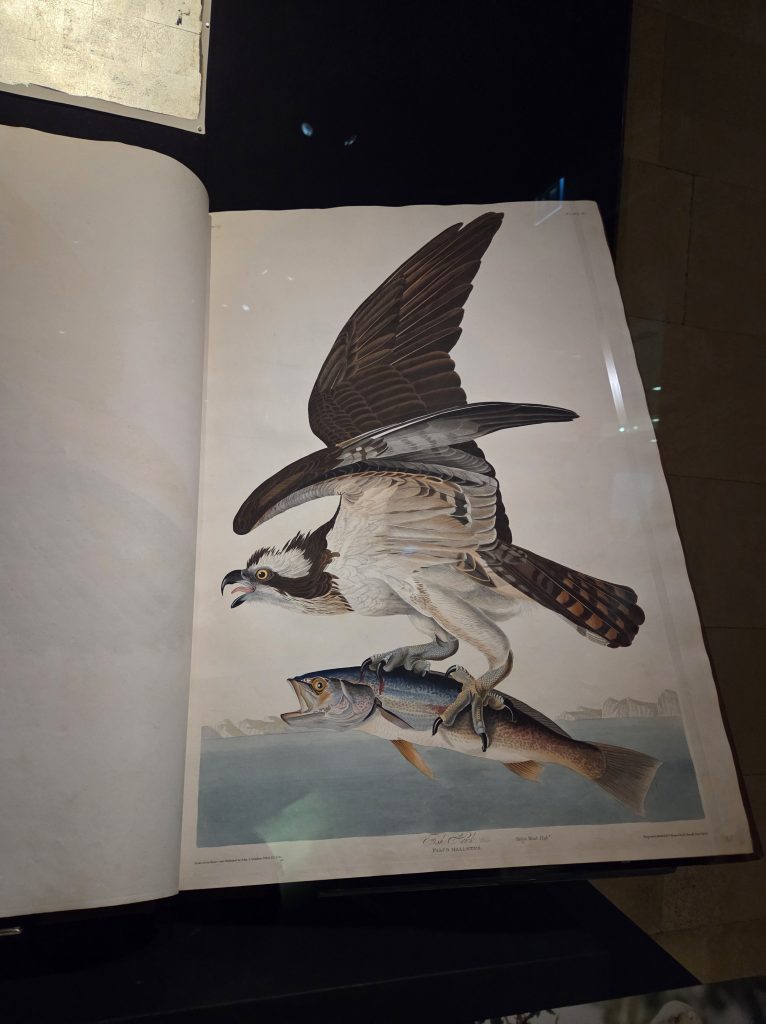
Then there’s this impressive painting of an osprey with its freshly caught dinner. This is from the Birds of America by John James Audubon. Audubon is a well known naturalist who produced some stunning work. He was also a slave trader and exploited enslaved and indigenous people in order to produce that same work.
It’s a nice space to wander – air conditioned! – and the staff were very friendly. The food in the cafe here is also very good.


I’m long overdue a return visit to Oxford, it’s been years. First time hearing of the Dickin medal, I must look that up.
LikeLiked by 1 person
I’m glad I took the time to do some proper exploring this time. The Dickin medal is often called the Victoria Cross for animals so you might have heard of it that way.
LikeLike
Pingback: Bodleian Library 30 Minute Guided Tour: Divinity School and Duke Humfrey’s Library | Louise Jayne's Blog