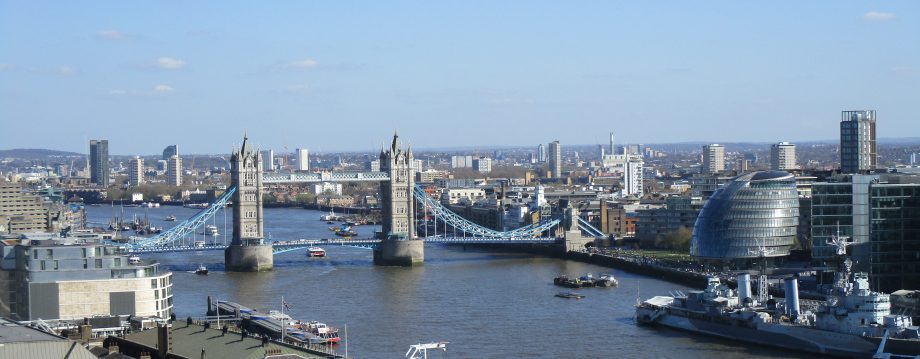
One of the things I definitely wanted to do on my visit to Oxford was to do a tour of the Bodleian Library, to which I did face some obstacles. I’d done a lot of research before my visit and the tour I had really wanted to go on was the 90 minute tour which basically takes in all the places you aren’t normally allowed to go as a member of the public. However, tickets are limited and supposedly go on sale online exactly one month before your proposed visit. I say supposedly because I had been meticulous about working out when that would be (my birthday as it happened) and checked the day before to make sure I had the right page bookmarked only to find out that all the tickets had already sold out. My advice would therefore be not to trust the website and keep checking early every day before your trip. This 90 minute tour is one of only two ways of going inside the Radcliffe Camera building, the other is the Radcliffe Camera and City Walking Tour which I promptly booked and which will feature in a later post.
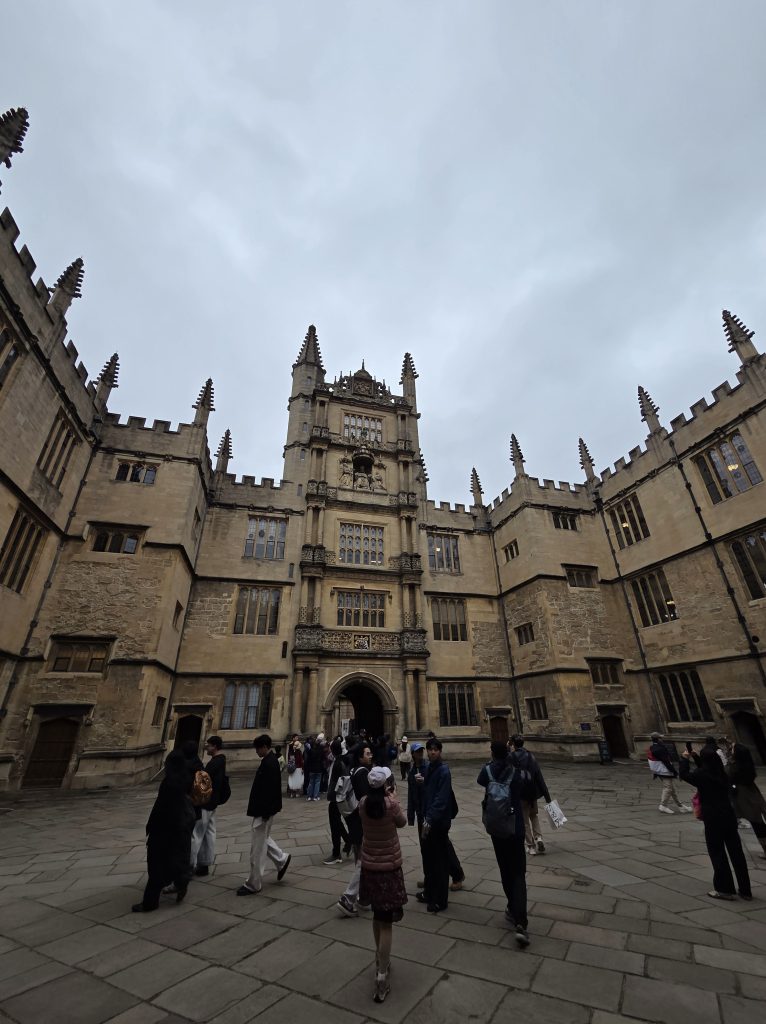
However you can buy tickets for the tours on the day from the Weston Library to visit other parts of the Bodleian. You must get there by 9am when it opens because they will all sell out within an hour or so. There are normally 30 and 60 minute tours (plus an afternoon tea tour but I had no interest in that) however on the day of my visit there was a wedding taking place in part of the Bodleian (what a lovely venue!) which meant that mostly only the 30 minute tours were available. And as I was queuing (about 15 minutes after getting there just before 9am) I could see on the large screen behind the counter that all the tours, one after another, were being sold out. Happily however just as I reached the front, thinking that I may have to come back and try another day a few tickets were released and I managed to get a place on one of the 30 minute tours which started at 11.
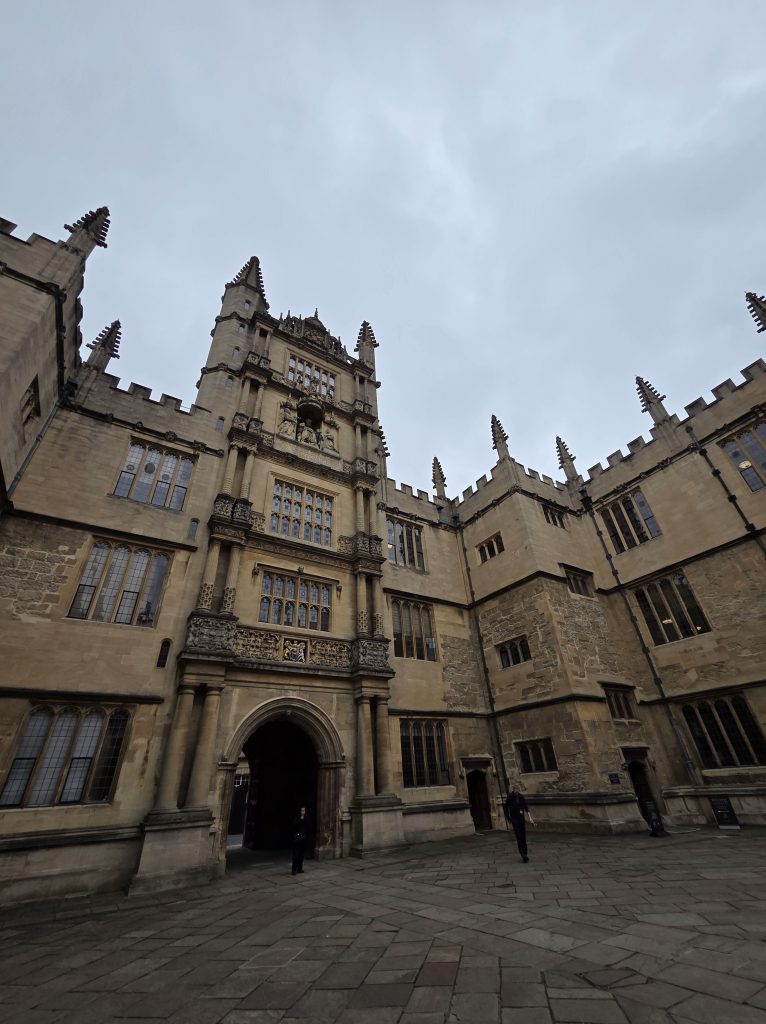
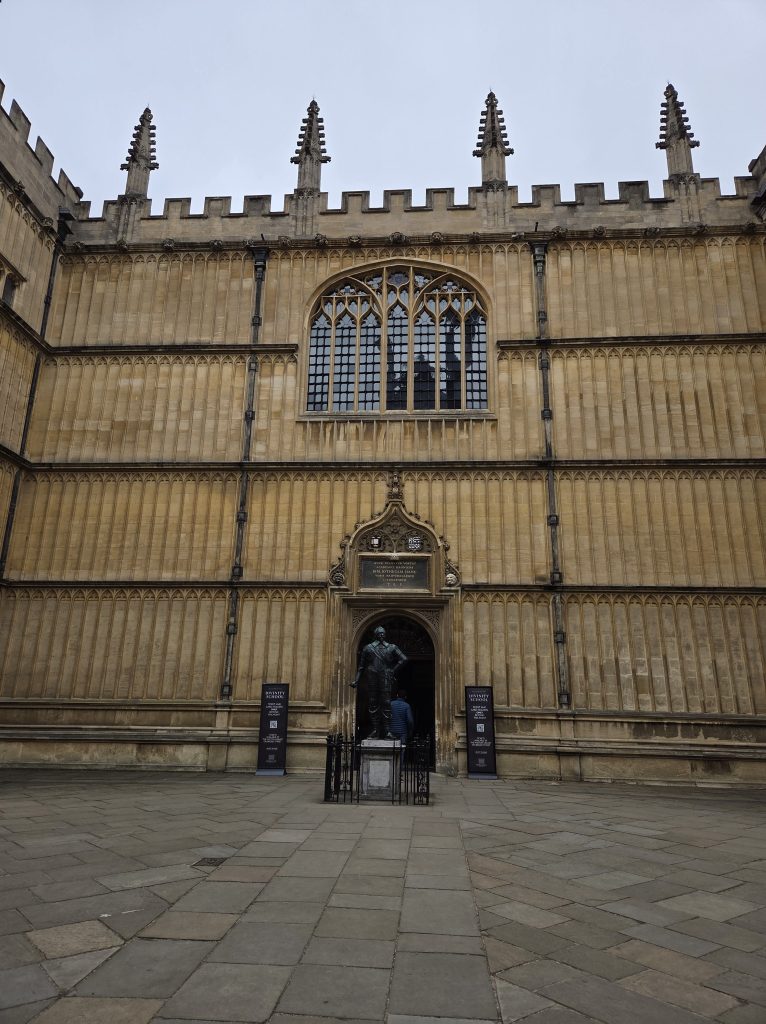
After visiting the Weston Library’s free exhibits I headed over to the Divinity School – the entrance of which is behind the statue of William Herbert, 3rd Earl of Pembroke who was Chancellor of the university from 1617 until his death. The Bodleian is named for Thomas Bodley who opened it in 1602 and expanded it from its origins in the 15th century. He was a fellow at Merton College and also a diplomat in the court of Elizabeth I.
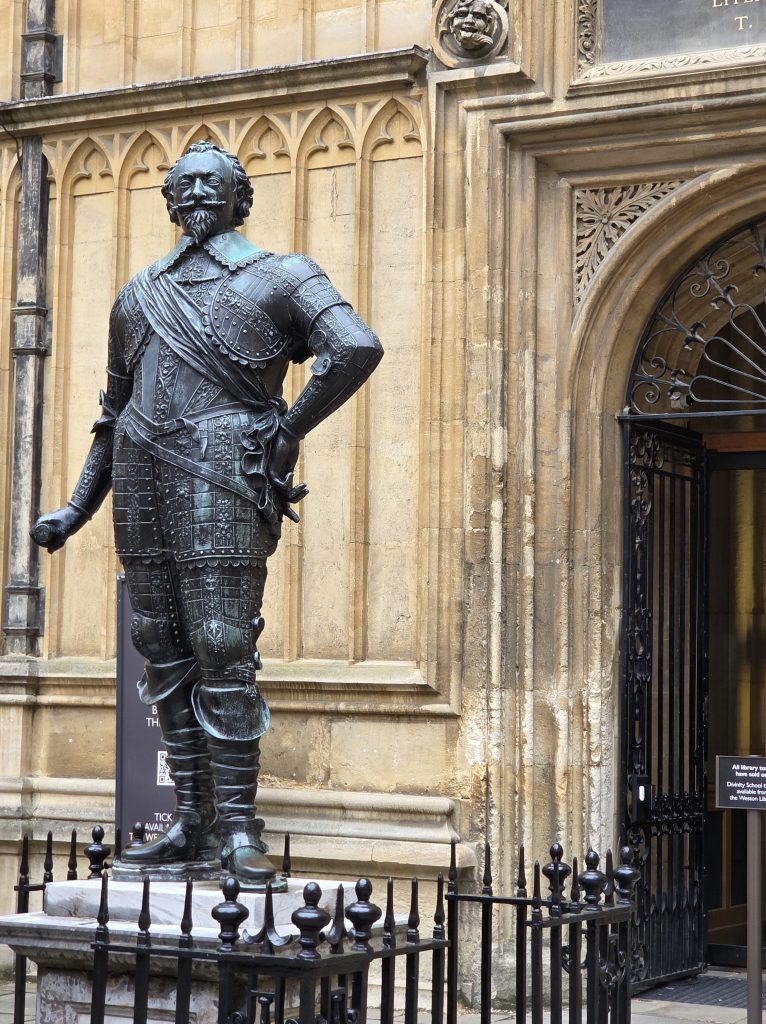
Once inside the entrance you present your ticket and are given a headset and a coloured badge and allowed to enter the room while you wait for everyone on your particular tour to gather. The headset is because once you get up to the second part of the tour, Duke Humfrey’s Library, the tour guide must whisper and the headset allows you to hear them properly. Also be mindful that there will be at least three if not more tours happening around you which is why they issue you with a coloured badge to help the guide keep track of you.
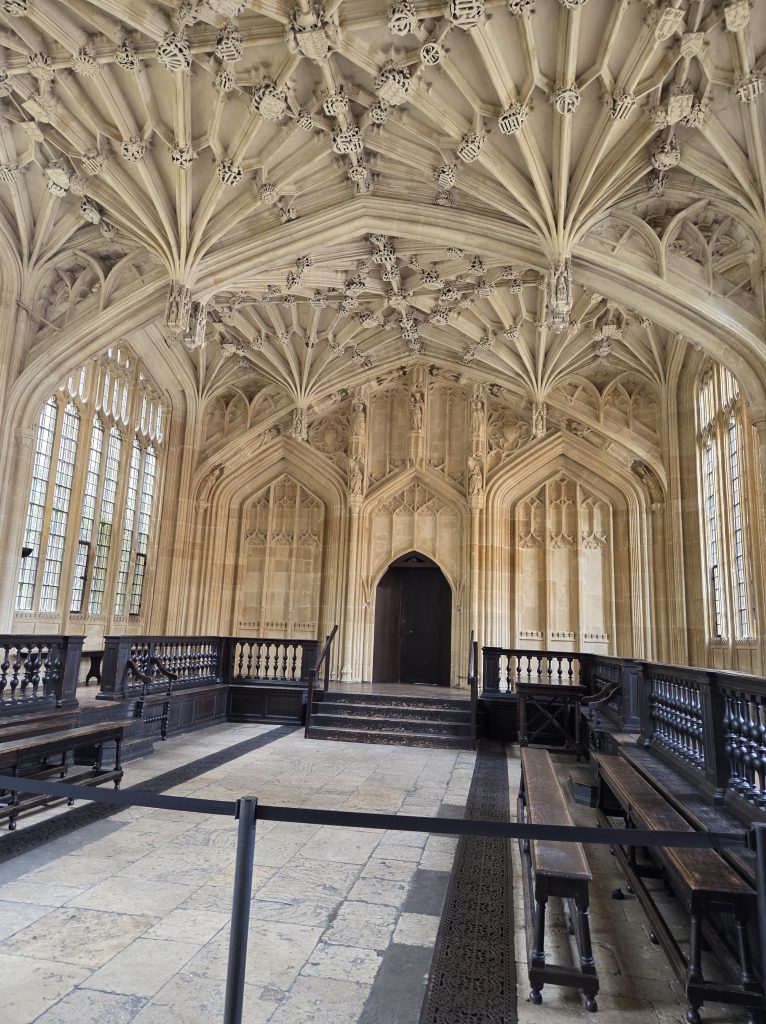
The Divinity School was built between 1427 and 1483 and is where Theology was taught and examined. Very different to today’s university exam, back then members of the public could sit in on these exams and heckle the students as they tried to answer complex questions about theology!
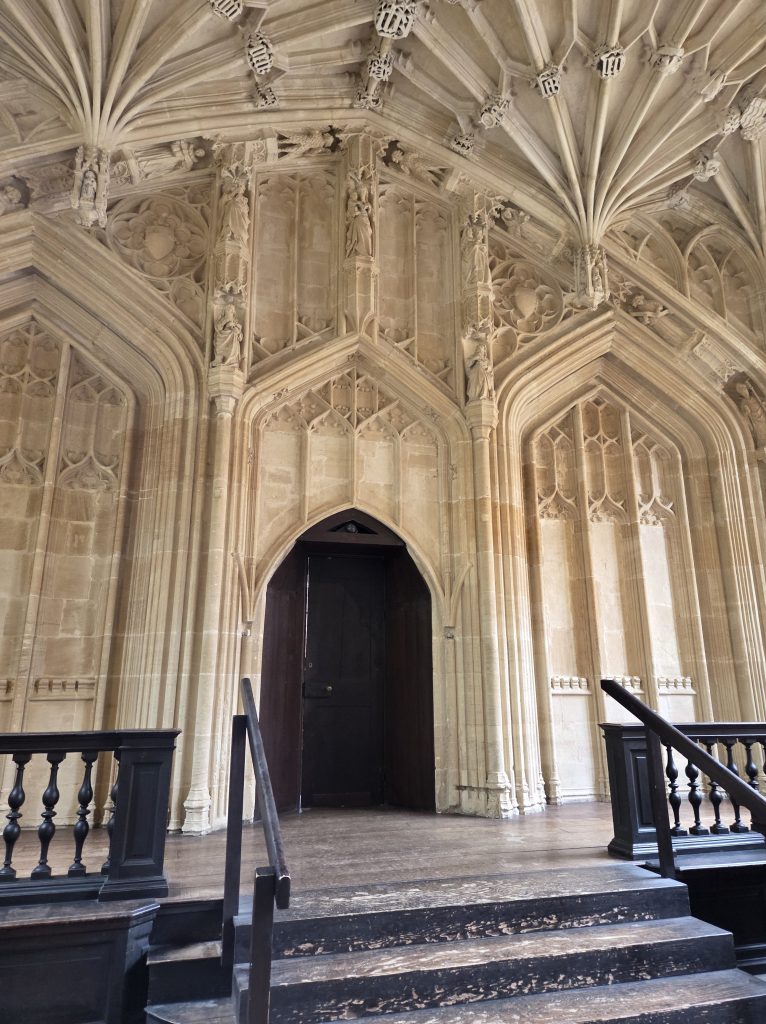
It’s the oldest surviving purpose built building for university use though now is predominantly for tourists to visit and where graduating students don their robes before walking through this door across to the Sheldonian Theatre where the conferring of degrees takes place. The door was added by Christopher Wren in 1669.
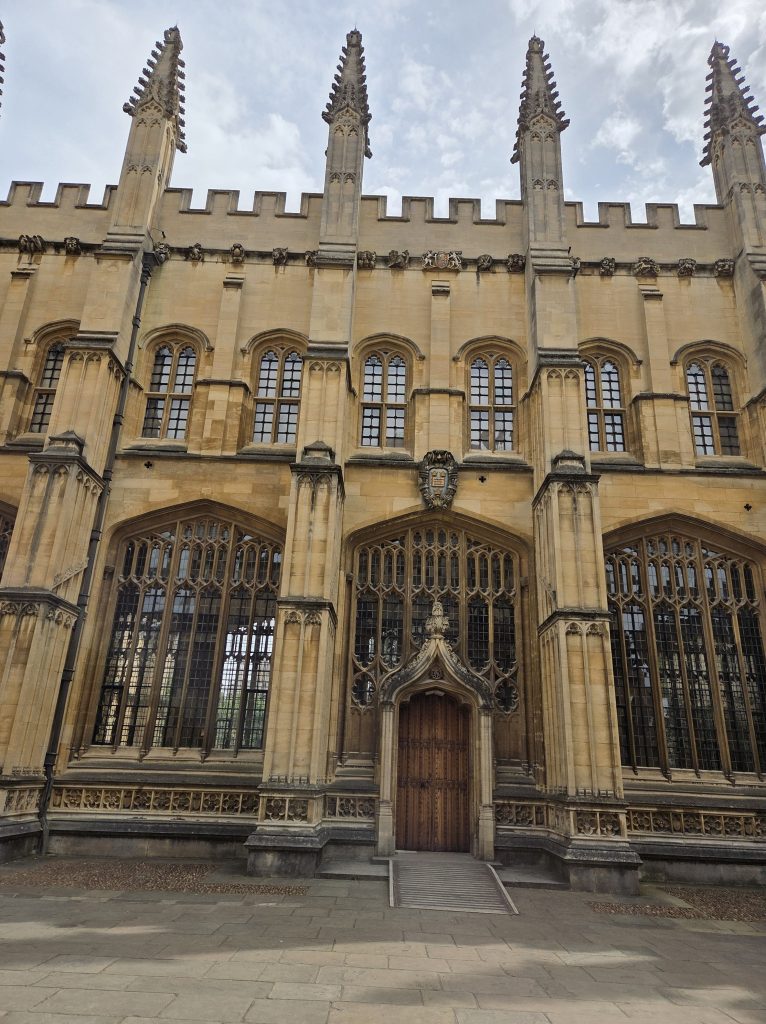
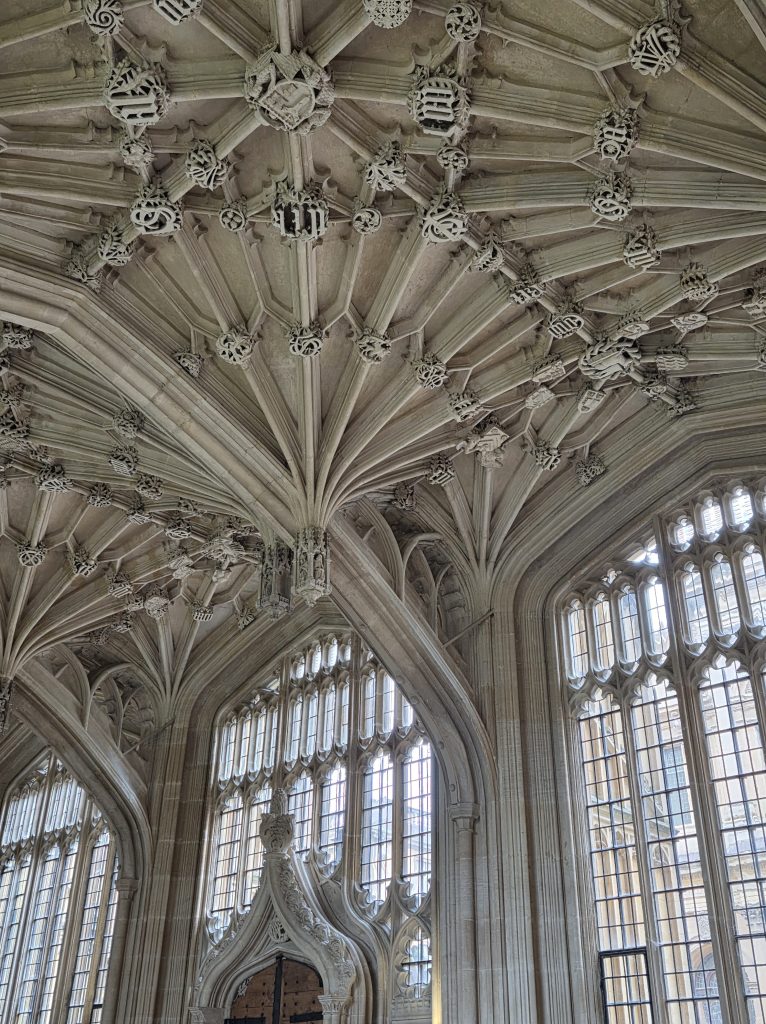
The ceiling is of course the most impressive part of the room – vaulting with 455 bosses designed by William Orchard in the 1480s. Along with Orchard’s initials there are carvings of royal coats of arms, religious figures such as the Virgin Mary and St Paul and animals such as owls and foxes.
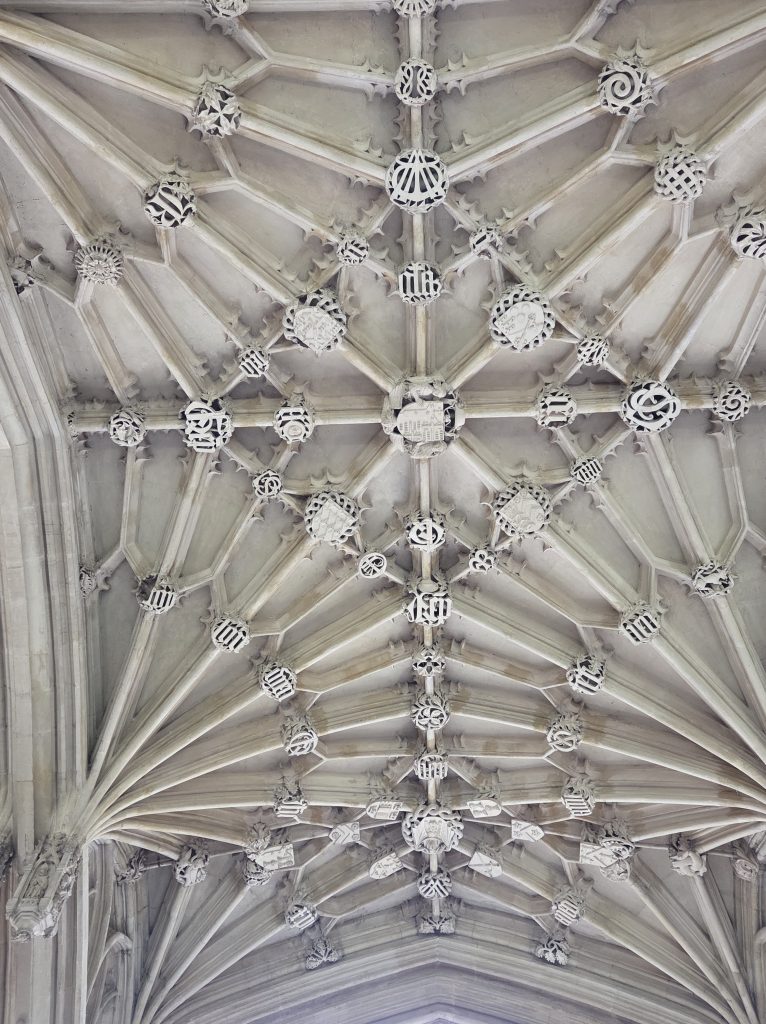
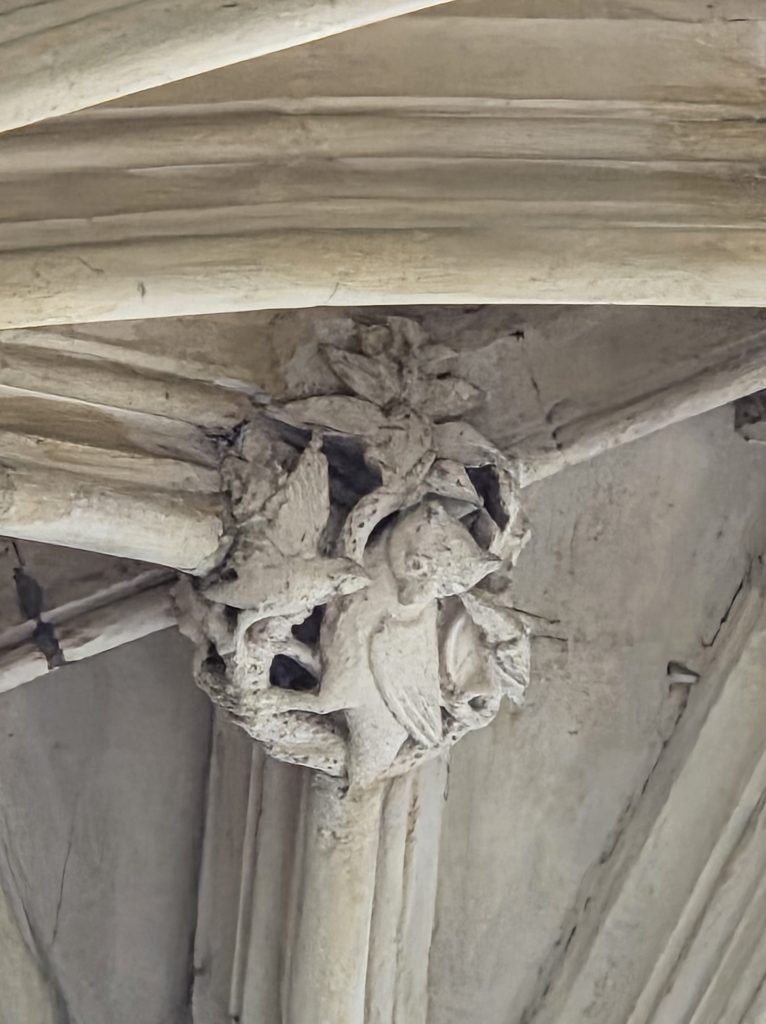
The room is light and airy because of the clear glass – there used to be stained glass but this was all smashed during the Reformation.
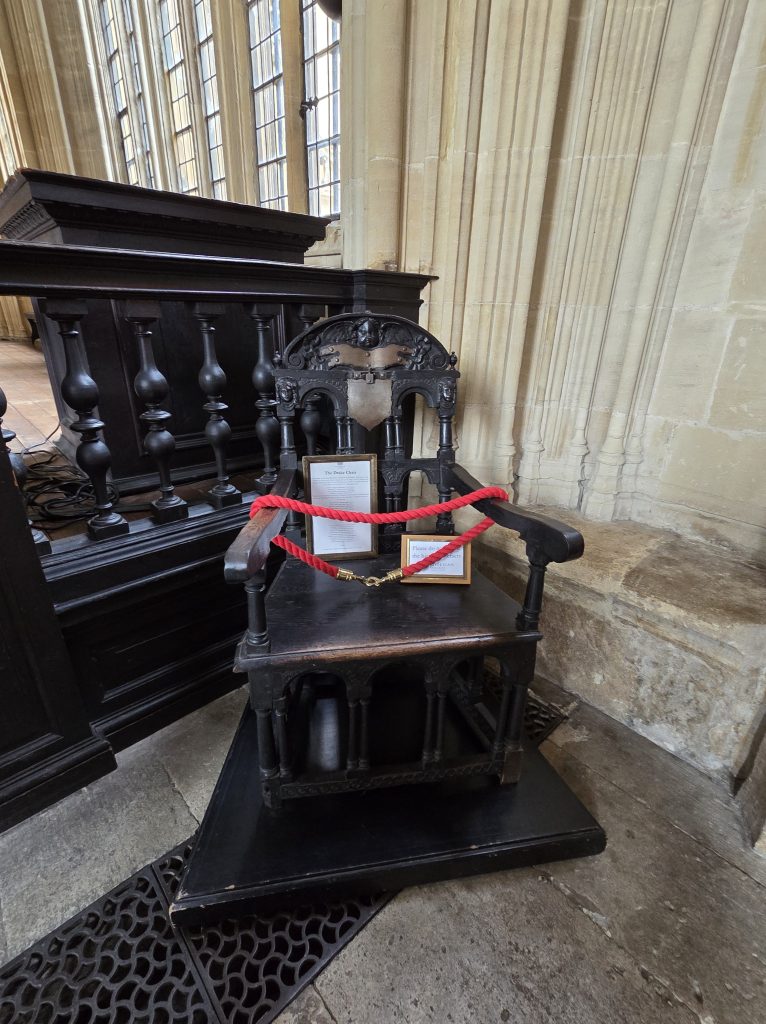
Other than some benches that you are free to sit on there is a chair which is not to be touched. This is made from timber from the Golden Hinde, the ship which Sir Francis Drake used to circumnavigate the globe. You can actually find a replica of his ship that you can go onto just north of Borough Market and Southwark Cathedral in London.
From here it’s a short walk upstairs to Duke Humfrey’s Library. This is where the audio device you were given at the start comes into play as the guide had to whisper throughout this section to avoid disturbing the students – when I visited they were heading into exam time so the library was pretty busy.
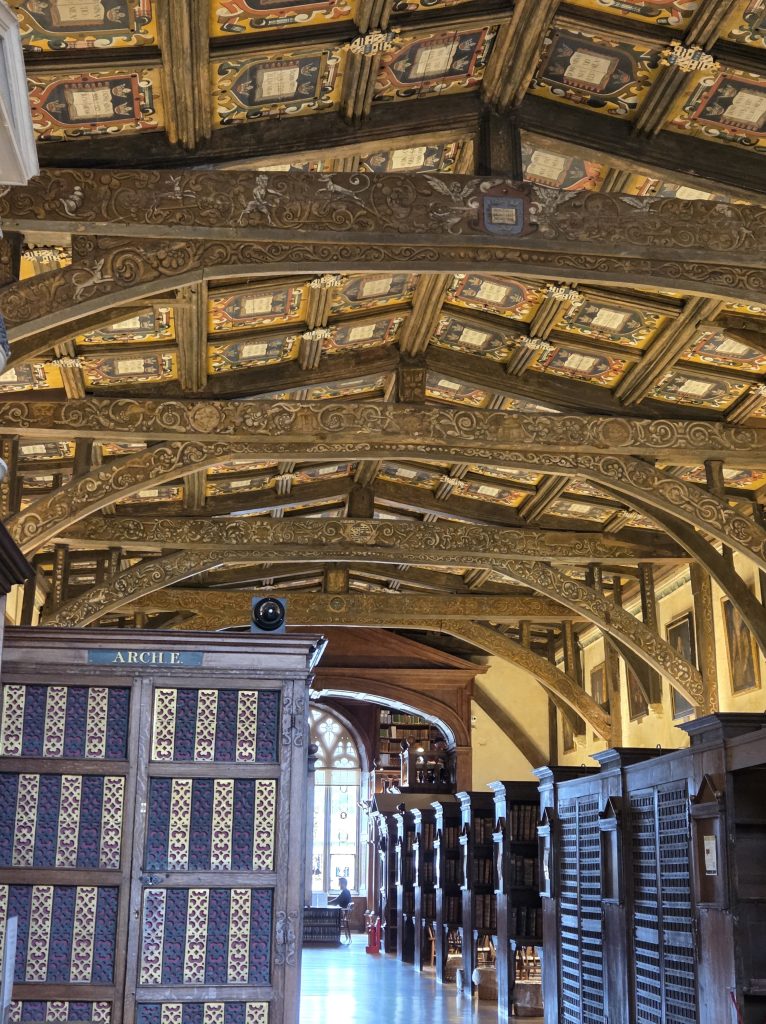
Duke Humfrey’s Library is named for Humphrey of Lancaster, Henry V’s brother who donated his collection of 281 books to the university. (At the time in 1447 the university only owned 20 books). It was constructed as a second storey to the Divinity School between 1450-1480 to house his donation and is therefore the oldest reading room in the Bodleian.
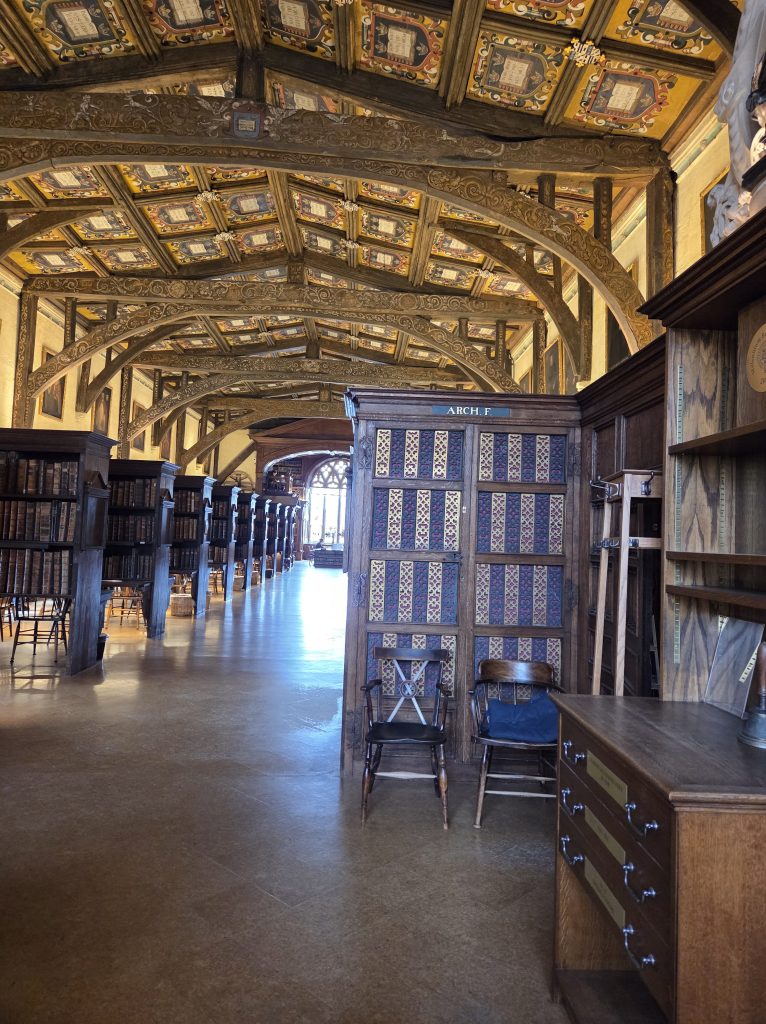
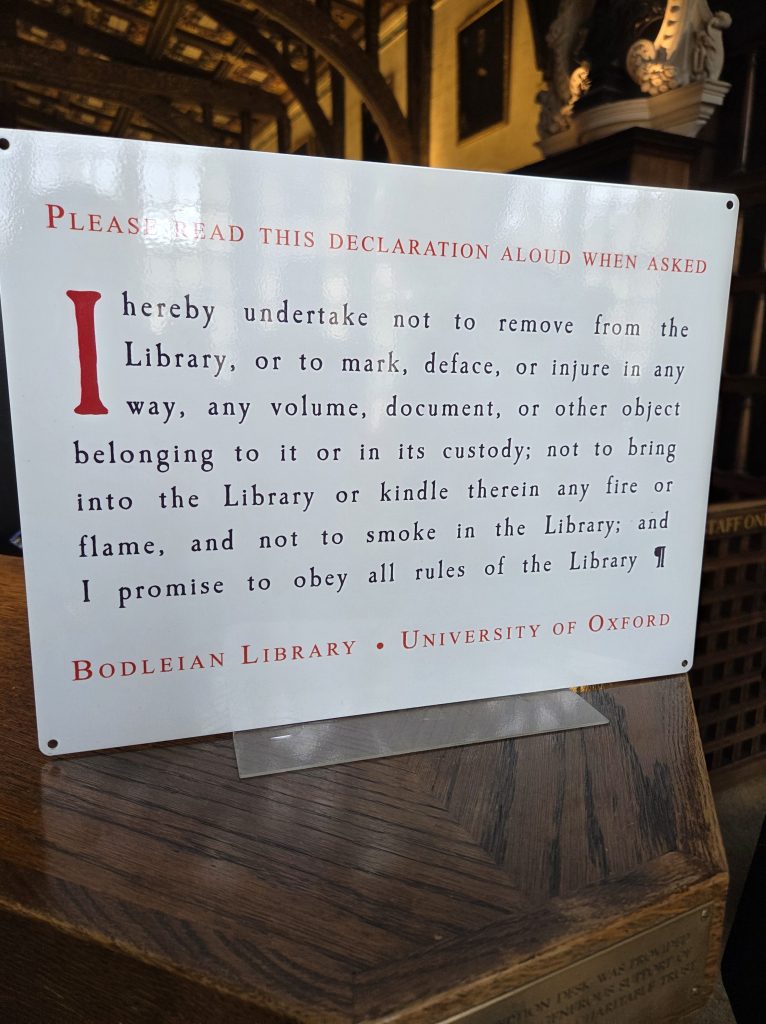
Originally containing books on Theology, Law and Medicine (everything else came under Arts) the library is now reserved for the use of readers of manuscripts and early printed books. Something I think is particular to the Oxford system is that many of these libraries (though not all) are not lending libraries so you can’t take them with you and must read them at the reading desks provided. The below sign is how the library ensures this is taken seriously – a very ancient kind of honour system.
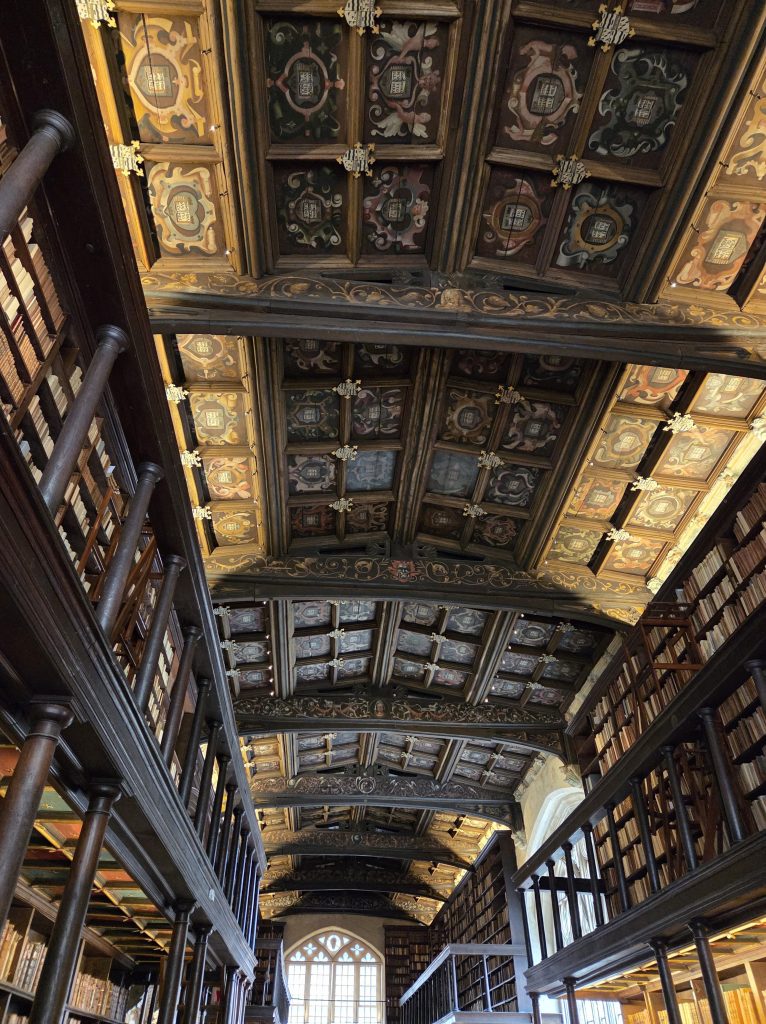
Don’t forget to look up to admire the ceiling.
For a 30 minute tour it did pack in a lot of information and was well worth doing to see some of the parts of the university non students don’t usually get to visit. My ticket cost £12.50.

