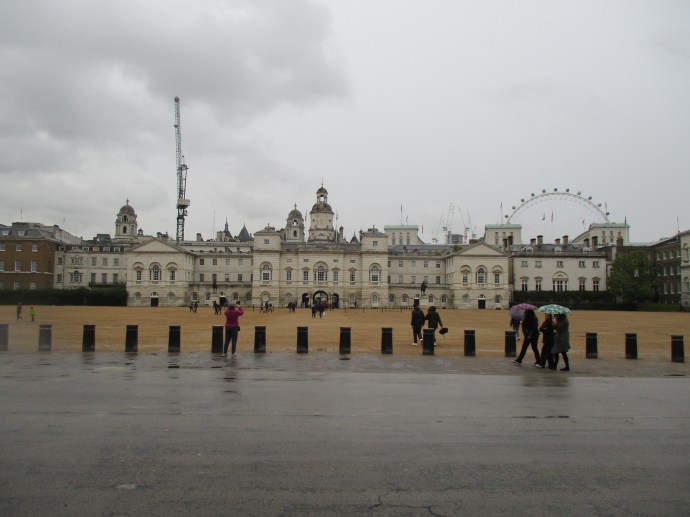
This statue of the poet John Donne can be found in the Churchyard of St Paul’s Cathedral. It was sculpted by Nigel Boonham in 2012.

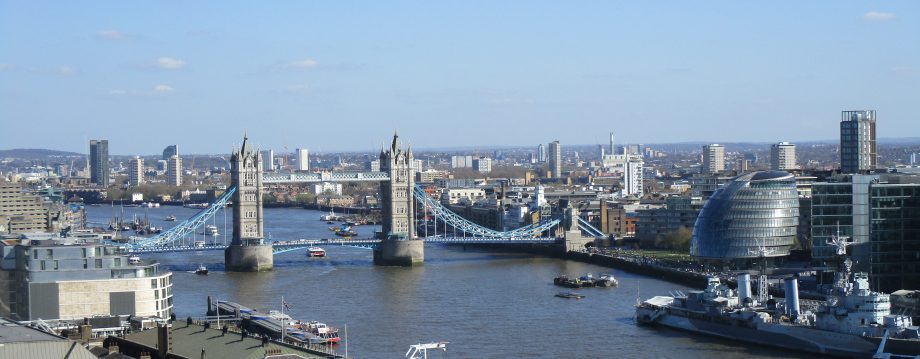
This statue of the poet John Donne can be found in the Churchyard of St Paul’s Cathedral. It was sculpted by Nigel Boonham in 2012.
This striking statue on the bank of the River Clyde in Glasgow is a memorial to British citizens who fought in the Spanish Civil War of 1936 to 1939. Created by sculptor Arthur Dooley it was unveiled in 1979. The statue is based upon Dolores Ibarruri, known as La Pasionaria (The Passion Flower), a female politician and prominent anti-fascist from Spain.

This large public square in front of Birmingham Council House is, unsurprisingly, named after Queen Victoria. Prior to 1901 however it was known as Council House Square. A parish church was on the site first, from 1813, followed by Birmingham Town Hall (1832-1834) and then the current Council House. One of the central features of the Square is this statue which I was amused to discover on researching this post is known locally as “Floozie in the Jacuzzi”. Now a flower bed it was part of a water fountain up until 2013 when irreparable faults led to the water being permanently turned off.

This statue of a female nude called Awakening can be found in Ropers Garden on Chelsea Embankment. She was sculpted by Gilbert Ledward in around 1923.
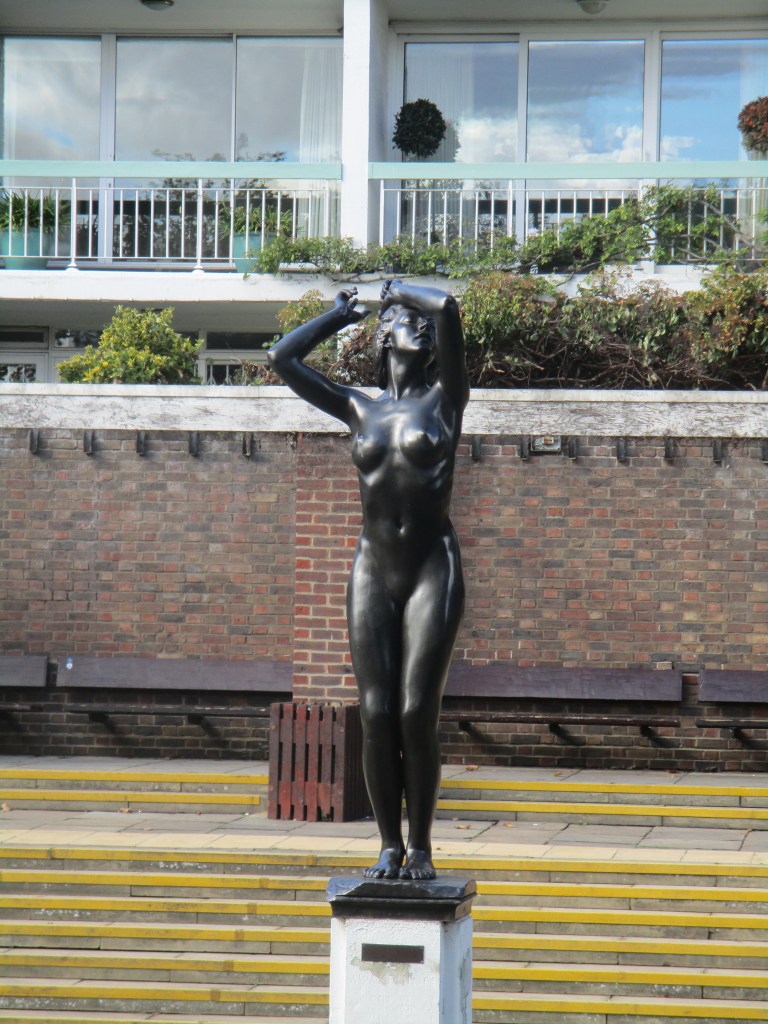
The University of Glasgow was founded in 1451 making it the fourth oldest university in the UK and second oldest in Scotland. They do run tours of the building for visitors but they weren’t running on the day I went so I did the self-guided tour which can be found on the university’s website.
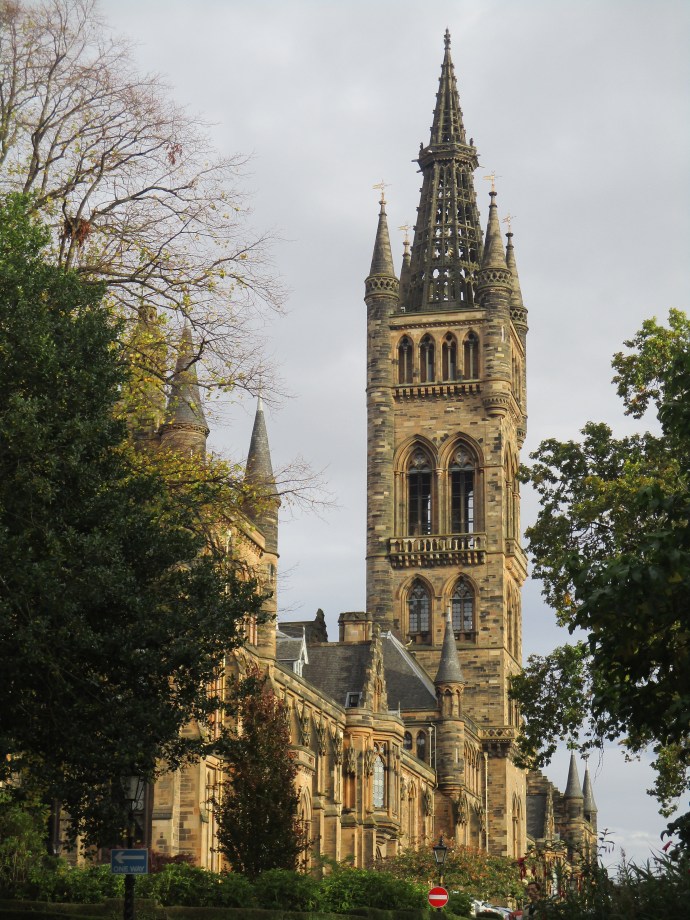
Gedling Country Park is built on the site of Gedling Colliery which started producing coal in 1902 and closed in 1991. It was opened in 2015 as a 580 acre park with lots of open space, a choice of walks of varying difficulty and two viewing platforms that on a bright day allow for views across to Lincolnshire and Leicestershire.

Today for the first time since March I ventured into Nottingham City Centre in order to photograph the 10 owls that make up the Wise Owl Walk. It was quite a good work out as the owls are spread out around the city centre and I walked there and back to avoid using public transport. The owls are really well designed and it’s a nice way of getting people back into the city centre, though personally I didn’t stick around other than to take photographs which is probably what I would have done pre-pandemic as well! You can find a map of the trail to download here.

It should be obvious by now that I enjoy exploring a good cemetery and Glasgow’s Necropolis is one of the best. Established in 1832 it’s located on a hill next to Glasgow Cathedral (featuring in a future post) that, like Highgate in London, was inspired by Père Lachaise Cemetery in Paris.

Despite having visited Kensington Palace in the past I’ve never really spent much time in Kensington Gardens so I decided to rectify that on my last visit to London when the weather was surprisingly warm. Of course, my main reason for visiting was to photograph the Albert Memorial but I also wanted to see some of the other sculptures such as that of Peter Pan and to see if I could spot any of the famous Kensington parakeets, which as you can see below was a success.

Horse Guards Parade is the ceremonial parade ground by St James’s Park in London. Horse Guards is the building itself which dates from the 18th century, replacing an earlier building. It was built as a barracks and stables for the Household Cavalry and though still a military barracks it is also the site of the Household Cavalry Museum.