Back in March I travelled down to Winchester for a week, in part because visiting some Jane Austen related sites has long been on my bucket list, but also because I got an insanely cheap deal on train tickets. Unfortunately Jane Austen’s House was closed for refurbishment (but you can see a photo of the outside further down) – this includes things like her writing desk so I will be back at some point. But within the same village is Chawton House where she spent a lot of her time – it belonged to Austen’s brother Edward and is still owned by his descendents (though run via the Chawton House Trust as a charity).
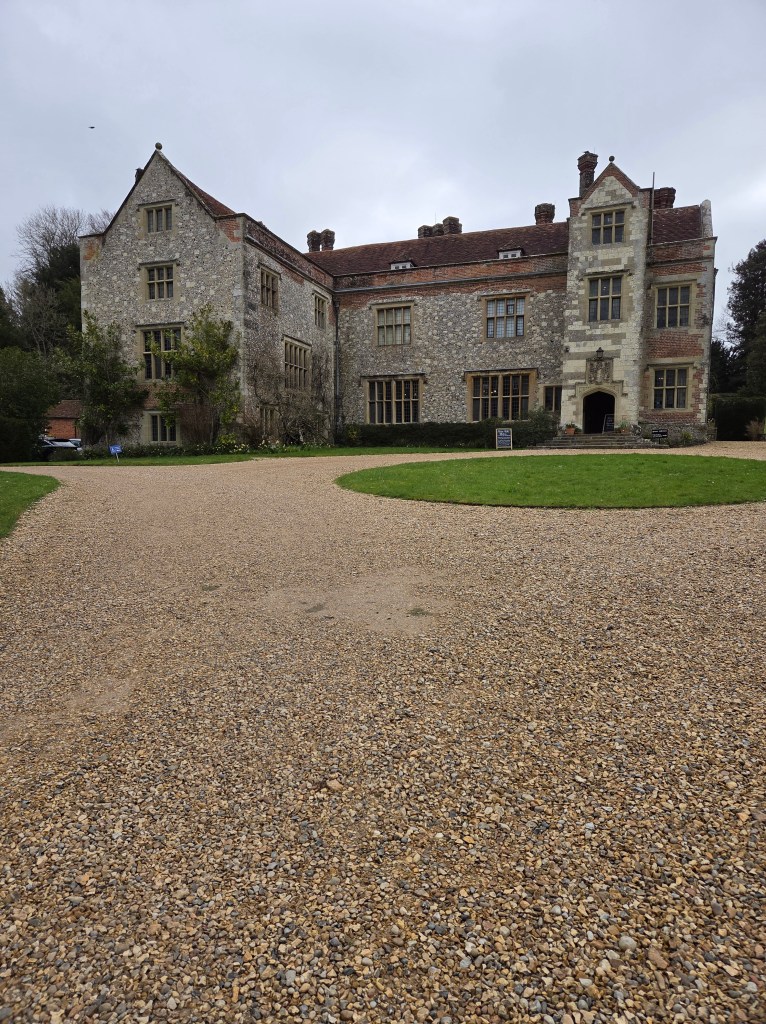
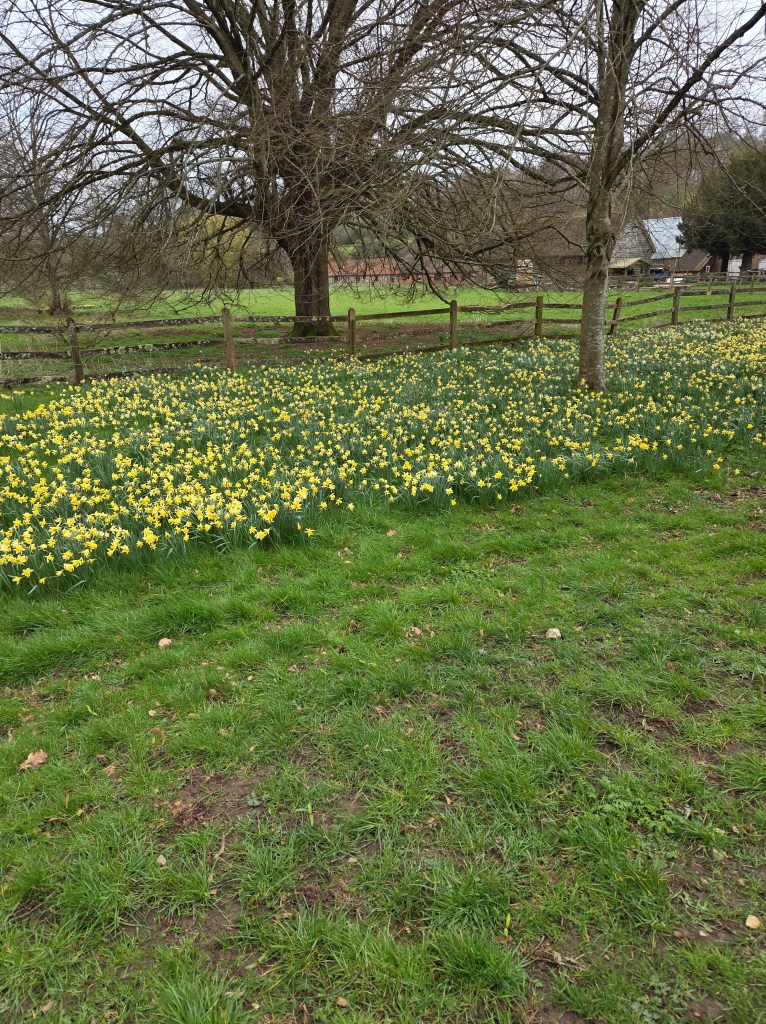
Normally you can book tickets online to visit the house and garden and pick a timeslot however it just so happened that my visit on 17th March coincided with the National Gardens Scheme Daffodil Day. For this event tickets could be bought on the day at the garden entrance with the money for visiting the garden going towards various charities including Marie Curie and Macmillan Cancer Support. The house was also open to visit for a small fee.
I’ll get into how to get here by public transport later, but once I’d arrived and had a nice chat with the ladies at the ticket stall I headed up and around the side of the house to the gardens. Jane Austen regularly visited here, living a close walk way, and supposedly Mr Knightley’s house in Emma was modelled on the house and gardens here.
I first walked up the Library Terrace that was built around 1905 by Edward Austen’s grandson, Montague Knight. (A note here that Edward was “adopted” by some rich cousins of the Austens, the Knights, and as part of him inheriting all the childless couples wealth he had to take on the surname Knight). There is a rose and herb garden by here but that was roped off on my visit – surprising since the gardens were supposed to be the highlight of that day’s opening but unlikely to have been much in bloom at this time of year anyway.
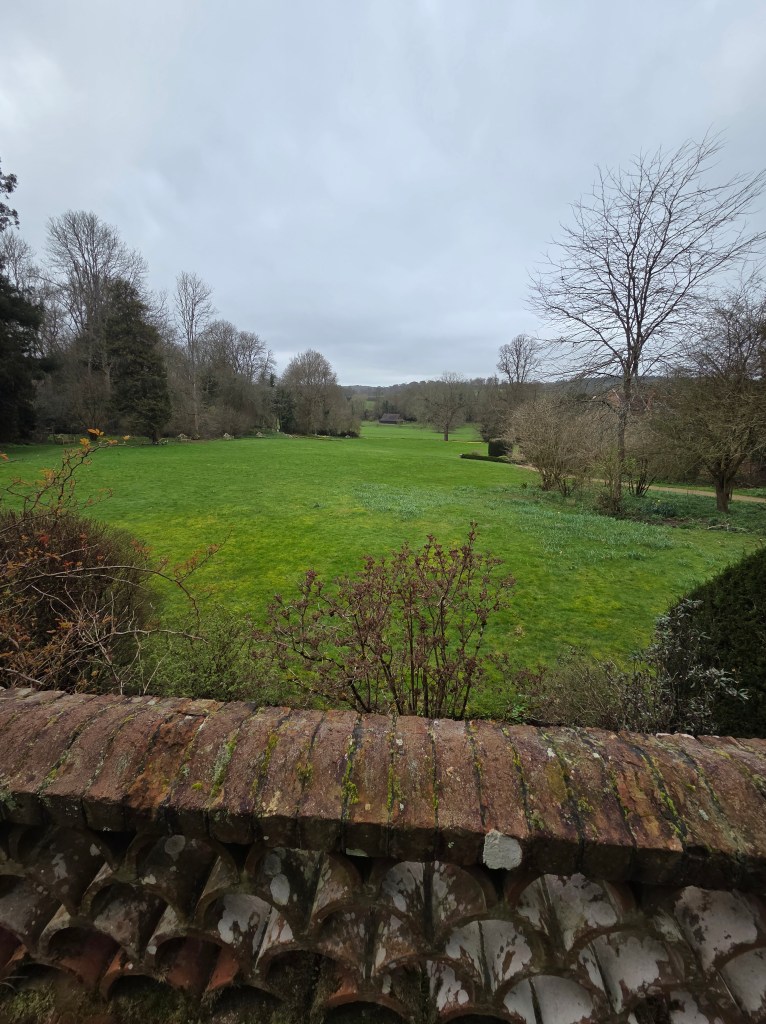
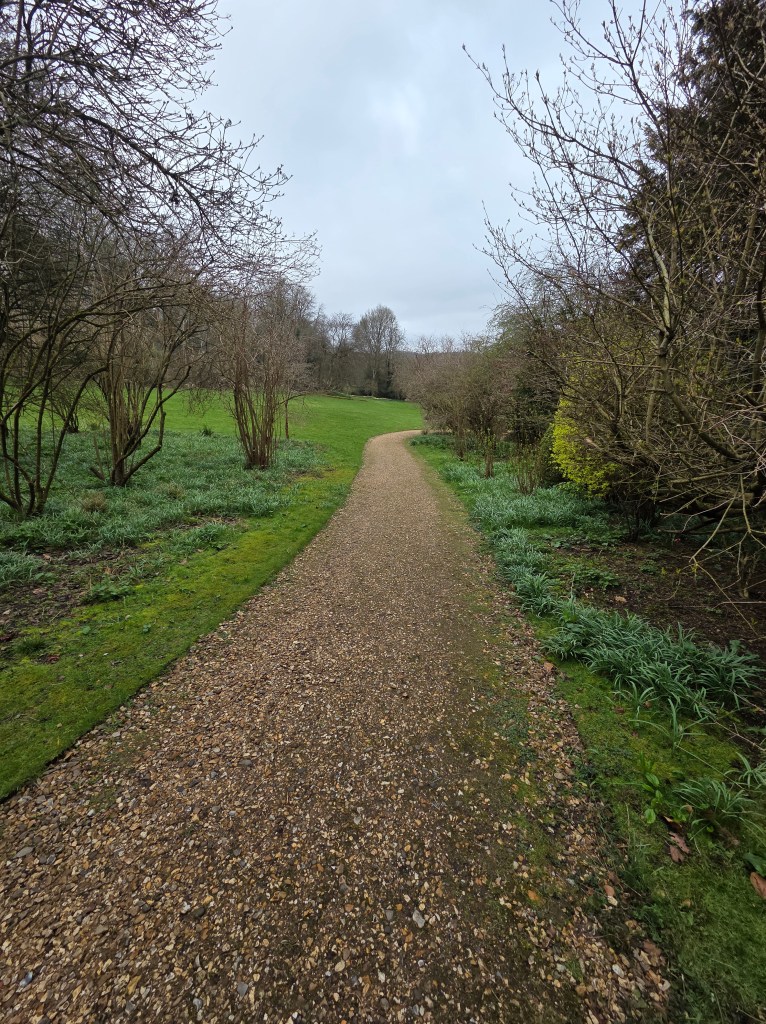
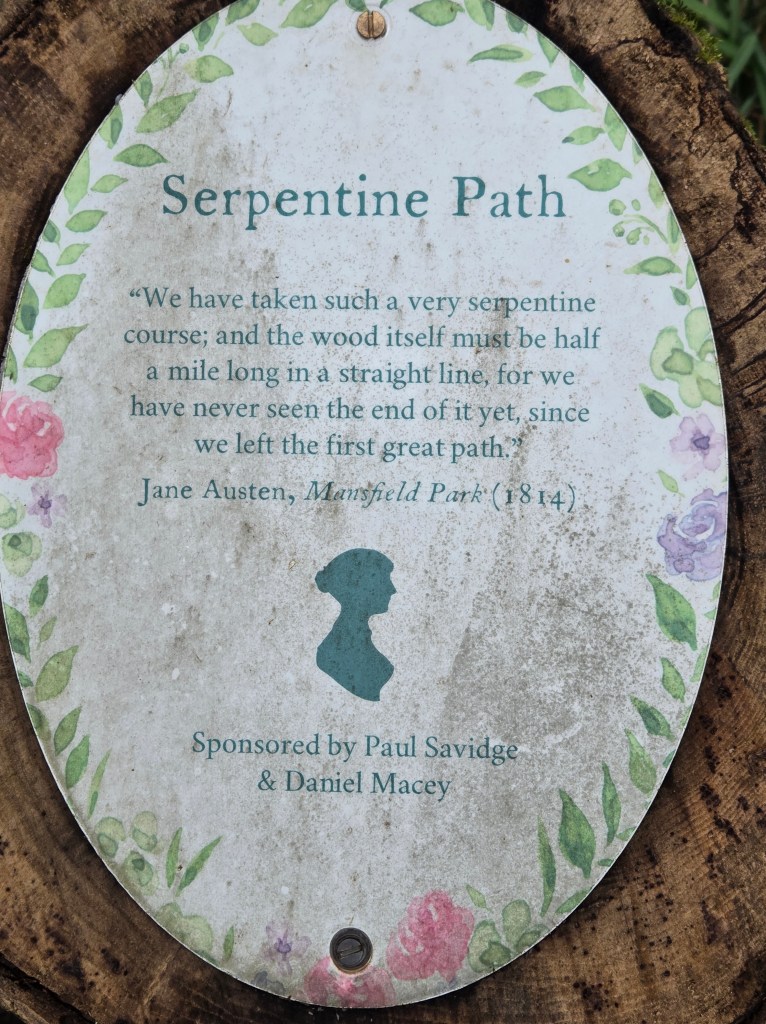
I did manage to walk through the Serpentine Path – note there are signposts with quotes from Austen’s works throughout the gardens.
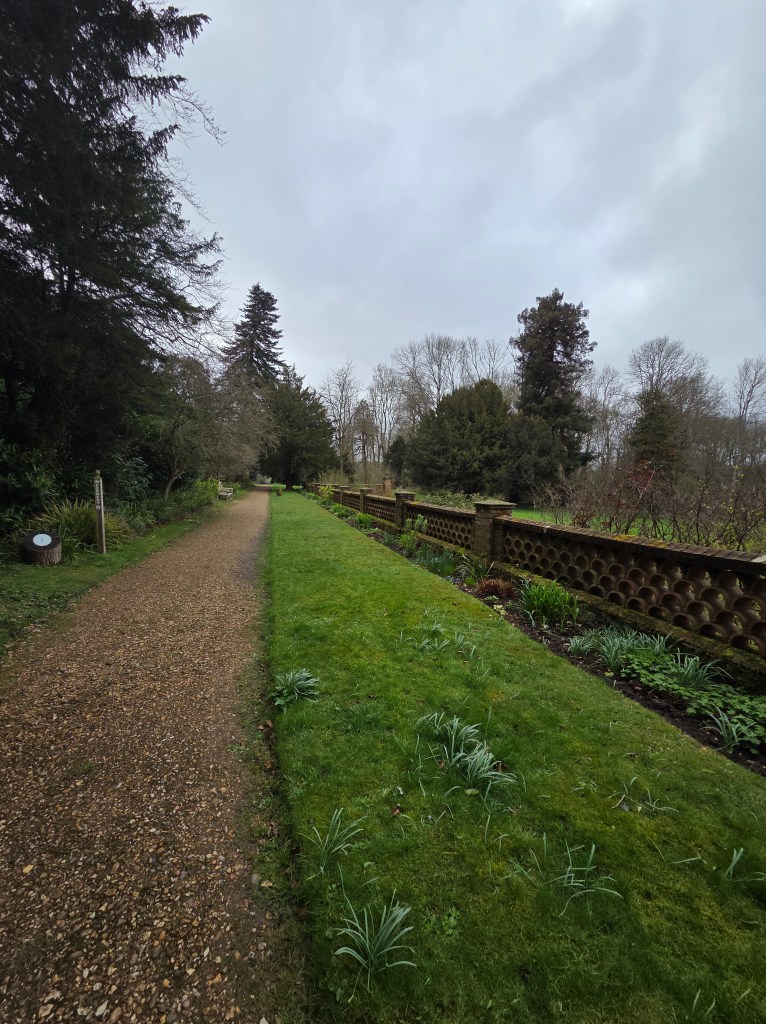
Then I wandered along the upper terrace with views across the South Lawn which was changed from its original formal gardens to parkland in the style of Capability Brown in the mid 1760s.
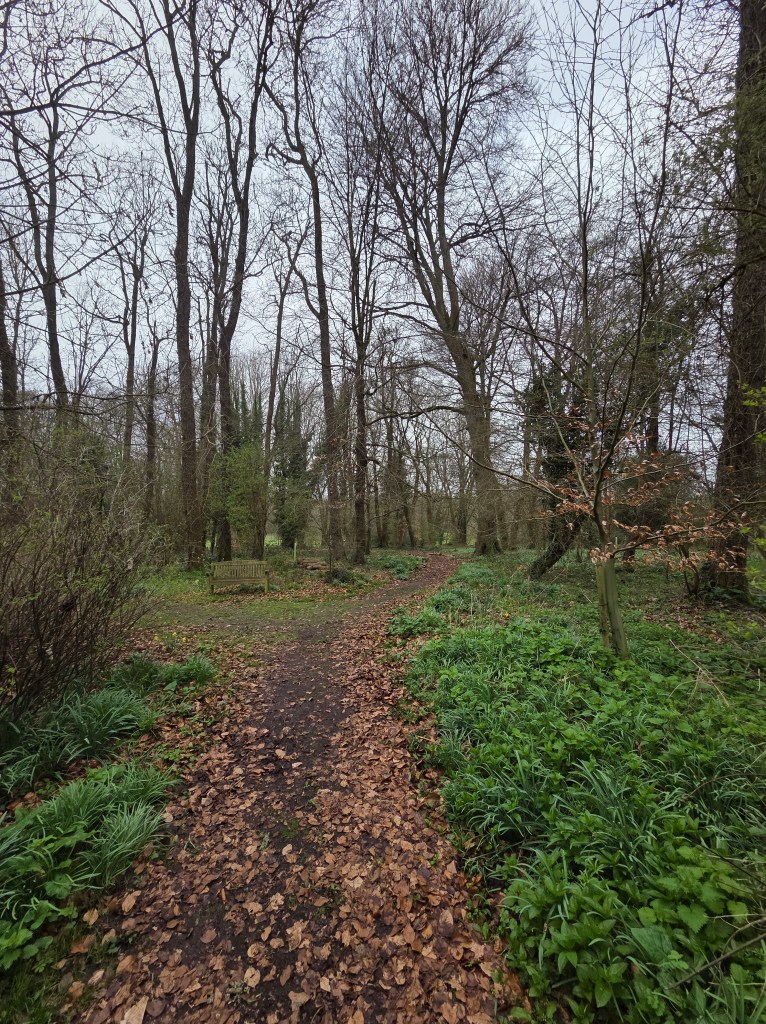
I then walked through the area called The Wilderness, a wooded area that was deliberately planted but made to appear more wild and natural. A wilderness is mentioned in Pride and Prejudice.
I then proceeded to the house – ringing the bell as instructed for entrance. I was greeted by a lovely volunteer and after paying the house entrance fee she gave me a really good rundown on the history of the building and what to keep an eye out for as I moved around. The house dates from around 1583, built on a previous Medieval house that was probably a hunting lodge – Henry VII in particular enjoyed hunting in the area.
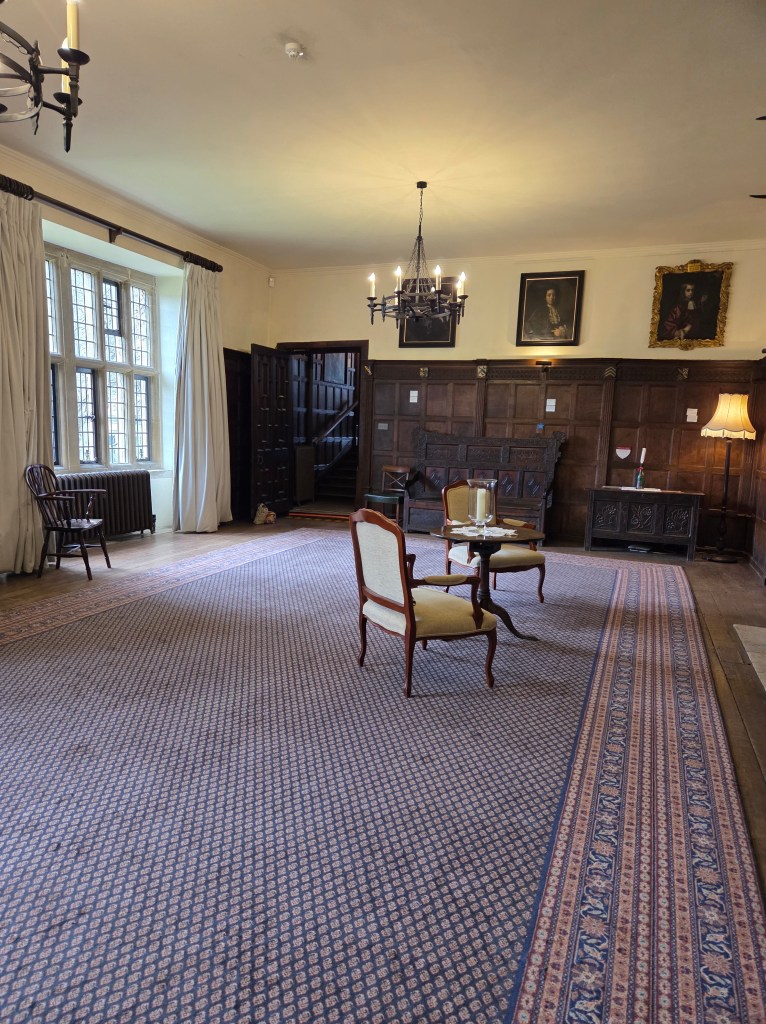
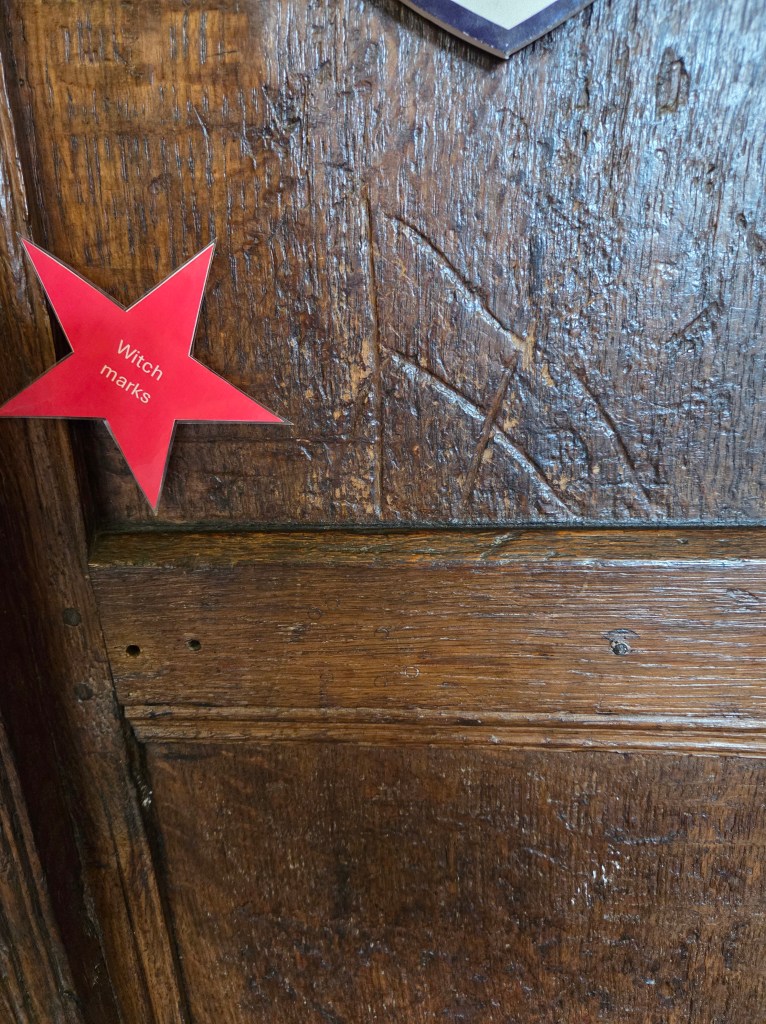
Probably because the house isn’t normally open on a Tuesday in March I ended up having the entire place to myself. The volunteer gave me a map of things to pay particular attention to and then I just wandered around, following the obvious route from room to room. The first area of interest is these protection marks around the fireplace in the Great Hall, used to ward off evil spirits.
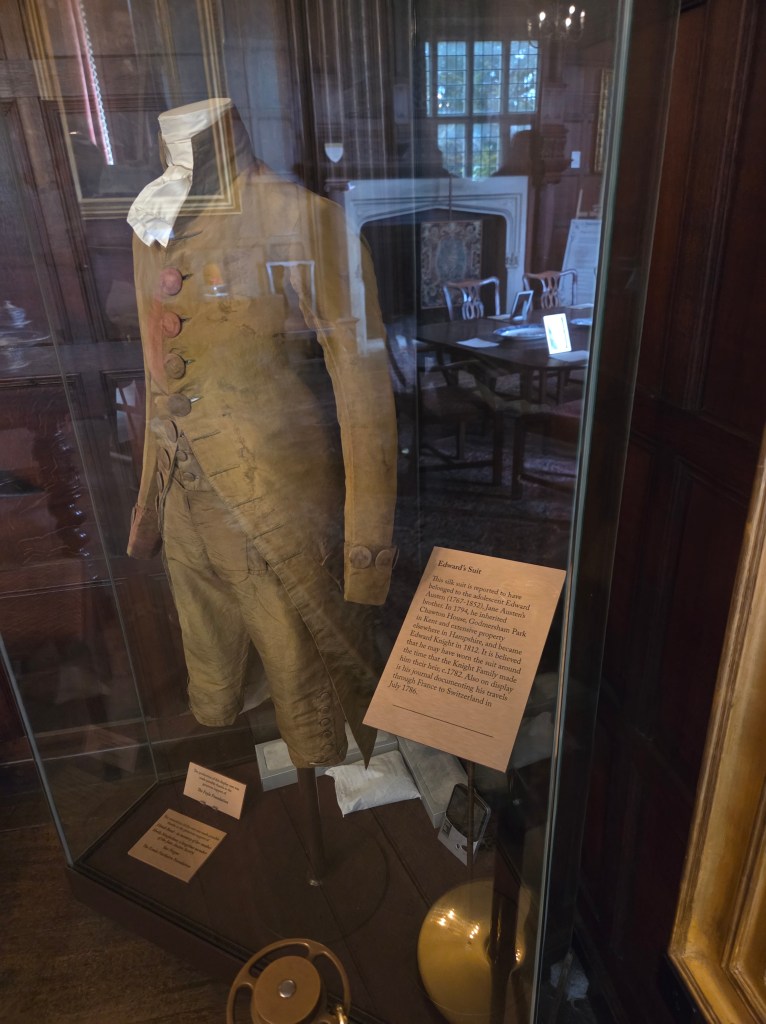
Another interesting thing on display is this suit supposedly belonging to Austen’s brother Edward, dating to around 1782.
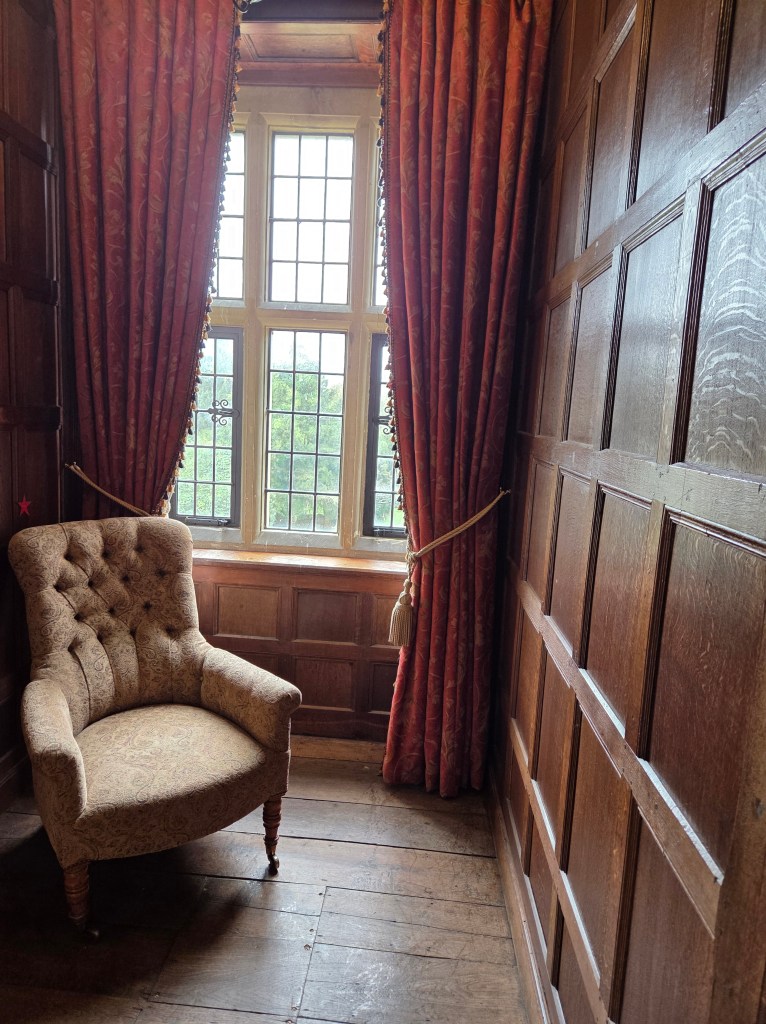
There is also this little reading nook where Jane Austen is said to have spent a lot of her time.
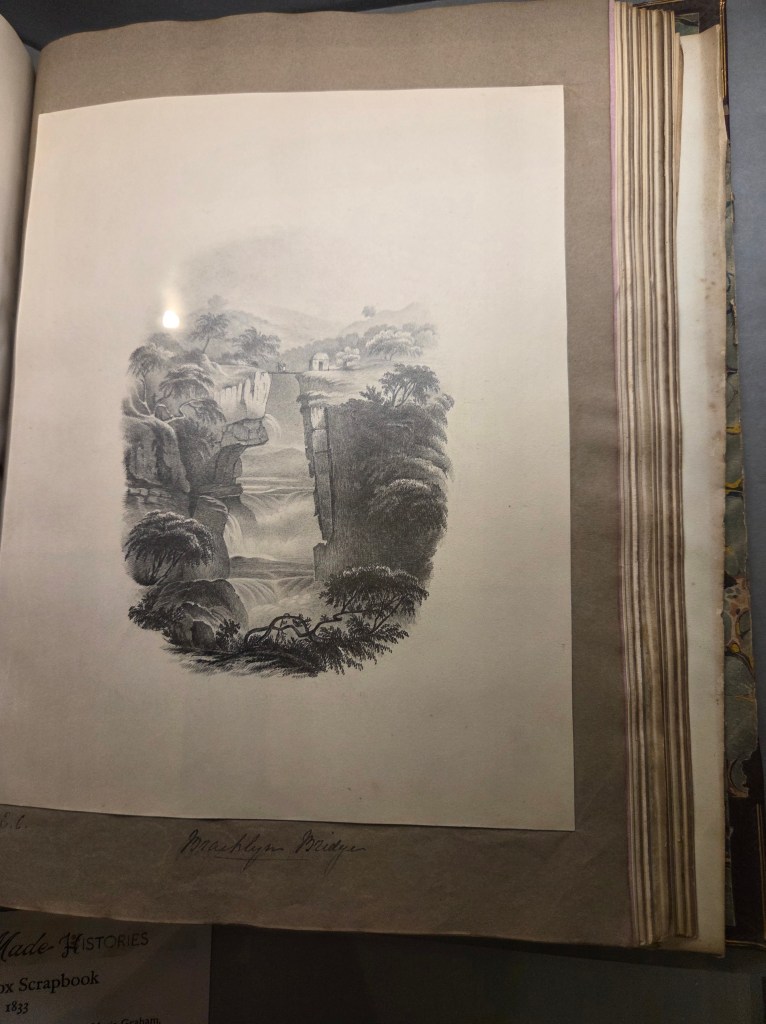
Unsurprisingly for a house connected to Jane Austen a big part of their work is putting on exhibitions about women writers. The one running while I was there (and which ends on 20th September) was called Homemade Histories: Letters, Art and Embroidery. Letters, journals, artwork and embroidery were all on display showing the various ways women’s creativity has been demonstrated both by the professional and the amateur. There was some beautiful artwork on display and a huge embroidery piece wrapping its way down one wall which I wish now I’d taken more detailed photographs of. However two pieces I did photograph and admire was firstly this early sketch of Bracklinn Falls in Scotland drawn by an Ellen Cox in 1833. It’s in a scrapbook collection of her sketches taken on her travels, or possibly copied from others.
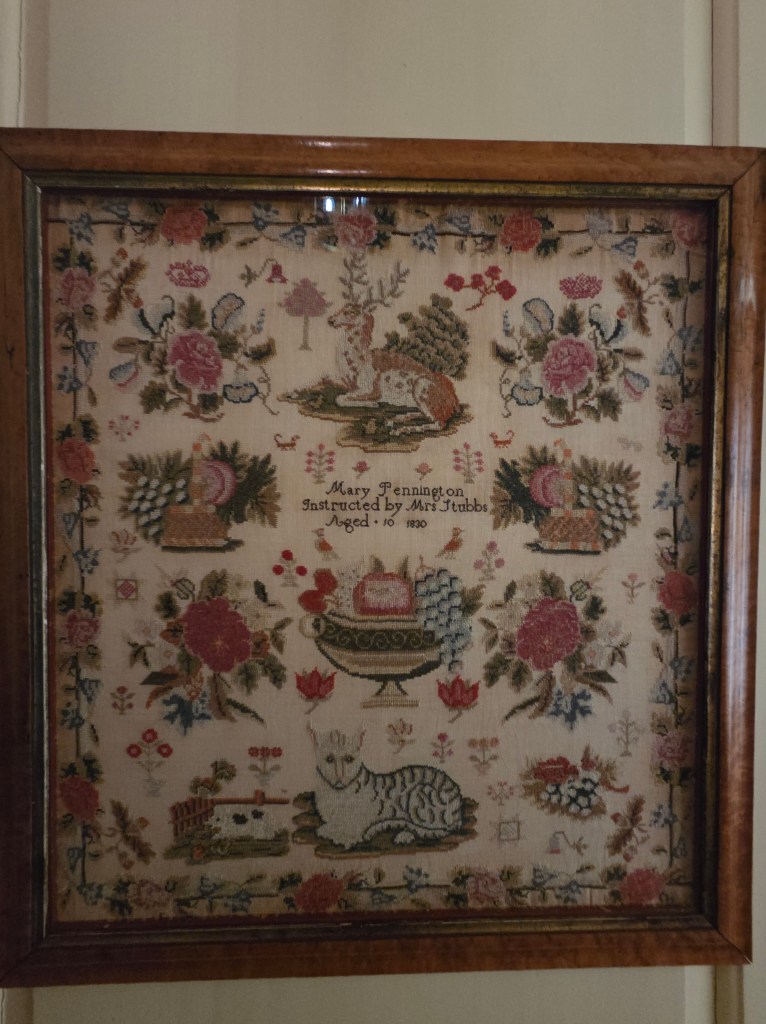
Secondly I took a photo of this lovely sampler. As you can see Mary Pennington made it in 1830 when she was 10 years old. I love the stag but the cat is looking a little miserable!
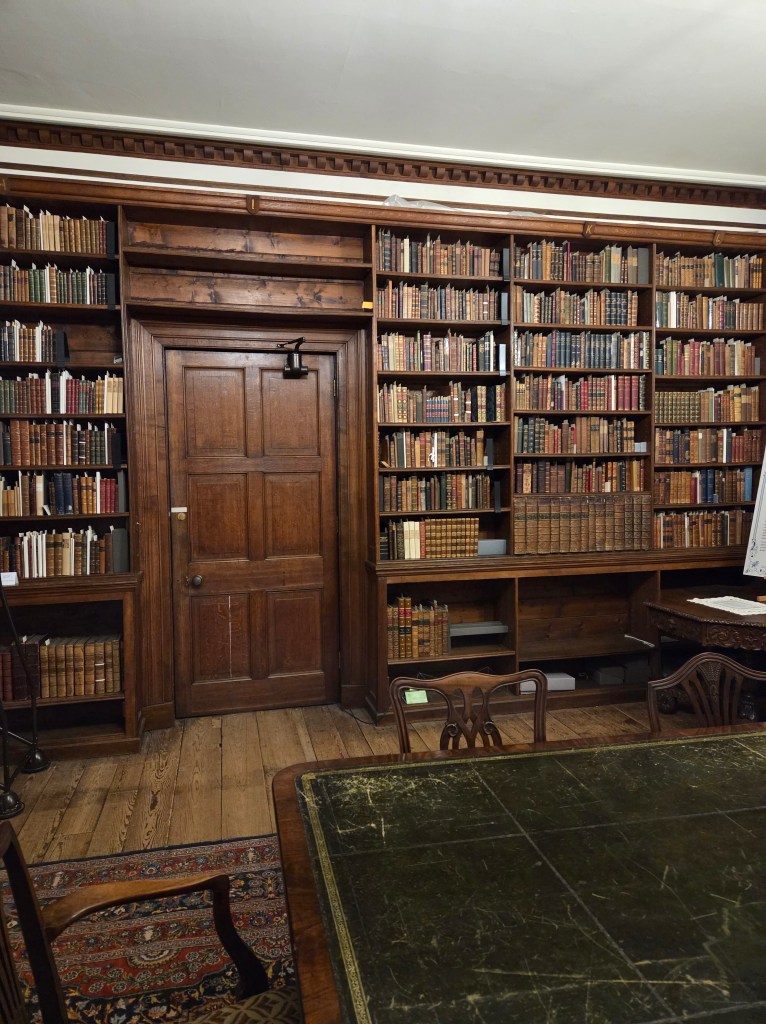
There is another very important, and permanent, aspect of women writers at Chawton and that is the library. The library is open to all visitors so once you’ve finished going around the house you’ll go down the stairs back to the ground floor and turn right towards the shop and tell whoever is at the desk that you’d like to see the library and they’ll open it up for you. There are over 4,500 books here all by women writers from 1600-1860 some of which are the only known copy in existence. [Scholars can request access to the books and there’s a reading room that can be used by prior appointment].
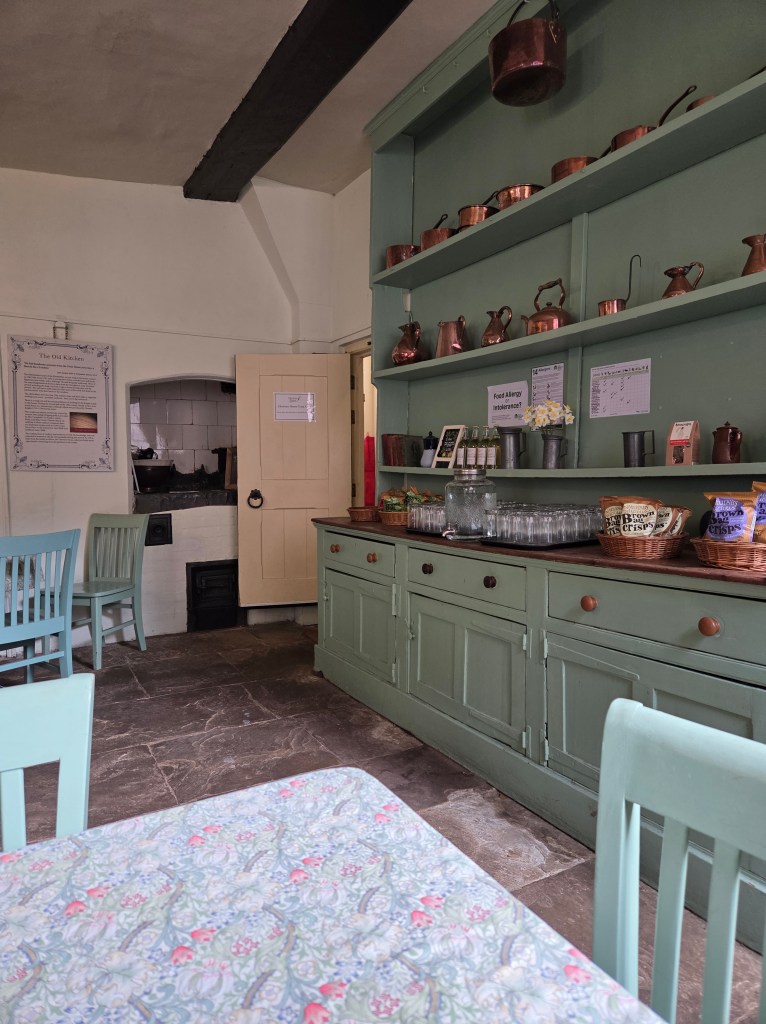
After buying a few things in the shop I then went further down the corridor to the Old Kitchen Tea Room. I only had a pot of tea here as I was still quite full from a substantial breakfast at my hotel but there are a range of soups, sandwiches and cakes available.
After leaving the house and going back down the drive I turned left in order to explore St Nicholas’ Church. A church has been here since around 1270 though part of it was destroyed by a fire in 1871 so the present building dates from 1872, thus Jane Austen and her family worshipped here, but the church isn’t exactly the same as they would have known it.
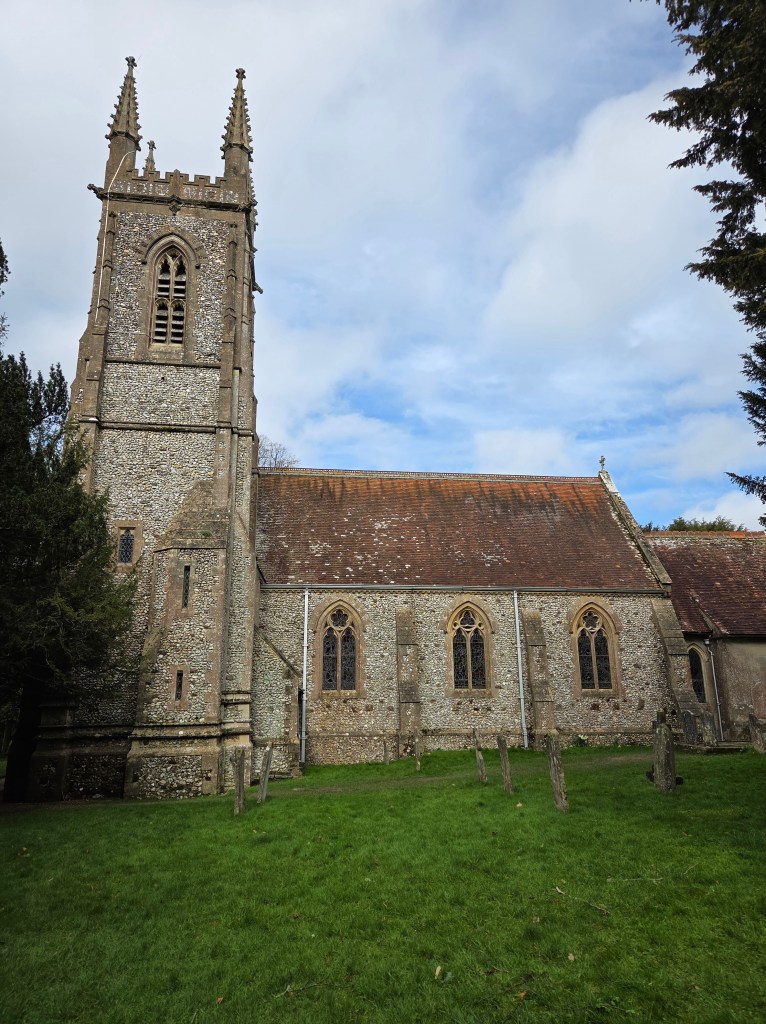
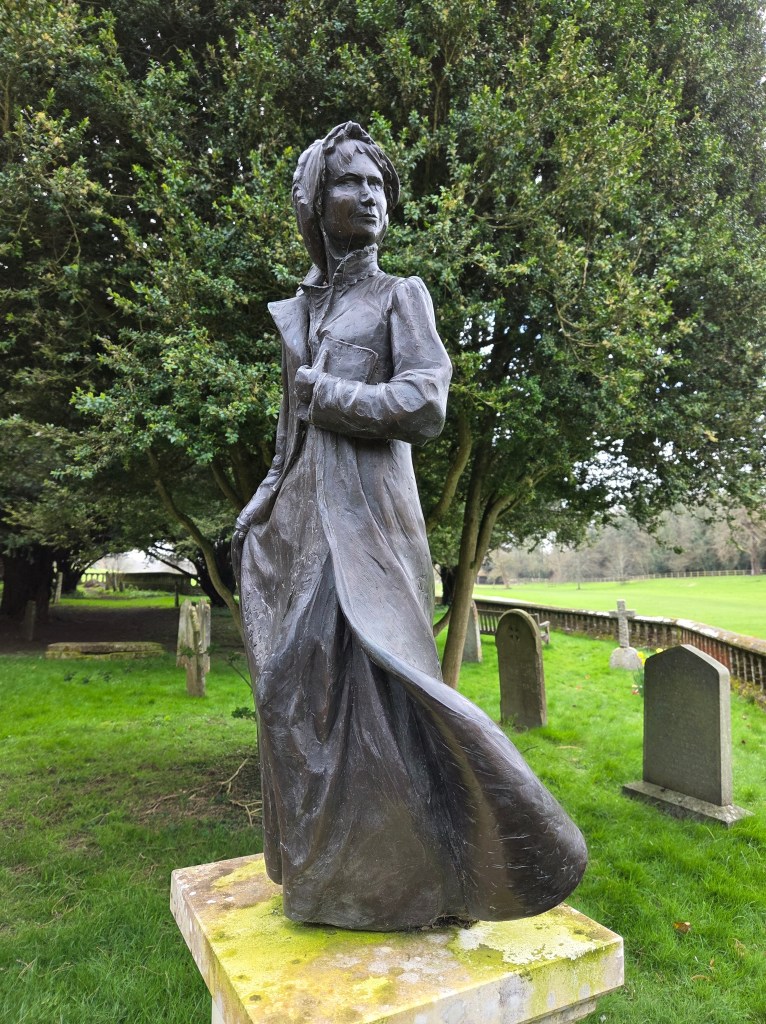
One of the first things you find in the grounds is this statue of a rather serious looking Jane Austen created by Adam Roud.
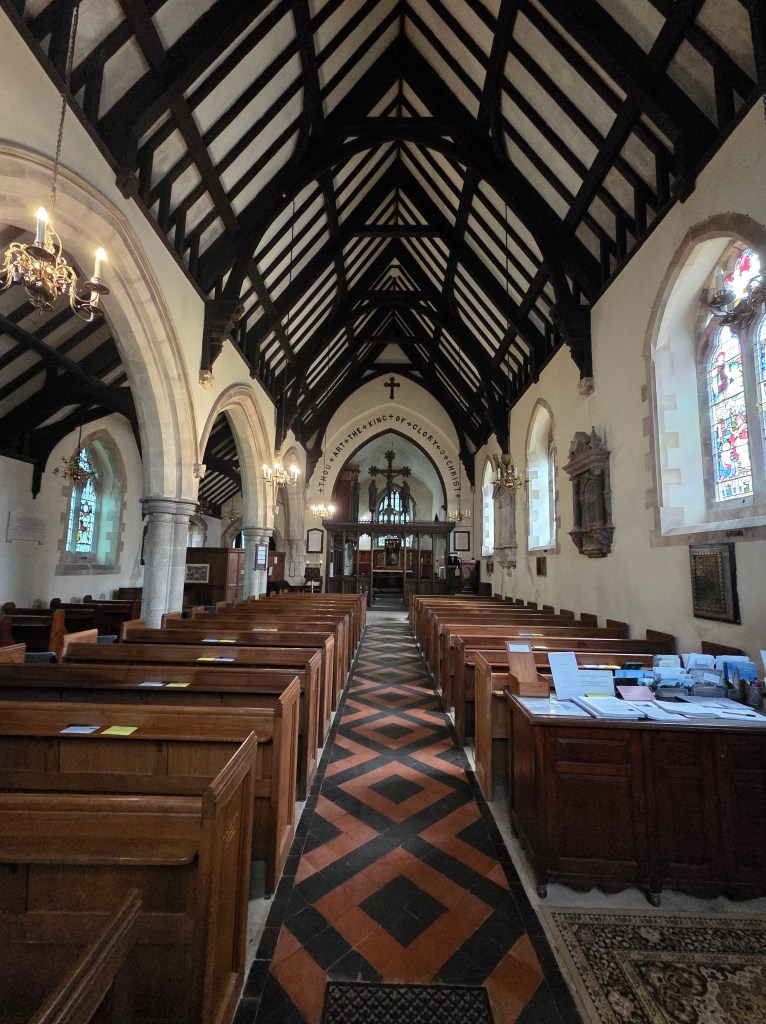
The church itself is very peaceful and much like the house I was the only one there.
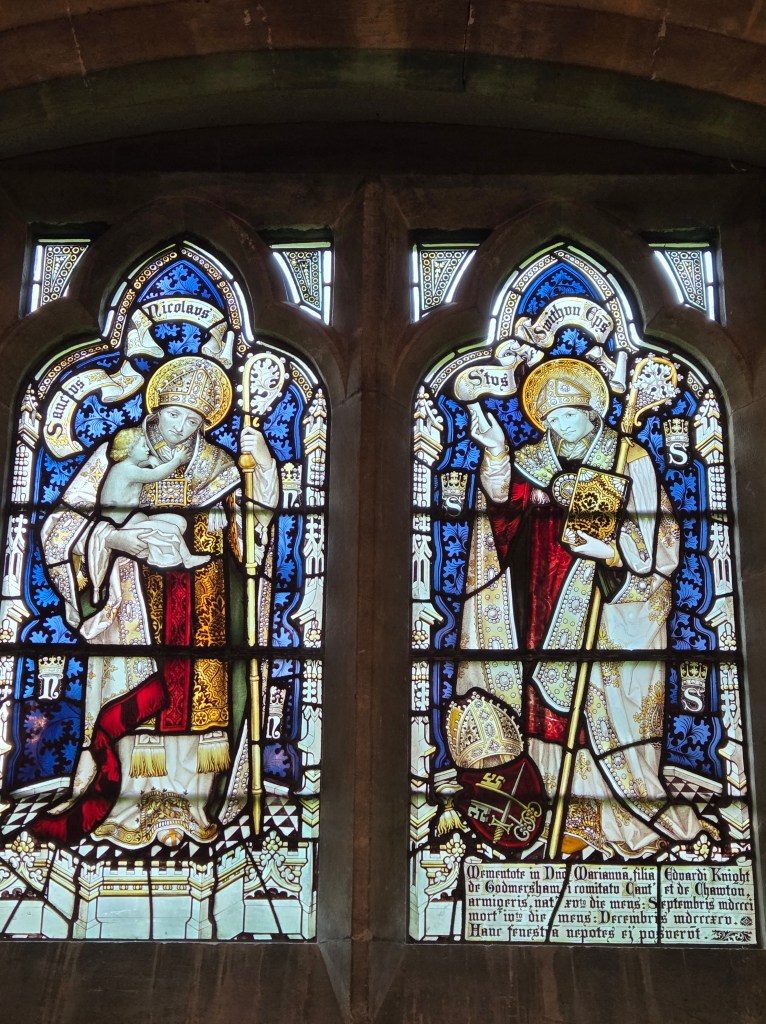
There is some lovely stained glass in the church including this Victorian window that depicts St Nicholas – for whom the church is named – and St Swithun who is the patron saint of Winchester Cathedral where Jane Austen is buried (more on that in a future post). The window is a memorial to Marianne Knight, one of Jane’s nieces.
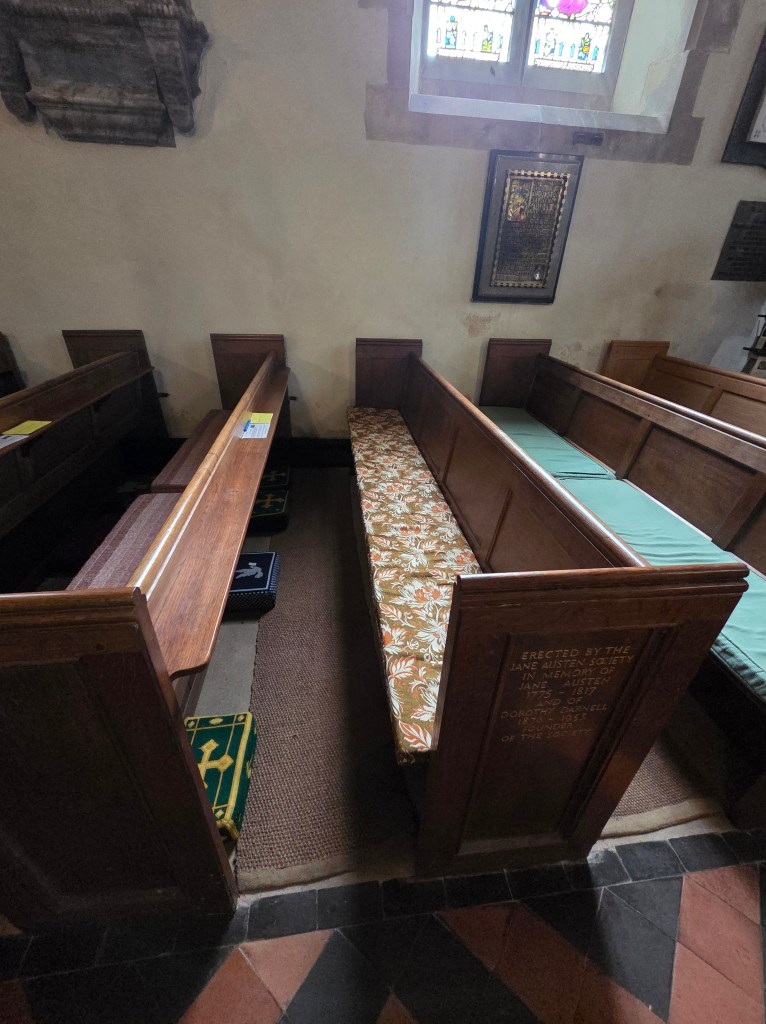
Although Austen didn’t worship in this exact church building, she does have a pew here, as below, which was erected by the Jane Austen Society in memory of Jane and of Dorothy Darnell 1876-1953, the founder of the Society.
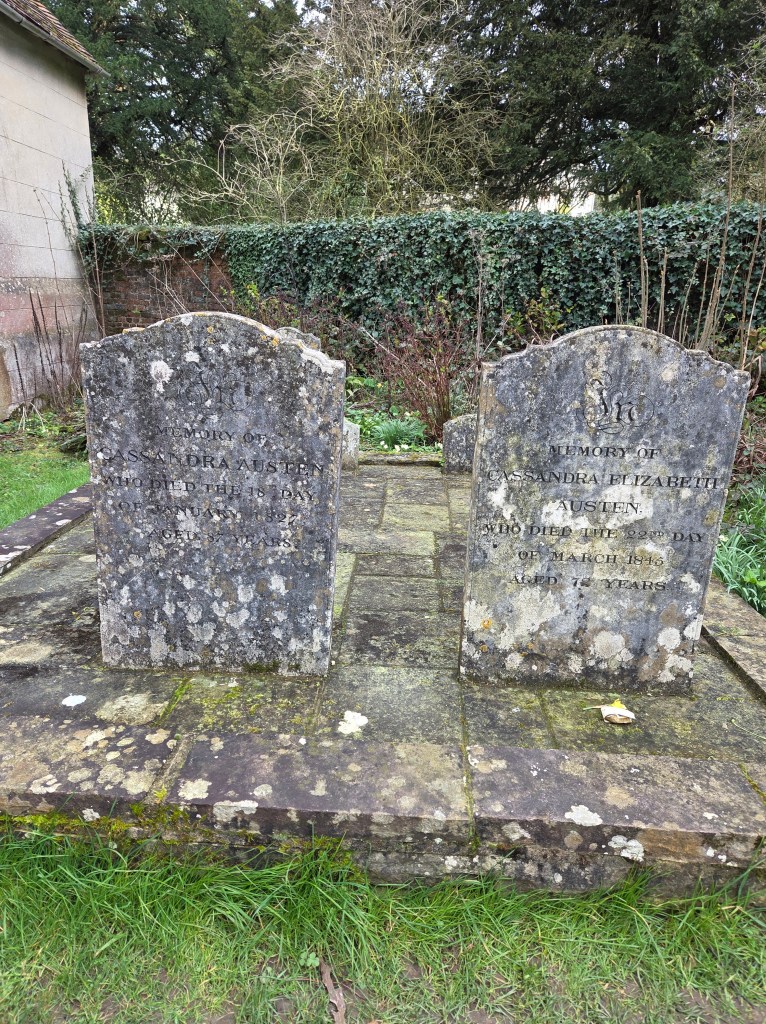
Don’t forget when you head out of the church to turn left into the graveyard – at the back, side by side, you’ll find the gravestones of Jane Austen’s mother Cassandra and her sister, also Cassandra.
I really enjoyed my time exploring here – everyone I encountered was very friendly and you can also do extensive walks through the Parkland if you have the time. I spent a good part of the morning and afternoon here.
The Practicalities:
A combined house and garden ticket for an adult is £12.50. Note that there is no parking at the house unless you have a disabled badge and have arranged parking in advance. There is a small council run car park nearby.
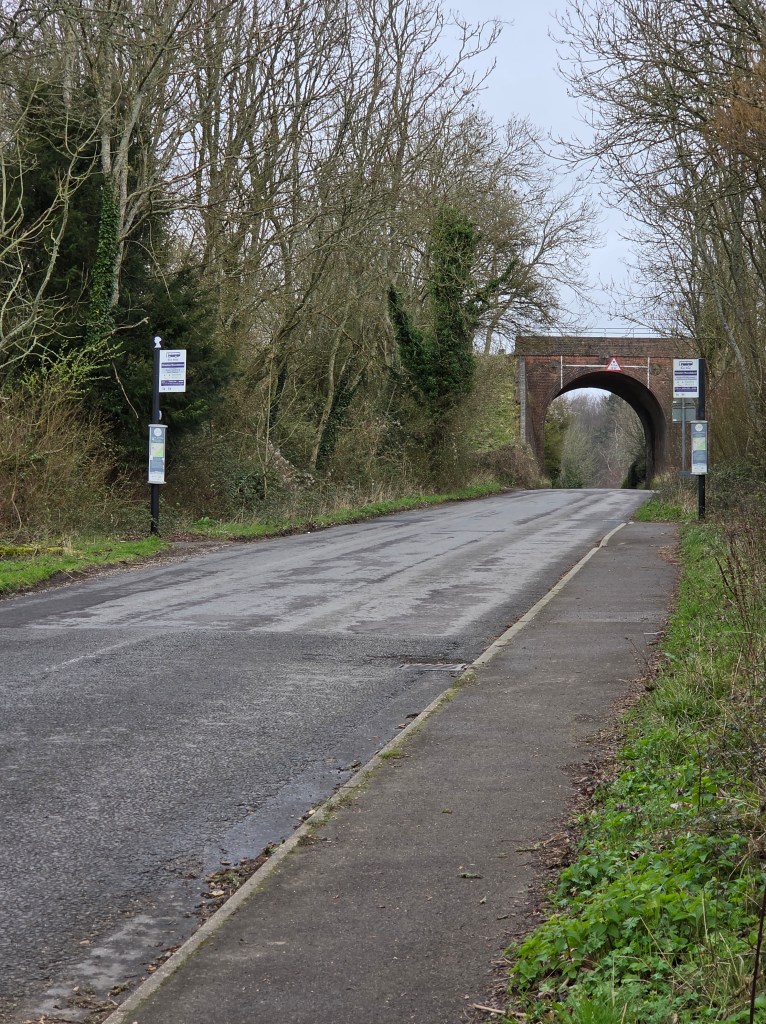
As a non driver I caught the bus from Winchester where I was staying. The bus you need is Stagecoach 64. The bus stop in Winchester is easy to find just by the large Guildhall Building which houses the Tourist Information Office. Thanks to the current government subsidy all single tickets no matter length of journey are £3. You can pay by cash, contactless or through the Stagecoach app which is what I decided to use. Stagecoach, or at least these ones, don’t announce the stops like other buses so I tracked the bus through the app so I knew when to press the bell which worked out very well especially as I was the only one to get off at that stop. The journey takes about 50 minutes through some nice countryside and villages and there are buses about once every half hour. The stop you want for the house is called Chawton Roundabout (the one on the left pictured above).
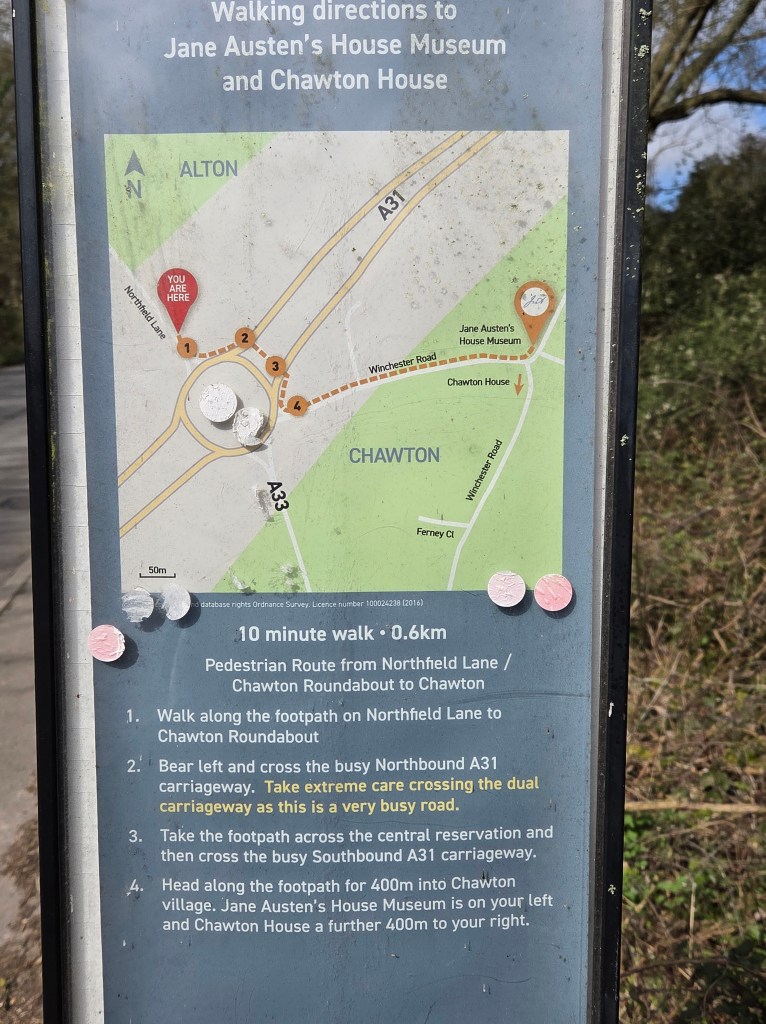
I took a photograph of the bus stop with its directions to the house as above. It does require you to cross over two roads – make sure you head towards the sign that says pedestrians and cross there – you can clearly see the trail marked out through the grass. It wasn’t particularly busy on my visit so crossing was pretty easy. You’ll see a brown sign pointing towards Chawton House on the right, follow that into Chawton village and as you walk down to the crossroads you’ll see Jane Austen’s House Museum, as below.
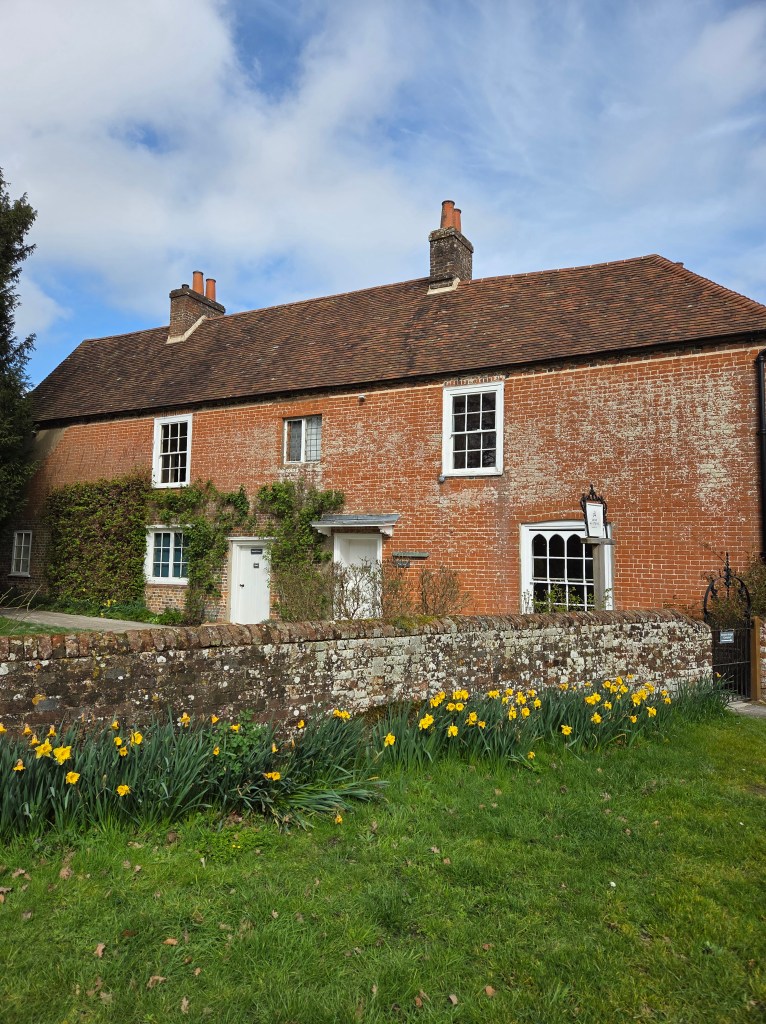
Hopefully it will be open for your visit. Either way go right and walk straight down the road for about 10 minutes and Chawton House’s driveway is on the left.


What a luck, to have the house to yourself!
LikeLiked by 1 person
It was great! I could almost imagine living there myself.
LikeLiked by 1 person
Pingback: Winchester Cathedral | Louise Jayne's Blog