Although these three museums are separate buildings I’m linking them together because you can get an Explorer ticket to visit all three for 20% off the ticket price, which is what I did. As each place takes roughly 30 or so minutes to explore visiting them in one day is a good way of spending a morning, though your ticket does give you 12 months entry to them all. I followed the order recommended on the website but you can of course visit them in any order you want. Therefore I began at The Great Hall, the only remaining part of Winchester Castle which was constructed in 1067 by William the Conqueror.
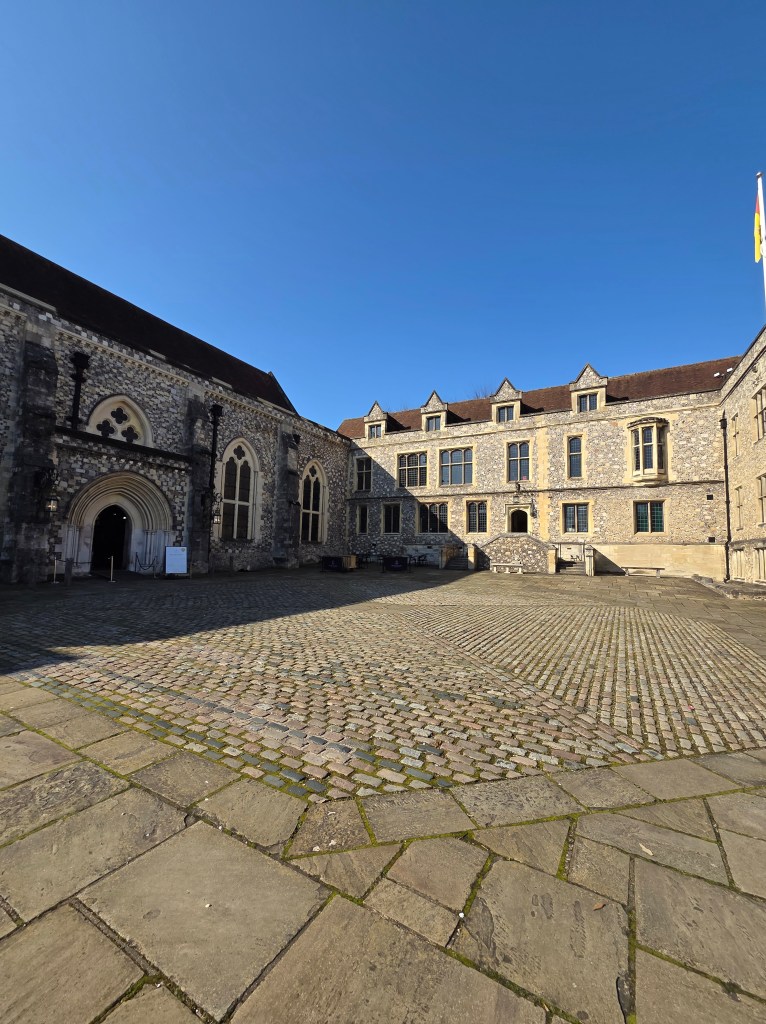
The Great Hall section of the castle was predominantly the work of Henry III who had the former great hall torn down and replaced in the Early Gothic style. It is quite plain inside as to be expected as not much has survived over the years.

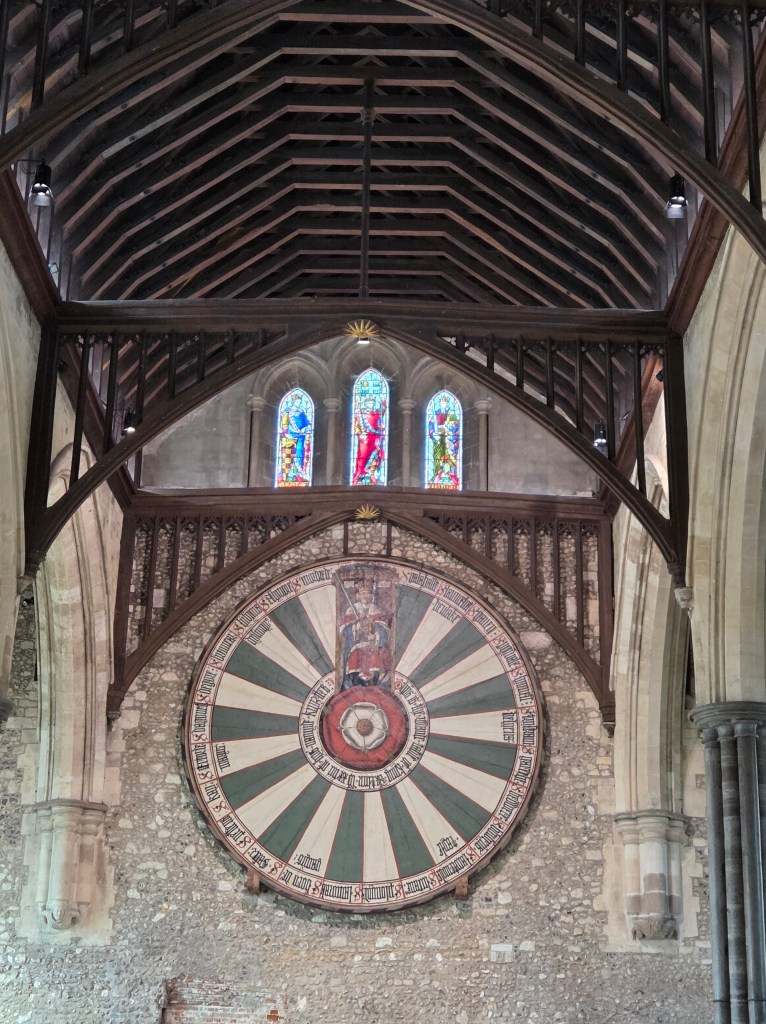
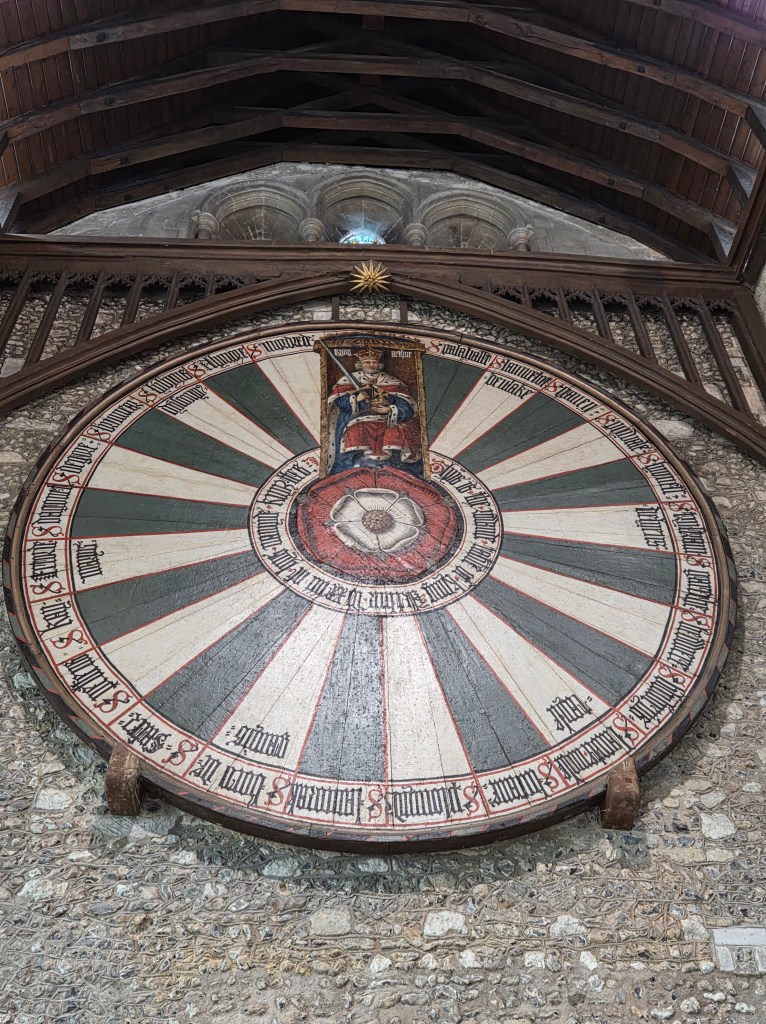
There is one item that definitely draws the eye however and that is King Arthur’s Round Table. If you’re rolling your eyes right now, you’d be well within your rights. This table was actually made in the 13th century but since Thomas Malory decided that Winchester was the site of Camelot the table was given a significant mythical boost. The figure at the top of the table? Reputedly a young Henry VIII.
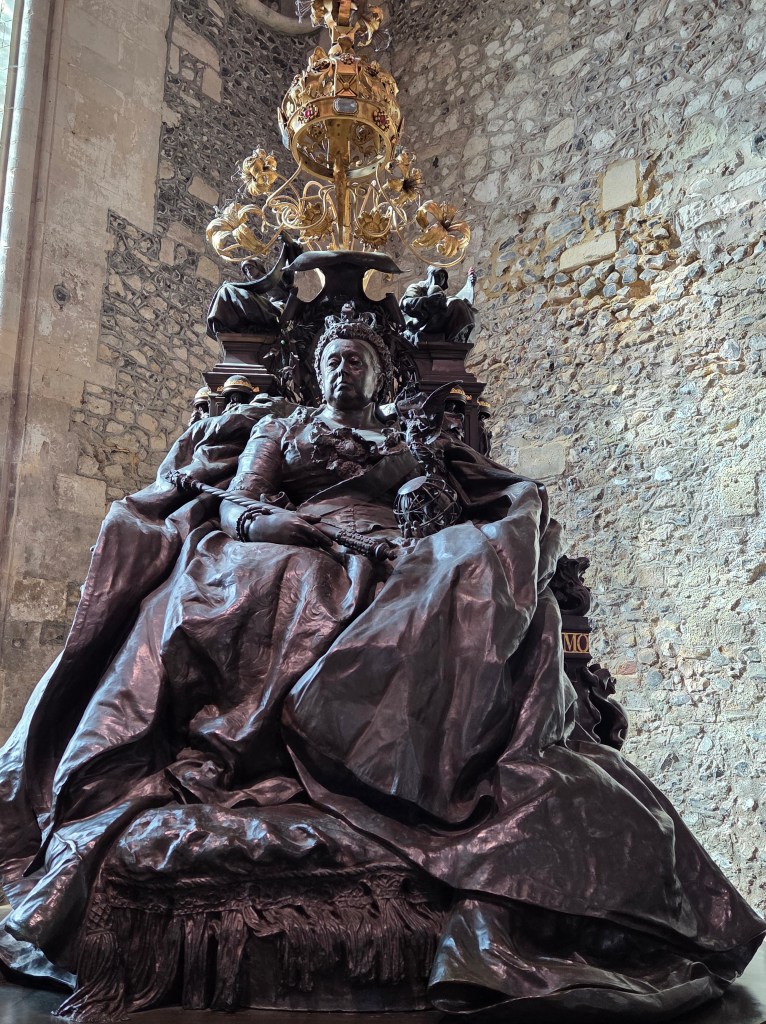
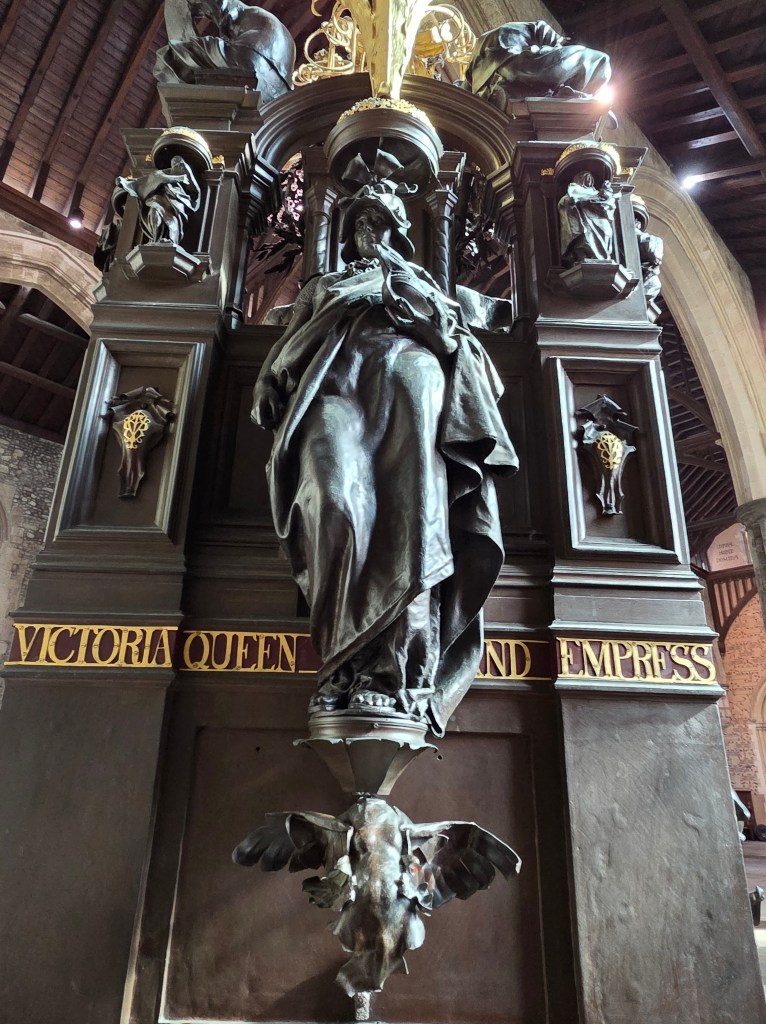
Another item that really stands out is this statue of Queen Victoria, one of the rare ones where she is depicted as sitting down. It was created in 1887 for Queen Victoria’s Golden Jubilee by Sir Alfred Gilbert.
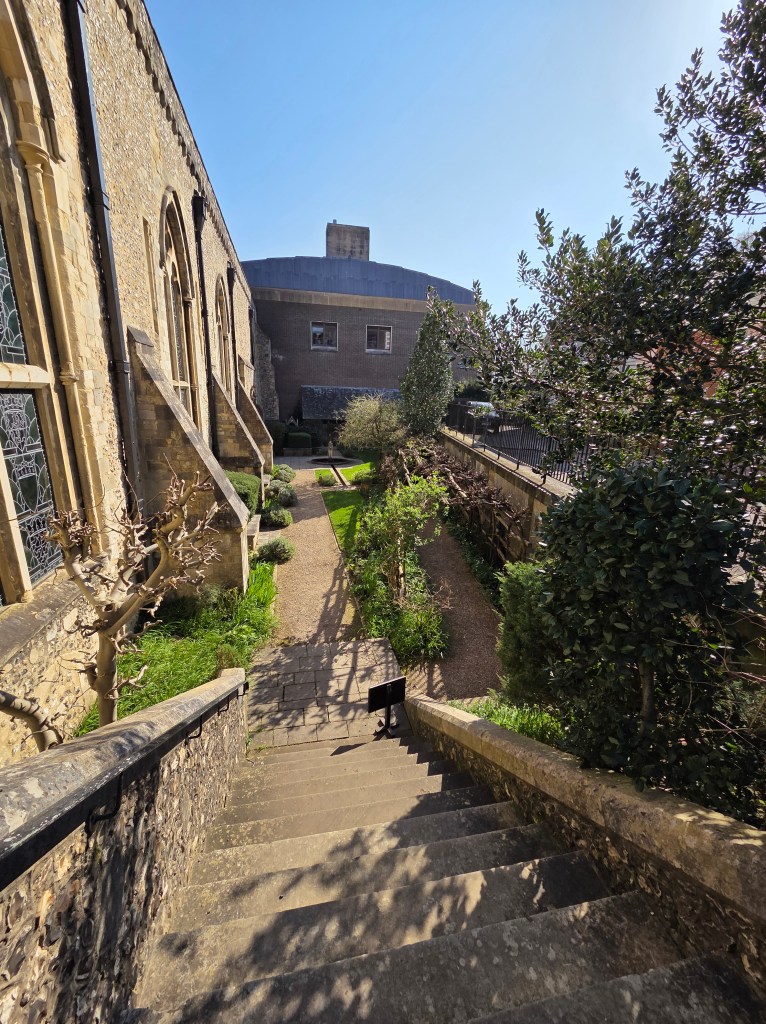
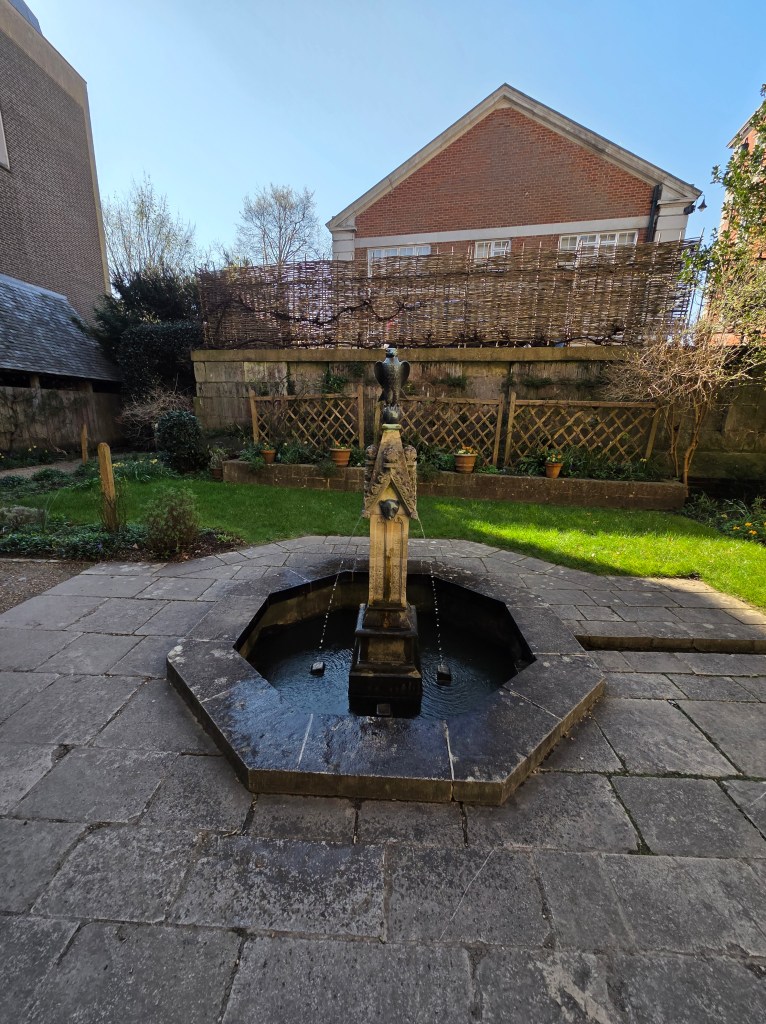
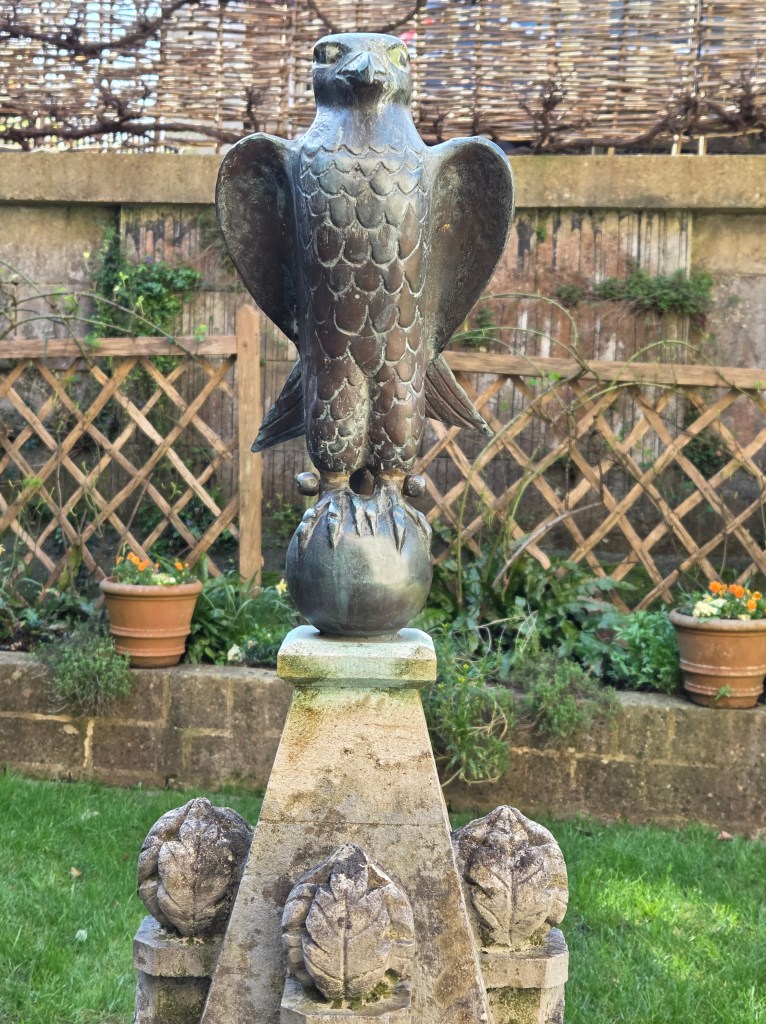
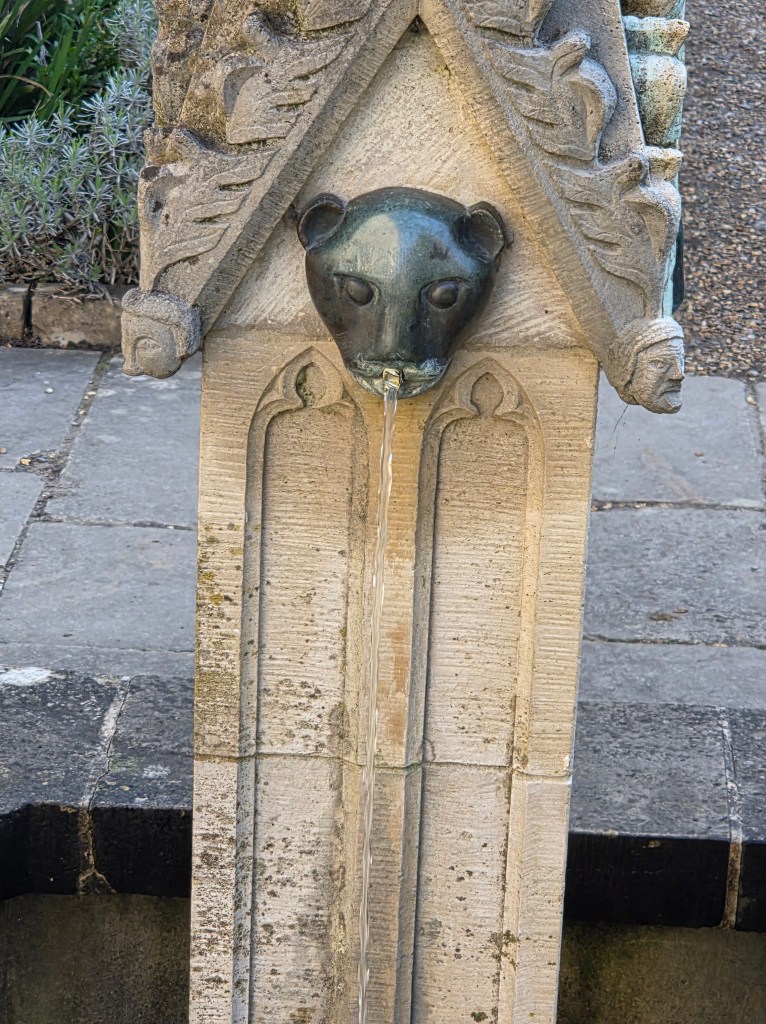
There is also a lovely little garden space you can visit named after Queen Eleanor of Provence, wife of Henry III and Eleanor of Castile, wife of Edward I. It has a charming fountain topped off with a bronze falcon and leopard head masks.
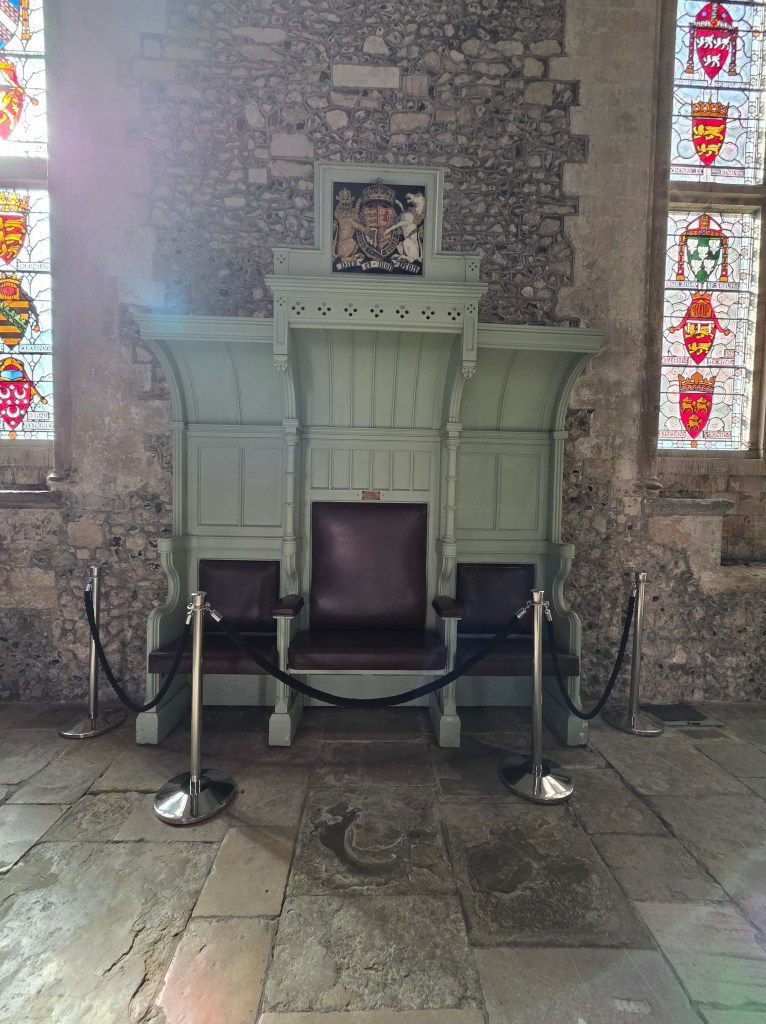
The Great Hall was also the site of many trials including that of Sir Walter Raleigh, charged in 1603 with plotting to overthrow James I and subsequently sentenced to death. He and the other plotters were reprieved at the last moment. This is the judge’s seat used in the court – although not the one from Raleigh’s time!
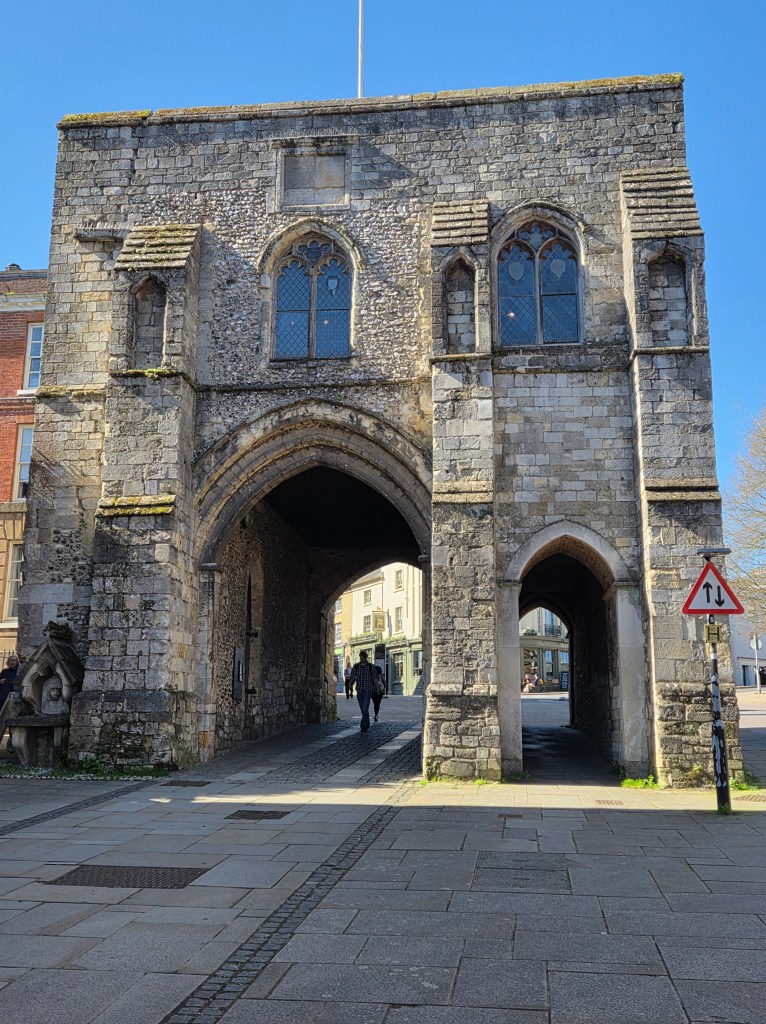
From here it was a short walk around the corner to the Westgate Museum. The museum is inside a surviving fortified medieval gateway first established by the Romans around AD70. The present building dates from the 12th century. Over the years the other gates were demolished leaving just this one standing.
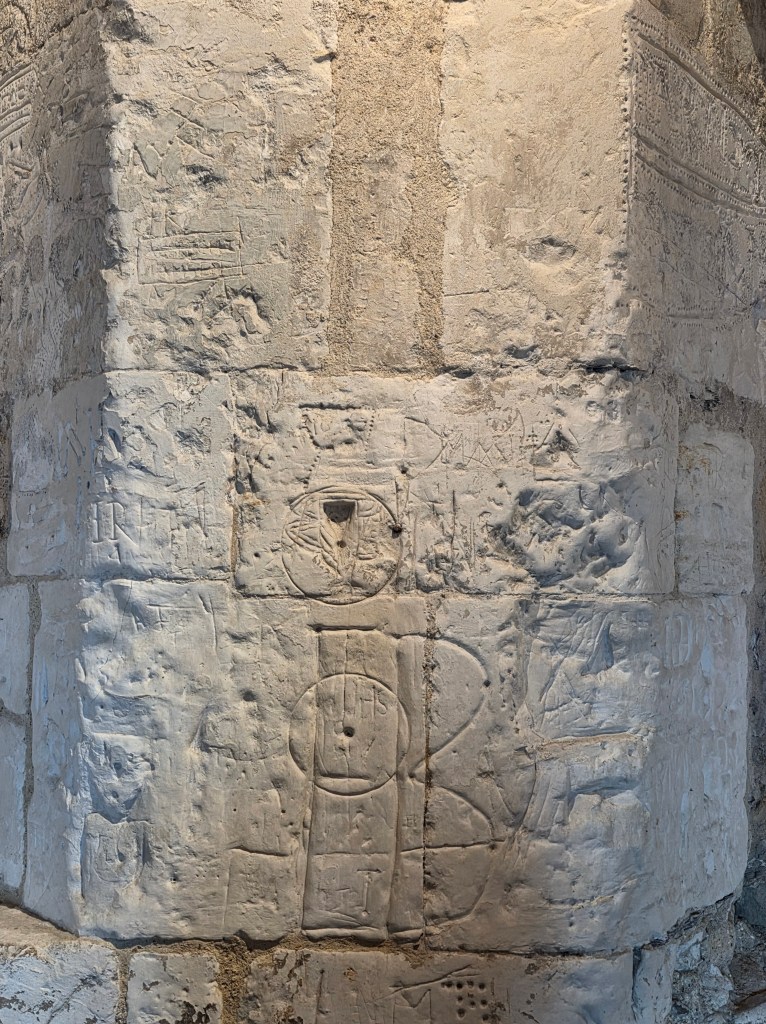
For 150 years it was a Debtor’s prison and you can still see the graffiti the prisoners left on the walls.

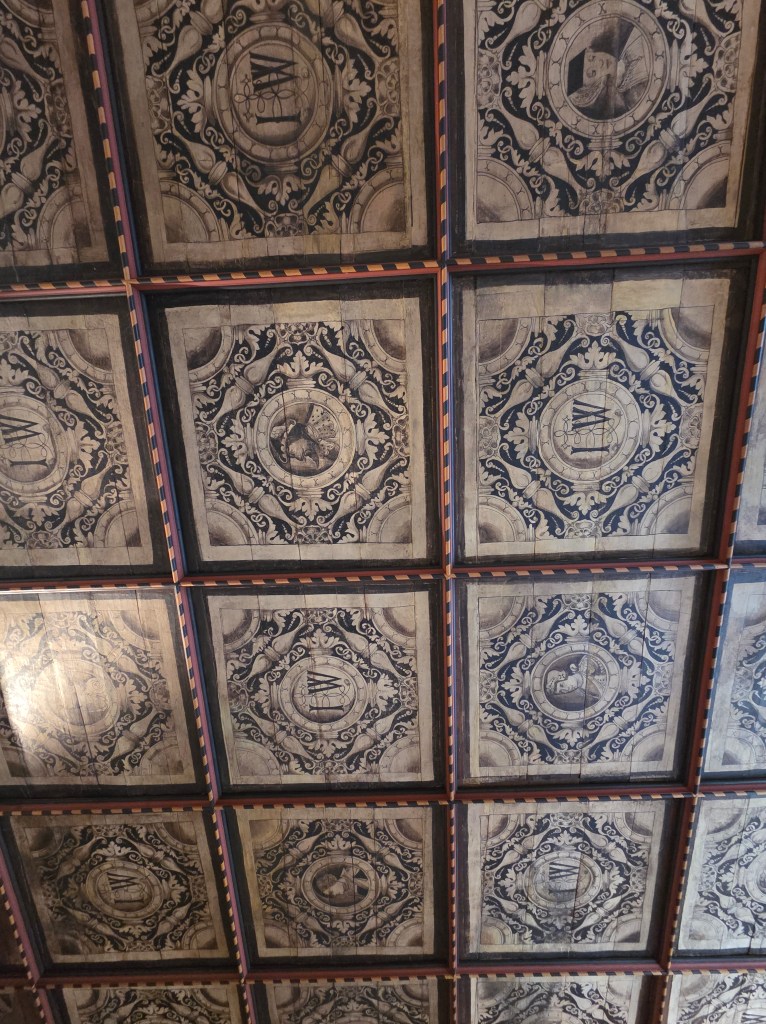
Don’t forget to look up. When Mary I married Philip of Spain in Winchester Cathedral this ceiling was commissioned by Warden John White from Winchester College. It was found underneath paper in 1885 in the Warden’s rooms and eventually installed at Westgate in 1980.
There is also an interesting display of weights and measures – in Anglo-Saxon times a law was created that all measures in the country had to agree to that at Winchester.

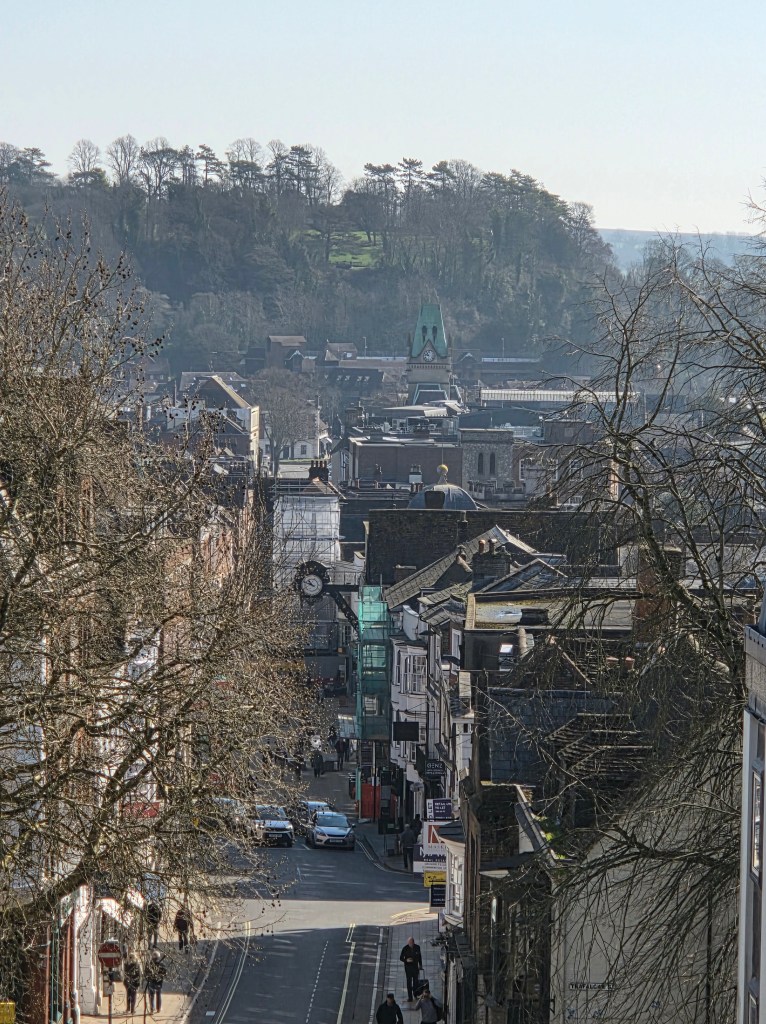
You can also go up onto the roof for some impressive views of the city.
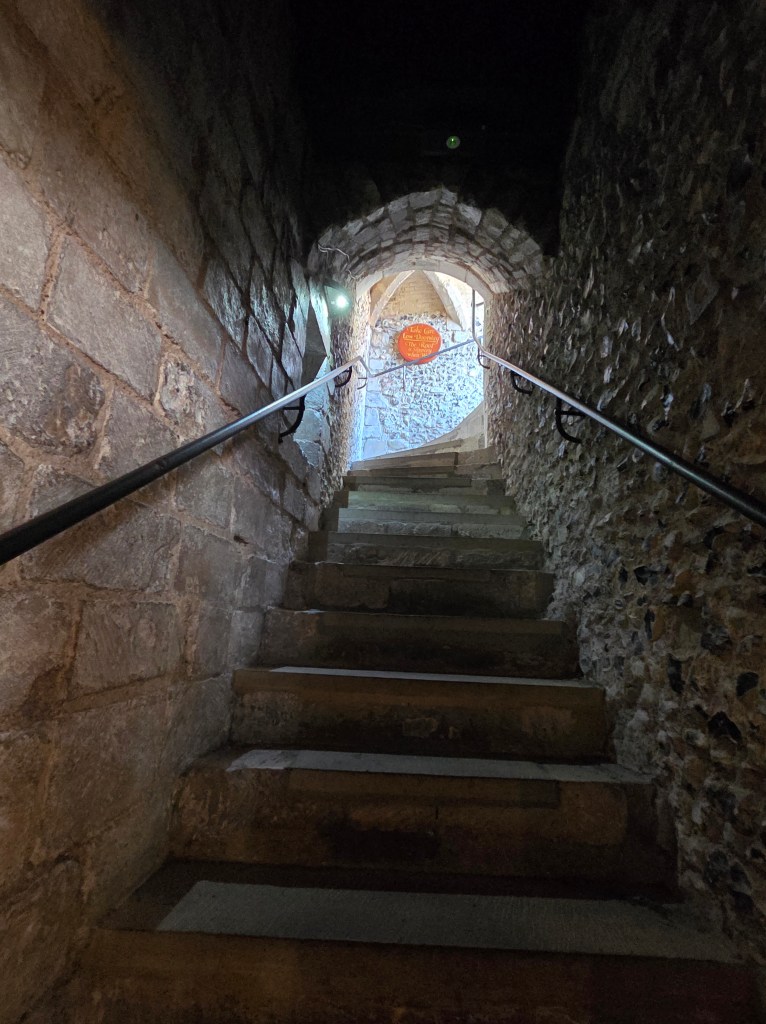
From here it was then on to the City Museum, down the High Street and down a side street on the right from Westgate. It’s this museum that specifically traces the history of Winchester from its founding until the modern day. Spread over three floors you can go in any order but I decided to head to the top and work my way down. There is a lift if you can’t manage the stairs.
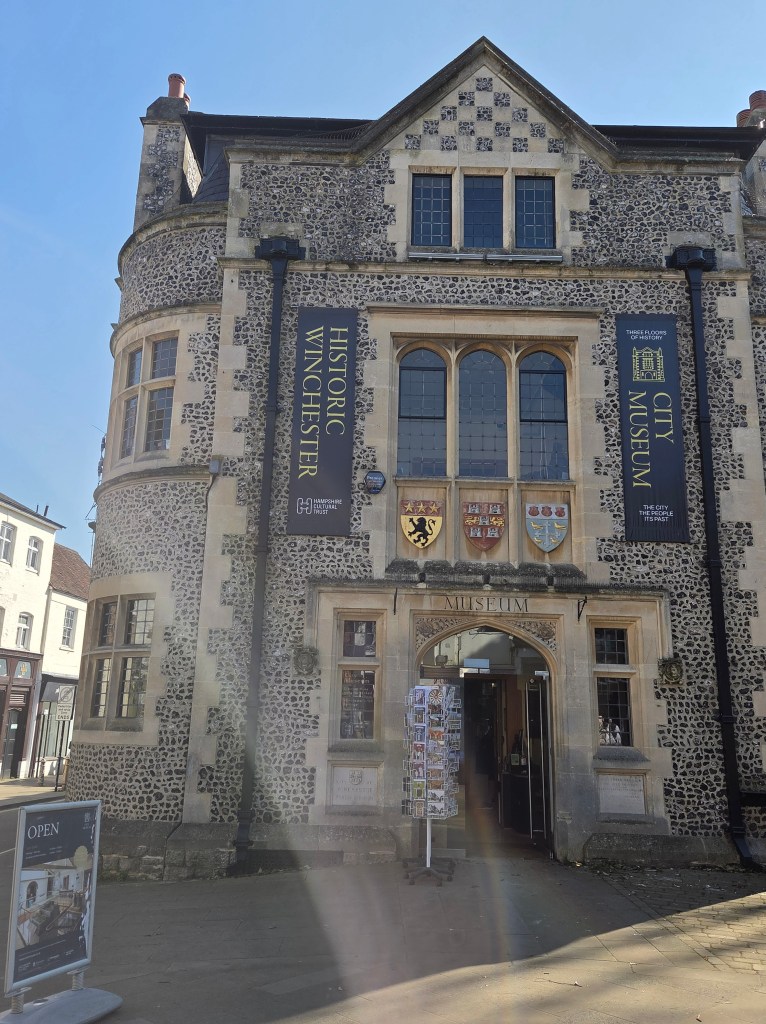
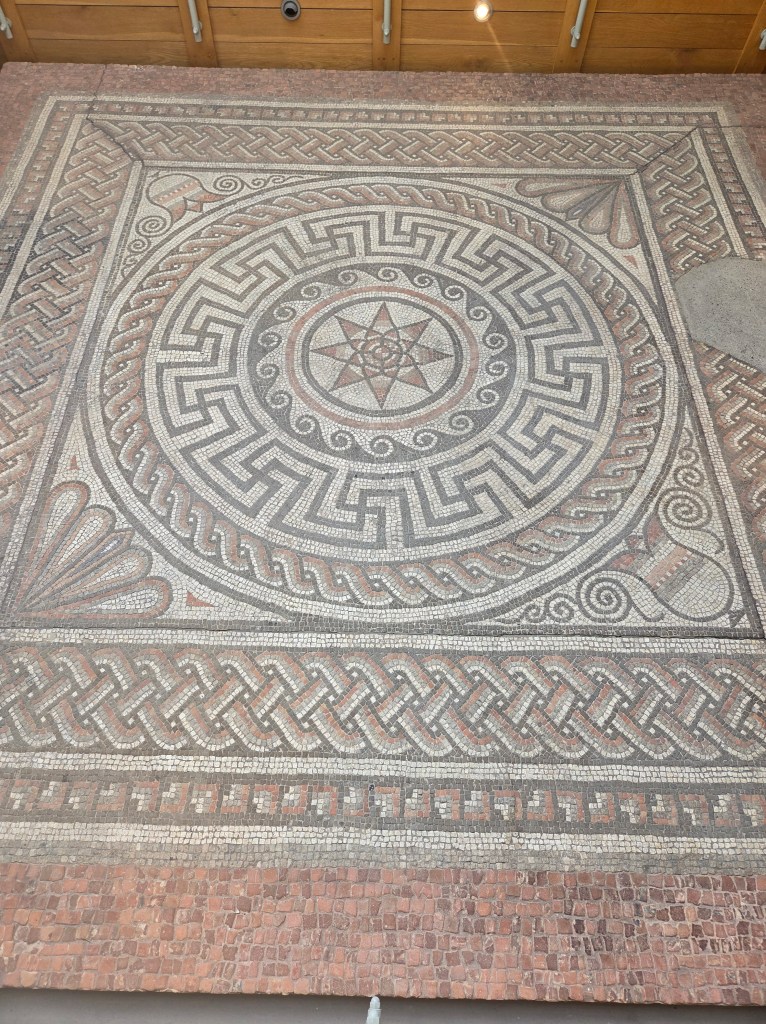
There was an Iron Age hillfort near Winchester in 400BC and by AD70 Roman Winchester had been established as Venta Belgarum. The top gallery displays items from this time including this beautiful mosaic from Sparsholt Roman Villa which was excavated in the 1960s.
The next floor down details how the Roman town eventually became a royal city under Alfred the Great. This lead to Winchester becoming the most important city in the country, until London took over as the capital when William the Conqueror took over in 1066.

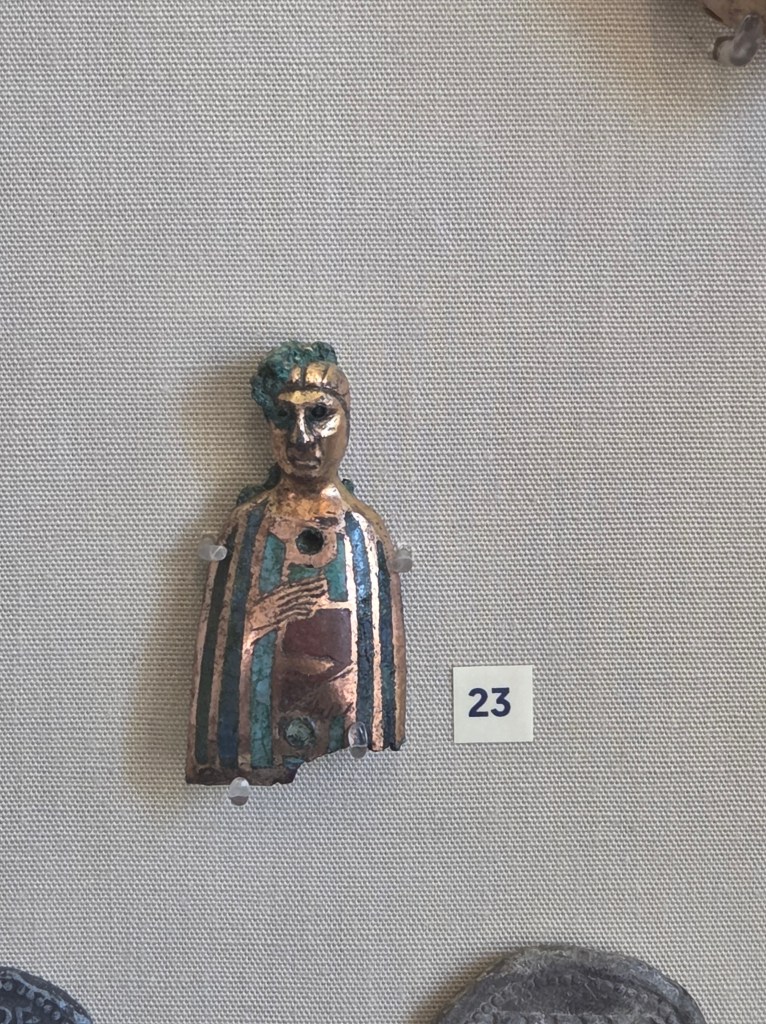
Some of the items I liked here included this figure from a 13th century reliquary (container for holy relics)…
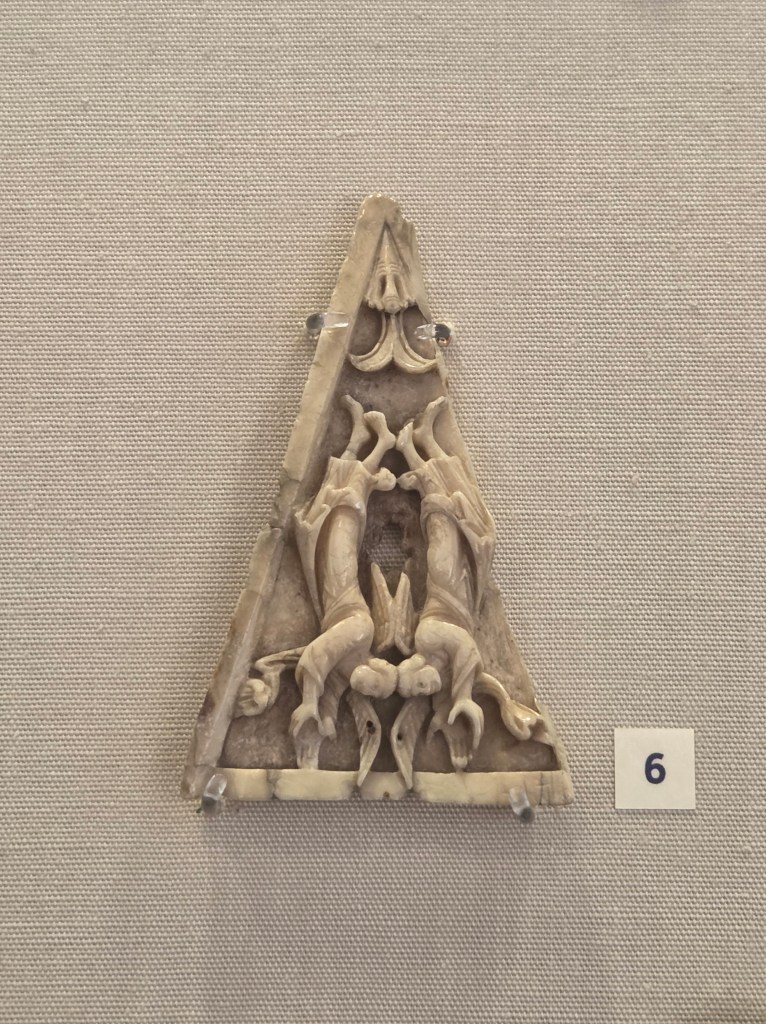
…and this walrus ivory panel from the roof of a late 10th century shrine.
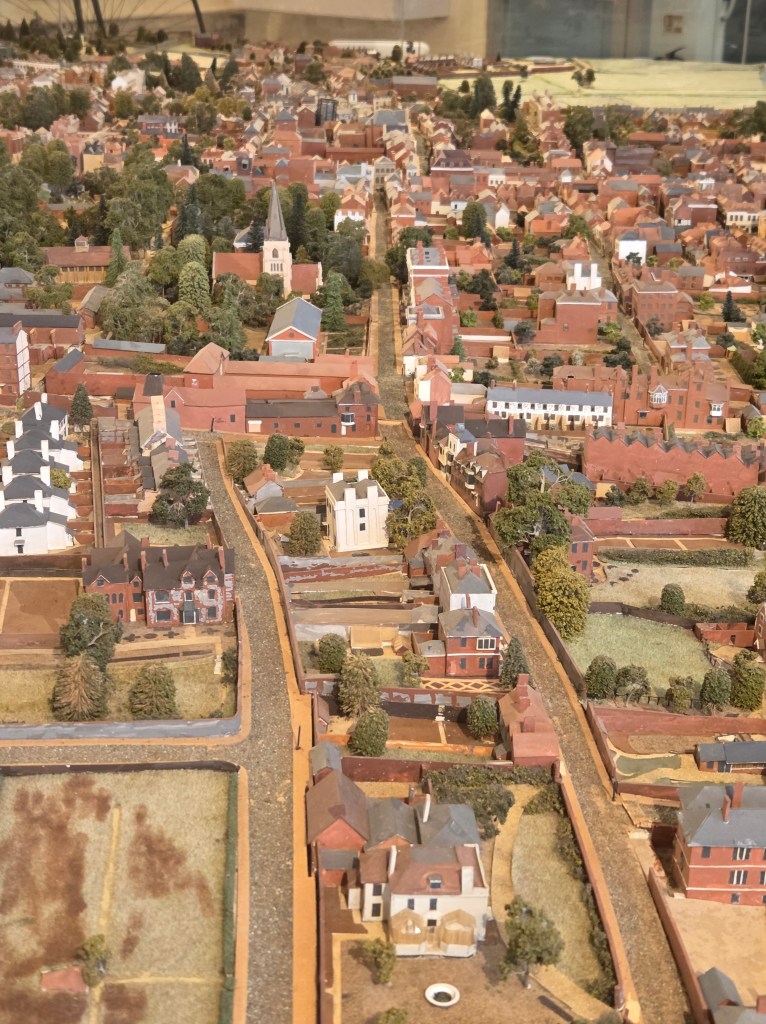
Down on the first floor is a fantastic model of the city itself that takes up most of the room. It was built by former county planning officer Roger Brown and depicts Winchester as it was in 1870.

They also have a few items on display that used to belong to Jane Austen including these two purses – the blue one is said to have been worked on by Jane herself.

All three were very interesting places to visit in their own way and didn’t take very long to go around – I probably spent about 3 hours in total among them. You can buy tickets individually for each one but I do think the Explorer Ticket which is what I purchased makes the most sense. For £13.50 you get access to all three museums for 12 months. I bought online and had to pick a time to arrive but I don’t think it matters that much. You can also buy the Explorer Ticket in person from whichever venue you visit first. Usual opening hours for them all are 10-5.


Winchester is a fantastic city for a history enthusiast.
LikeLiked by 1 person
It really is, so much to see!
LikeLike
I loved this post. It reminded me of my visit to Chichester, especially the museum in Westgate.
LikeLiked by 1 person
Actually, I think it was Canterbury.
LikeLike
I’ve never actually made it to Canterbury. One for the bucket list!
LikeLiked by 1 person
Pingback: Winchester Miscellany | Louise Jayne's Blog