I wanted to go to this exhibit as soon as it was announced even though I knew very little about Elsa Schiaparelli. Born in 1890 in Rome she left Italy when she was 23 to escape her aristocratic upbringing and started her first fashion collection in 1927 without having any kind of formal training. Recognising that fashion, art and design are all interconnected she enjoyed experimenting and embracing new ideas and techniques. She retired in 1954 (dying in 1973) and the eponymous fashion house closed after declaring bankruptcy until 2006 when the name and archive, trademarks etc were bought by an Italian billionaire and brought under the umbrella of his fashion company. The current artistic director is Daniel Roseberry and some of his designs are on display here too.

I was expecting lots of pretty dresses, which I got, but there were also some interesting pieces of jewellery, hats, handbags and perfume bottles. The exhibition is very clearly laid out in a generally chronological progression, one of the earliest pieces being this sweater from 1927.

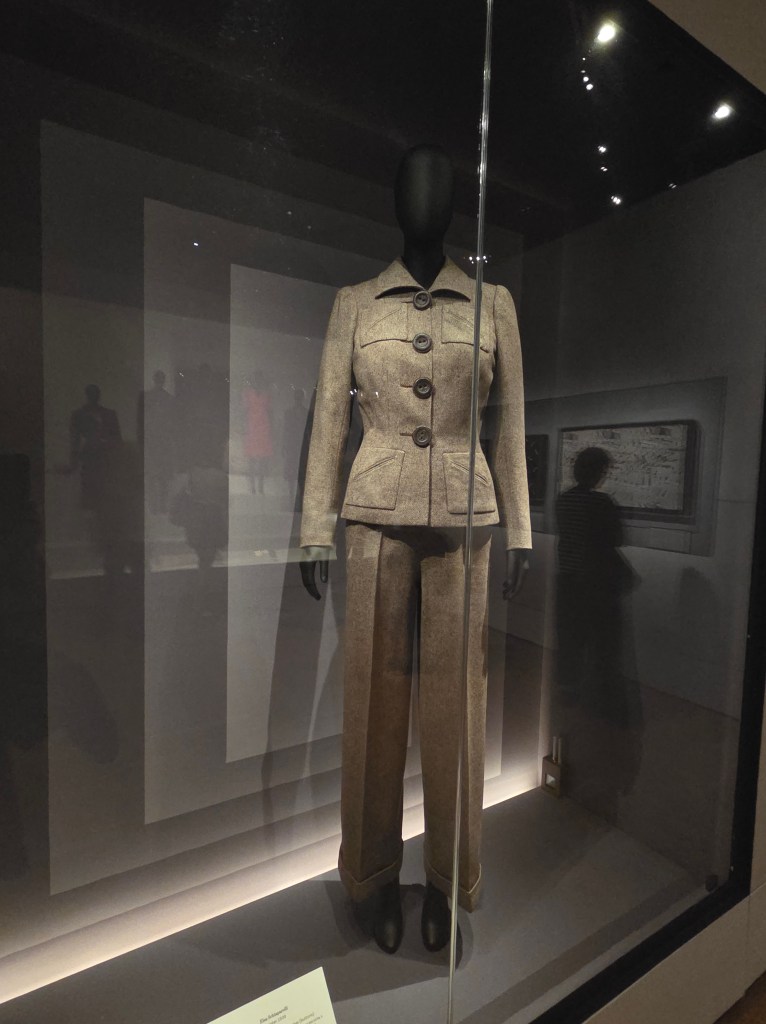
One of her early signature features was trousers – she wasn’t the first designer to incorporate trousers for women by any means but she did promote trousers as something women could wear in the day and out in the evening. This wool suit dates from 1939.
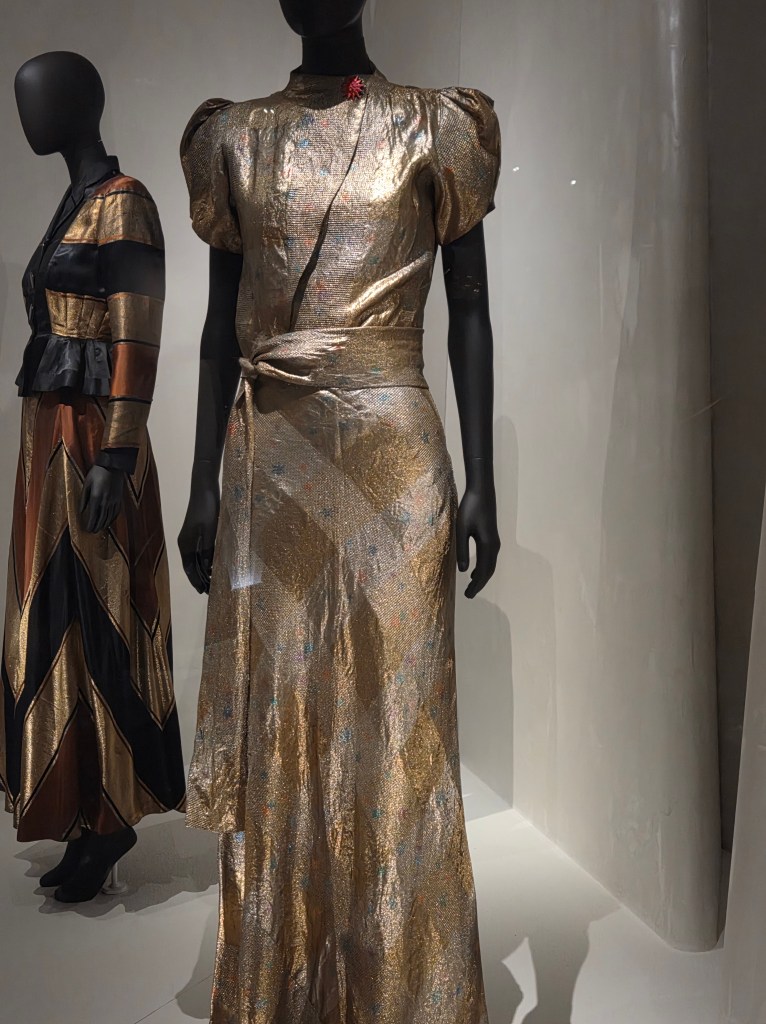
One of the ways Schiaparelli was so inventive was through her use of materials. This dress from 1937 has metal threads woven into the pattern and really stands out under the lights.
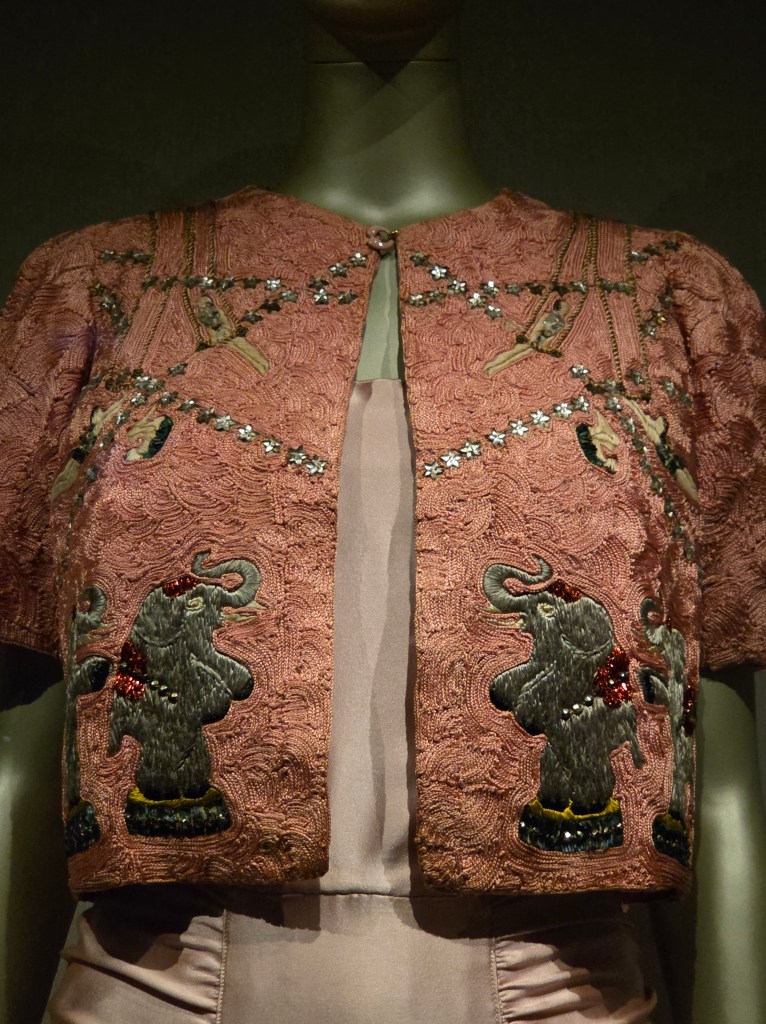
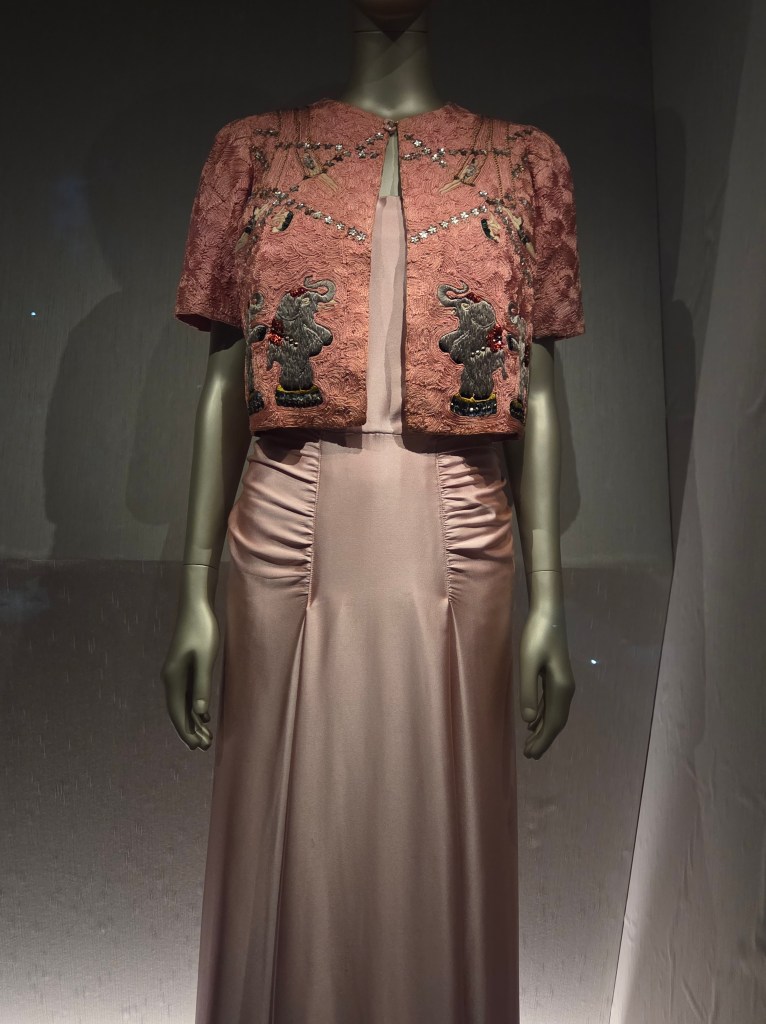
There are also some pretty fun designs scattered throughout – this pink jacket with elephants and this pink suit with acrobats for fastenings are from her circus collection of 1938.

These are not the dresses most of us are wearing out and about – which no doubt explains their continuing popularity with celebrities and actresses and whatever category Wallis Simpson fits in to. Here’s the lobster dress she wore in 1937, shortly before marrying Edward VIII which led to his eventual abdication.

Schiaparelli was friends with many of the surrealist artists of the time including Salvador Dali who considered the lobster to be the most erotic of animals (no, I don’t get it either). Her sense of theatrics, coupled with Simpson’s own, lead to Schiaparelli designing the dress, in collaboration with Dali, specifically for Simpson. In 1936 Dali had created Lobster Telephone and you can see this alongside the dress here at the exhibition.

Another collaboration between Dali and Schiaparelli that stood out were these powder compacts in the shape of the old style rotary telephone dials.

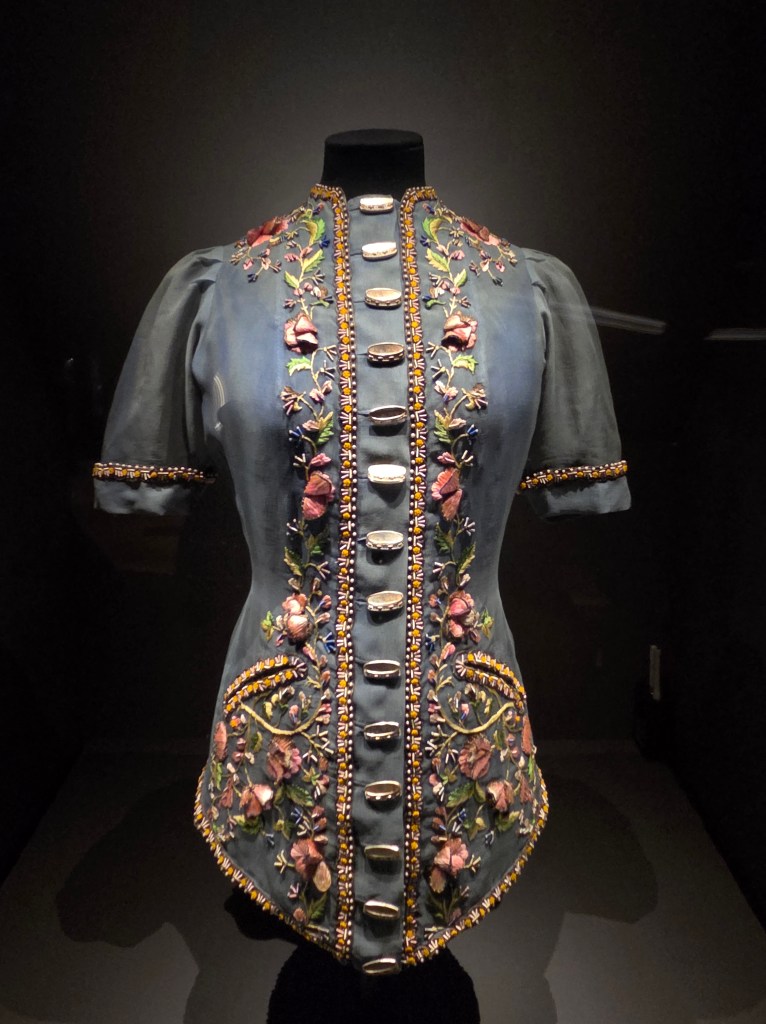
Jackets were a signature of Schiaparelli and this was one of my favourites dating from 1939 and part of her music collection.
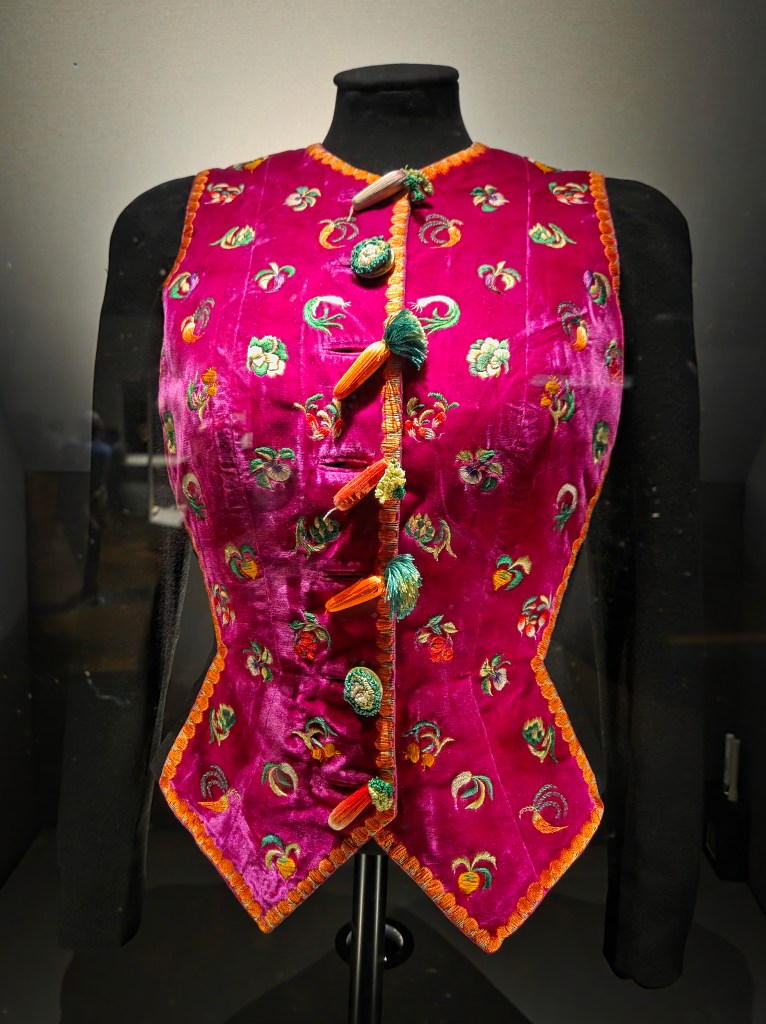
This one I liked for the pure absurdity – made in 1941 its a tribute to the French women who grew fresh produce during the German occupation of France.
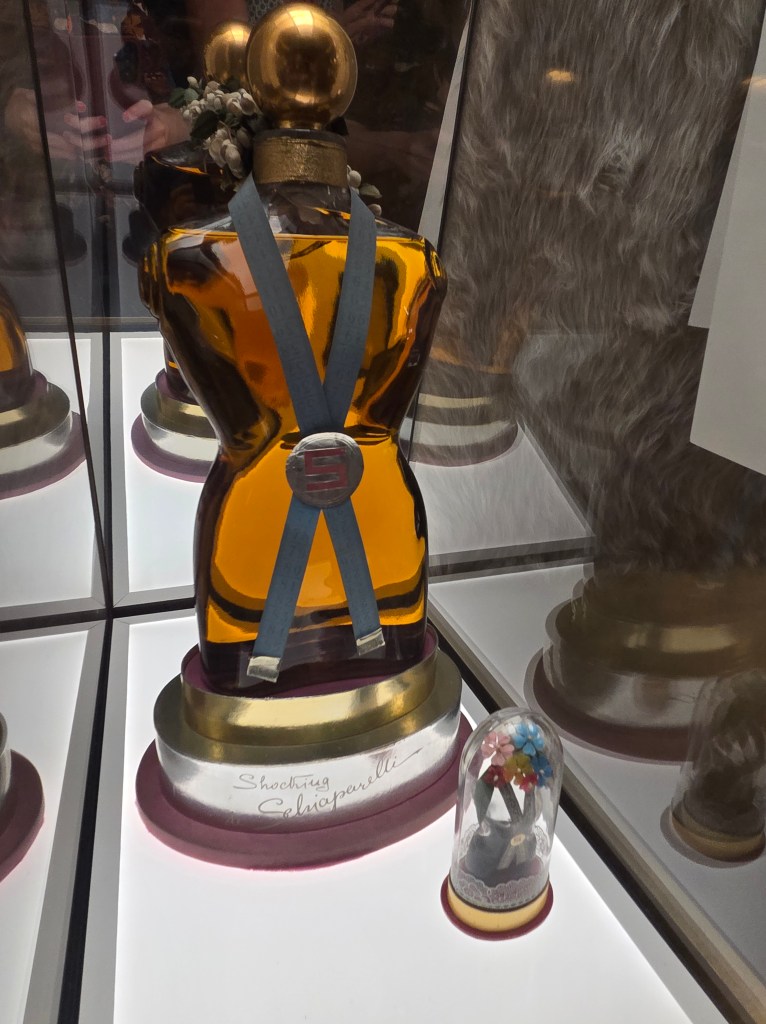
One thing I hadn’t realised was that Schiaparelli also designed perfumes and their bottles – in fact it was the perfume side of the business that was actually bought and reopened as the continuation of the fashion house. As well as the bottles themselves you could also see the draft design of the adverts for them. I particularly liked this one of her Shocking perfume.


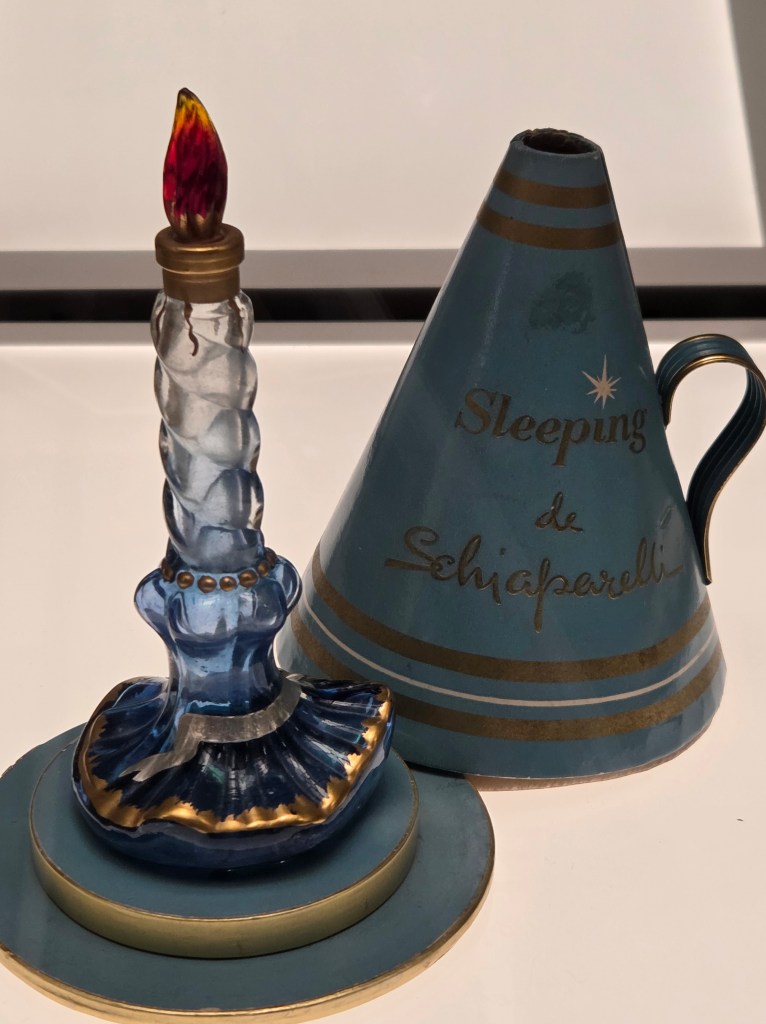
And this one appropriately called Sleeping which has a bottle and packaging designed to look like a lit candle and a snuffer – it incorporates the new Schiaparelli colour for the 1940 season – Sleeping Blue.

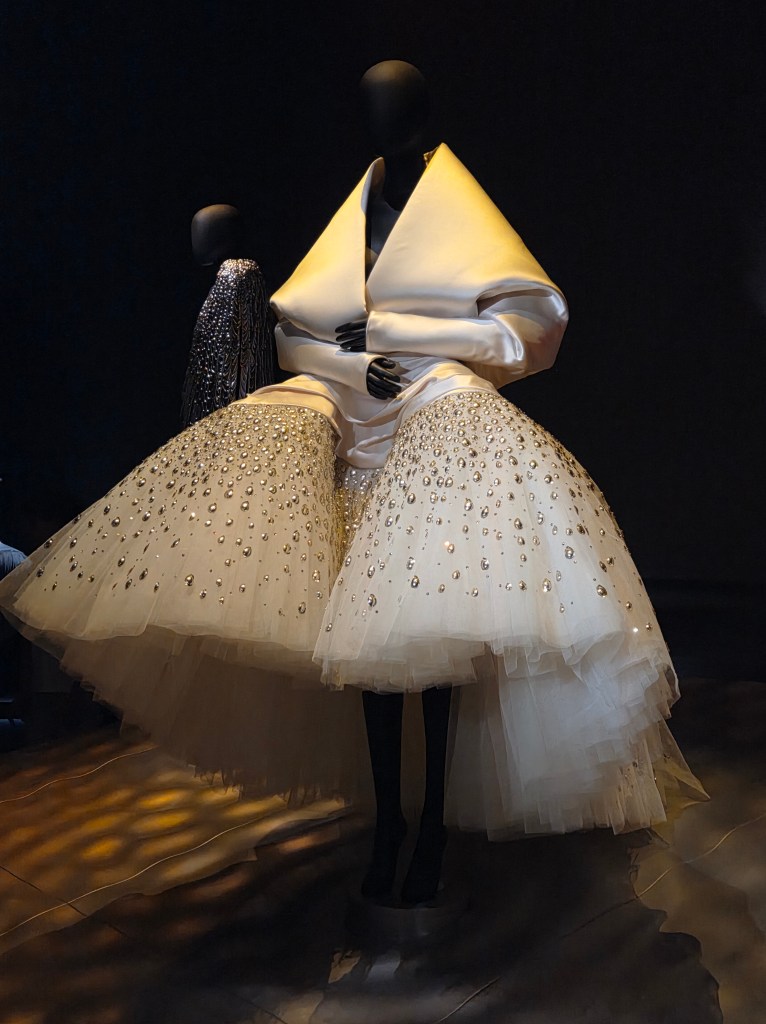
Daniel Roseberry has a number of items on display here and you can really see when they’re laid out together what a good job he’s done of building on Schiaparelli’s designs. Some of my favourites are below.
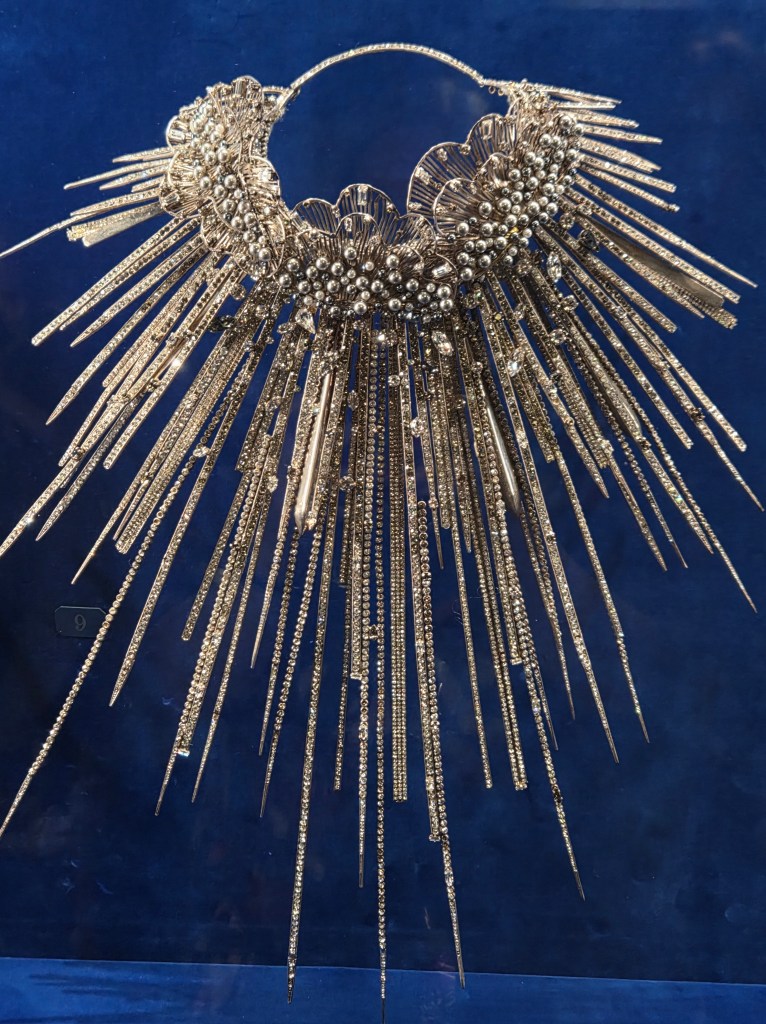
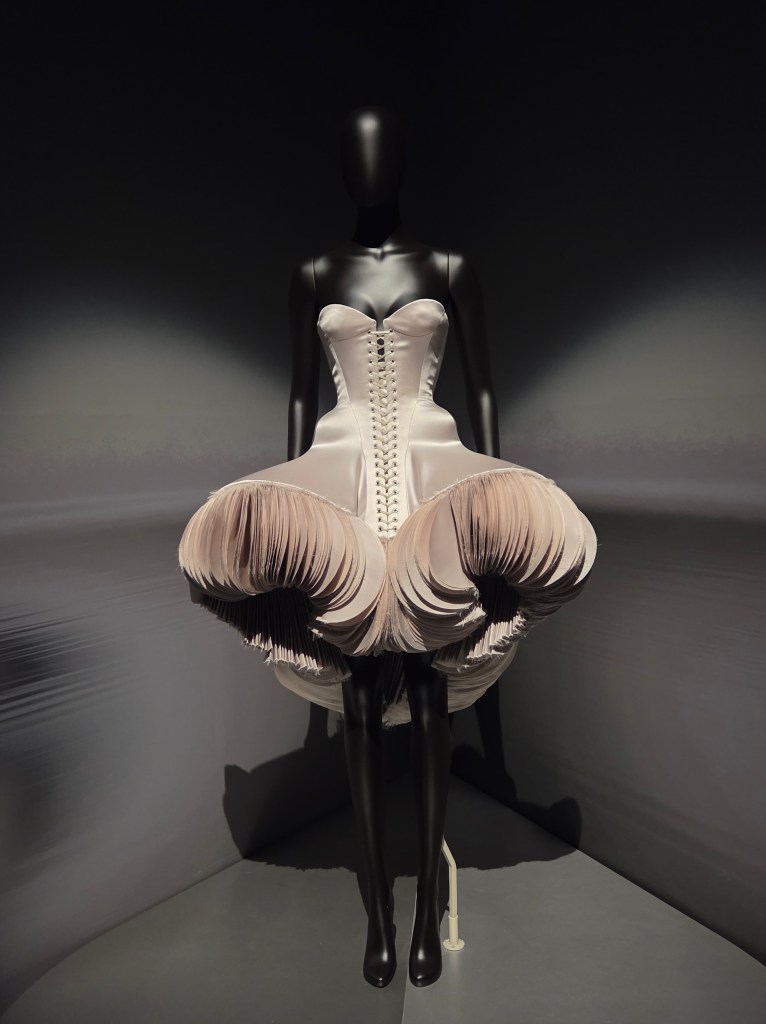

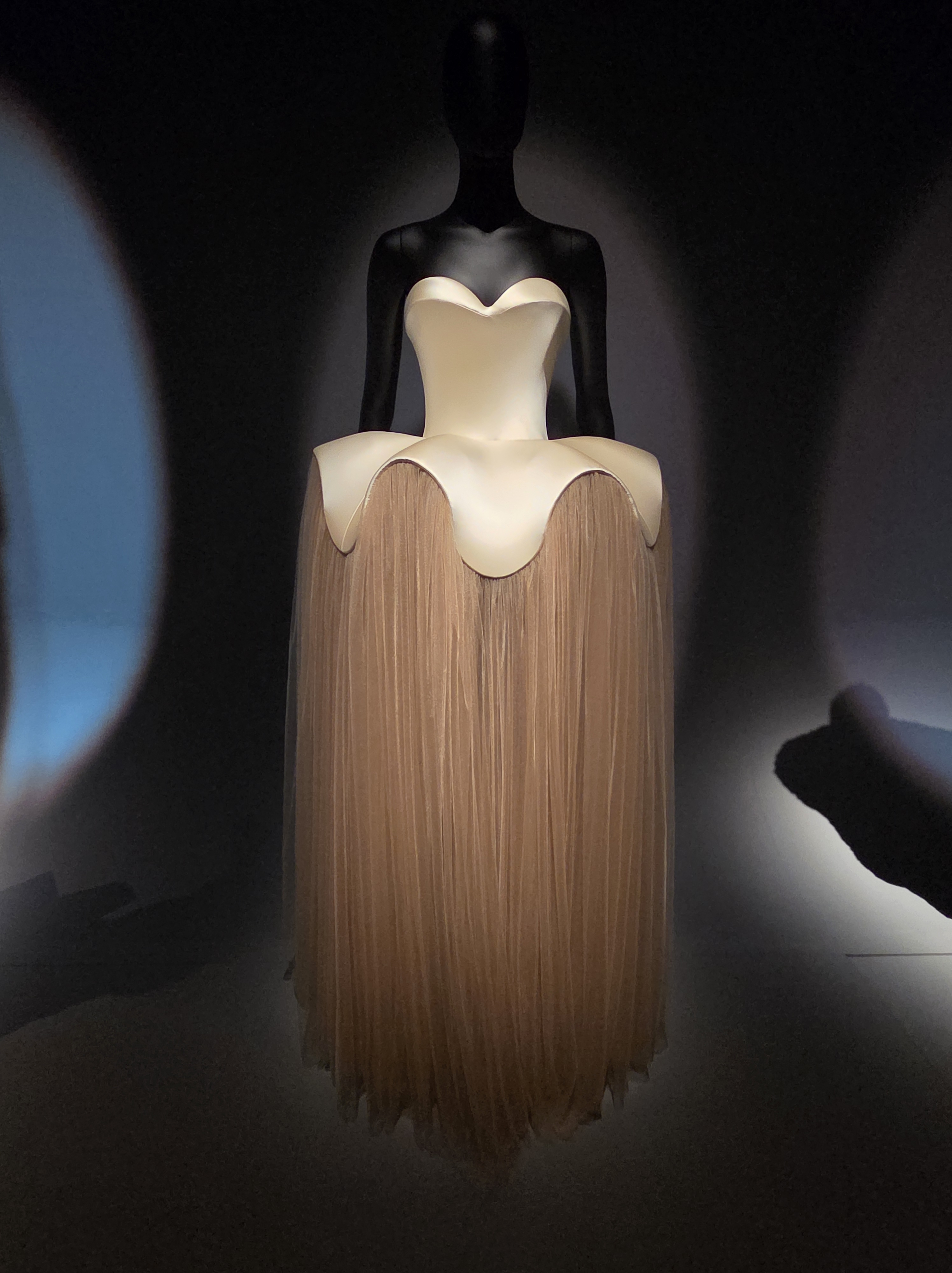
There are so many beautiful items on display that it’s tempting to photograph them all (I didn’t, but I came close!) It was well laid out and easy to navigate even on a sold out day. If you’re visiting during a heat wave its worth noting that unlike the rest of the museum the exhibition space is nicely cool with air vents blasting out cold air.

The exhibition finishes on 8th November and ticket availability is looking good for the next few months. Tickets cost £30 for the weekend and £28 for a weekday. My ticket cost £12.50 because back in January I decided to buy an Art Pass which gives discounts to exhibitions around the country, a bit pricey but it will have definitely paid for itself by the end of the year.