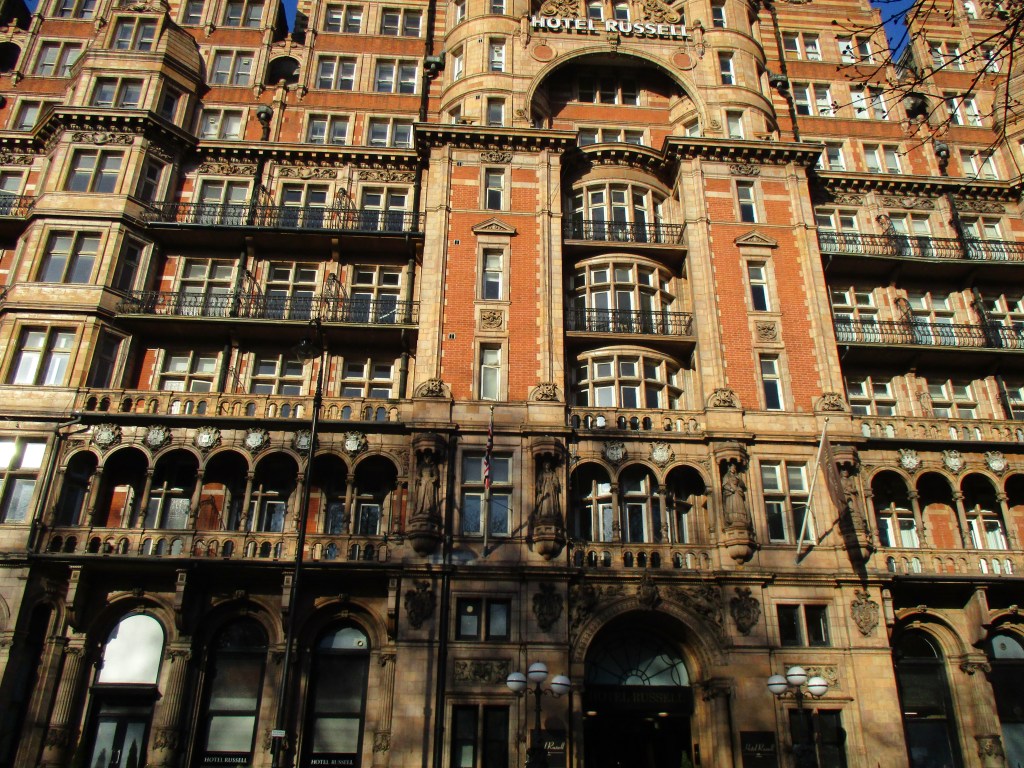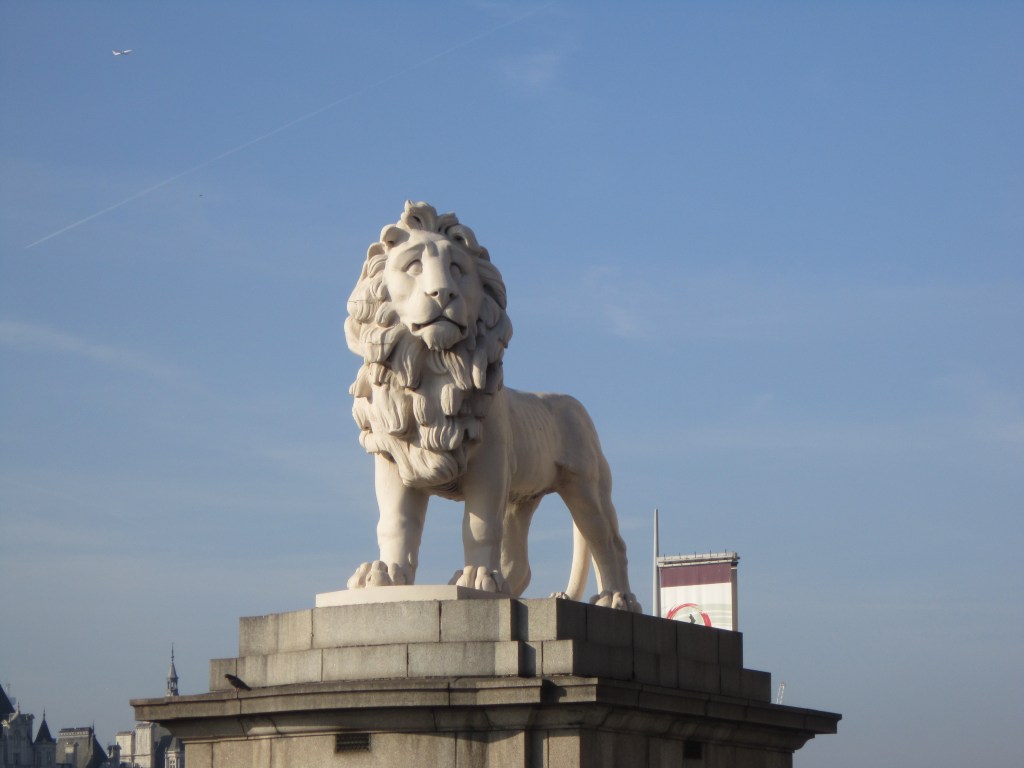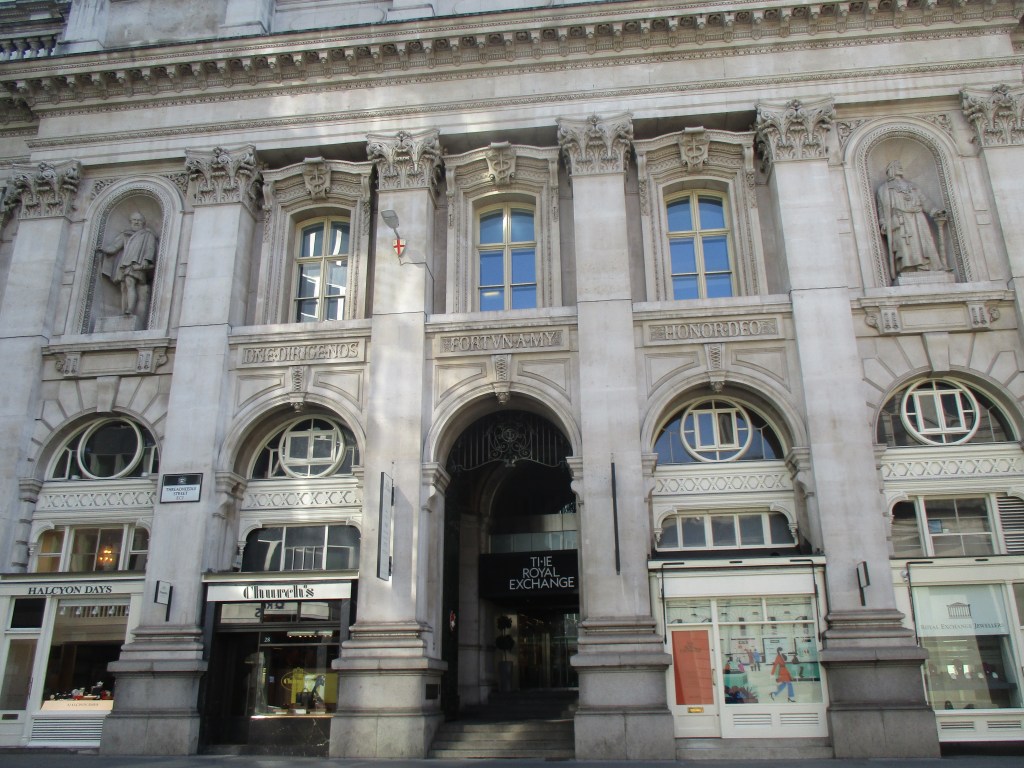
The Royal Exchange building in London was founded in the 16th century by Sir Thomas Gresham as a centre of commerce. Twice it was destroyed by fire – the present building was designed by Sir William Tite in the 1840s. These days it houses various shops, cafes and restaurants.
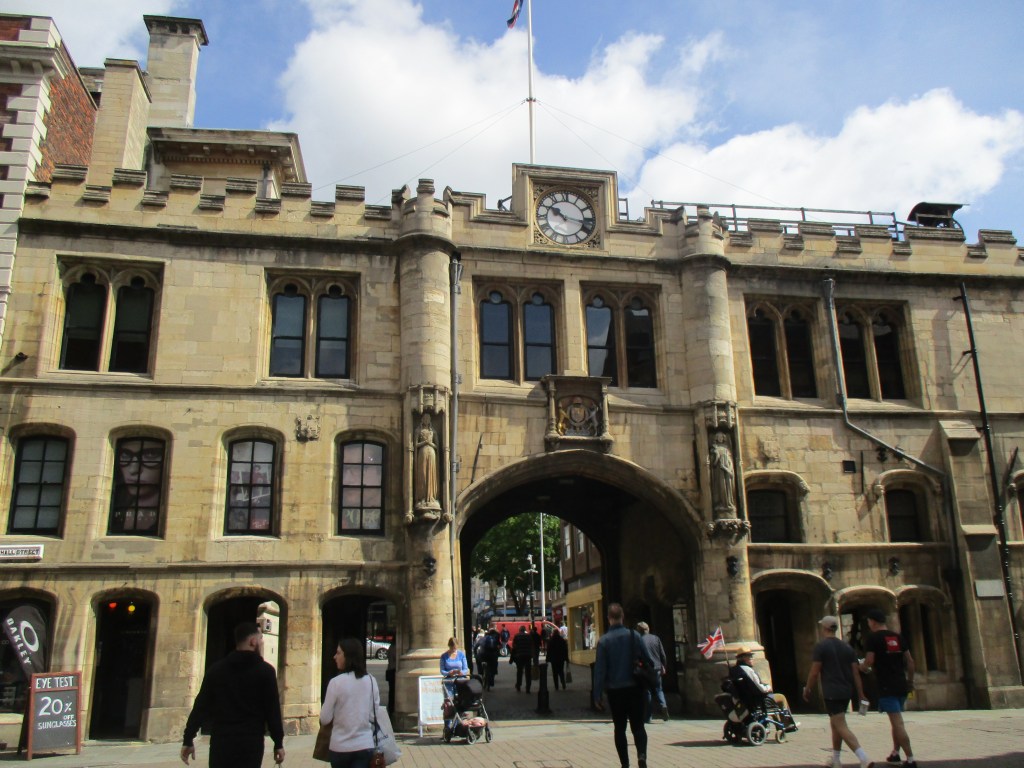
The Guildhall and Stonebow has been the meeting place of Lincoln City Council from medieval times to the present. The term stonebow is derived from Old Norse and means a stone arch. The first gateway on the site dates from around 211AD. The Guildhall which was located elsewhere was moved to above the stonebow in 1237. The present Guildhall however dates from 1520.
The Venezuelan Francisco de Miranda lived at 58 Grafton Way between 1802 to 1810 and it became the centre of South American revolutionary meetings. The statue is a copy of one made by the Venezuelan sculptor Rafael de la Cova and was placed here in 1990. He’s described on the sculpture as the precursor of Latin American independence and that he died a prisoner in Spain (in 1816).
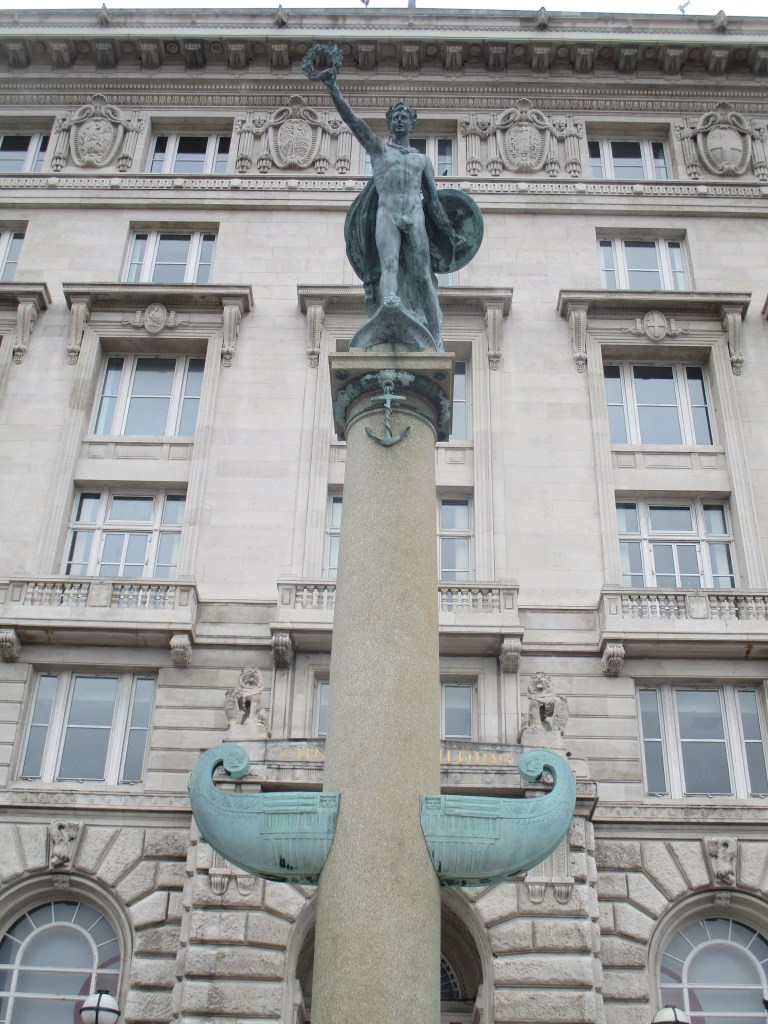
The Cunard War Memorial is on the west side of the Cunard Building and is a memorial to Cunard employees killed during the First World War, and then the Second. Designed by the architect Arthur Davis it was built around 1920 although it wasn’t officially unveiled until the next year by the Earl of Derby.
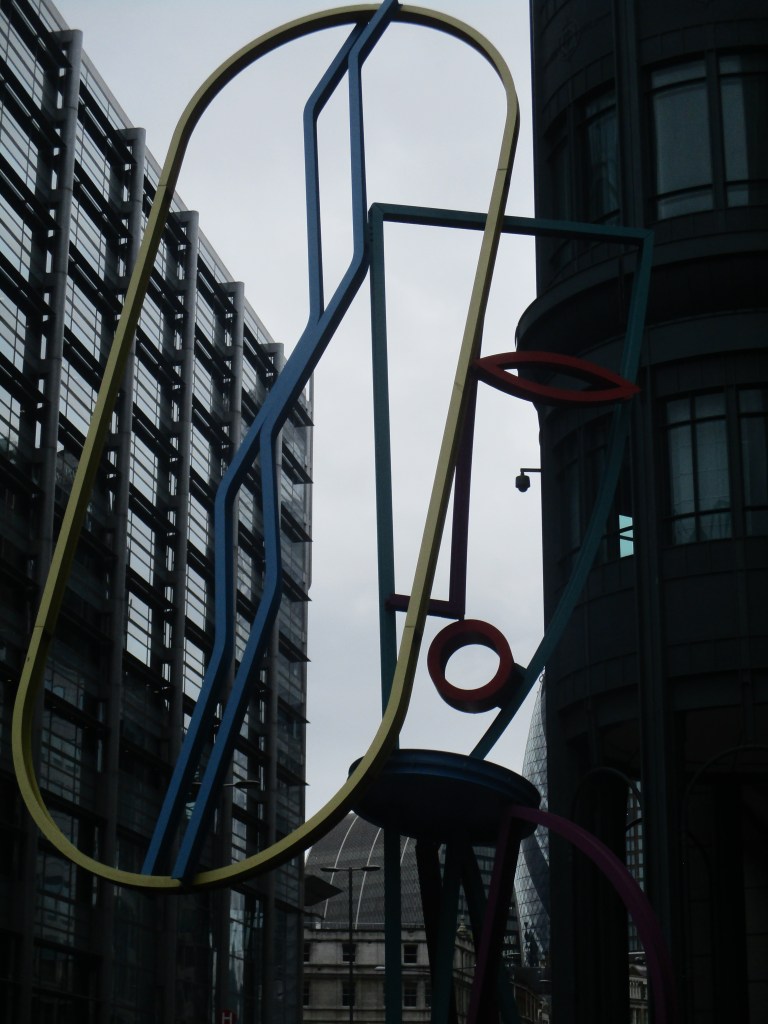
This abstract female face is by Glasgow born Bruce McLean and can be found outside 199 Bishopgate in London. Created in 1993 the title apparently refers to Glasgow’s “aye-aye” greeting. Made of steel it really is a fun addition to the surroundings.
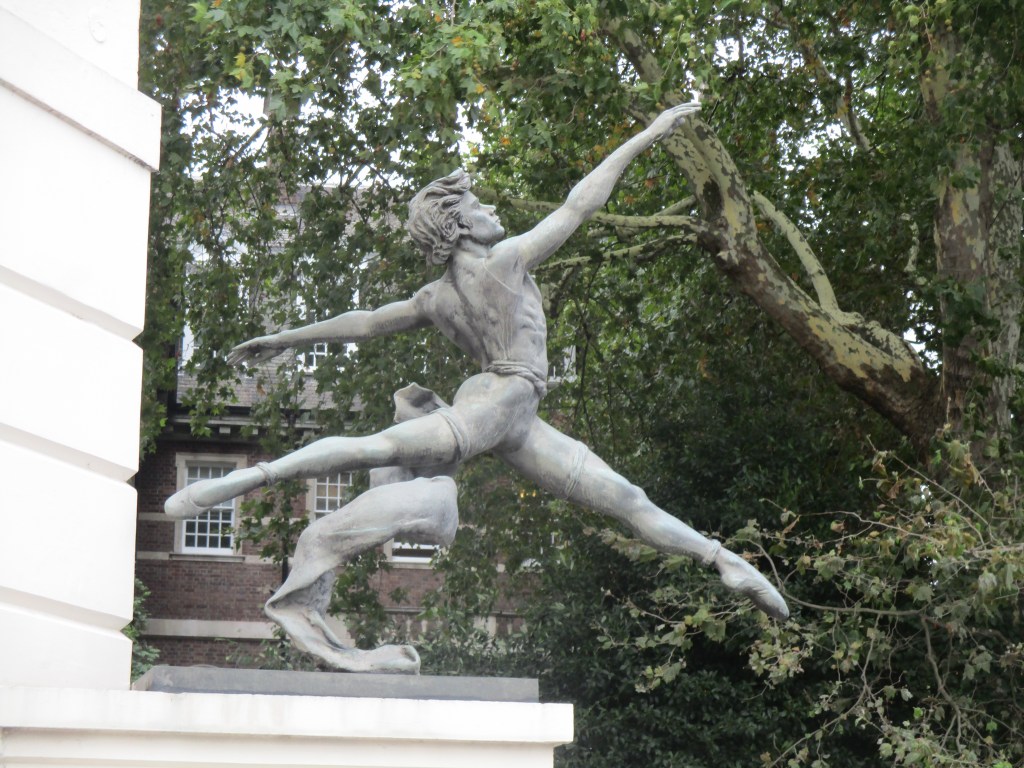
This striking sculpture called Jete can be found at 48 Millbank, not far from Tate Britain. Enzo Plazzotta based the figure on David Wall who became the youngest male Principal in the history of The Royal Ballet.
This striking statue on the bank of the River Clyde in Glasgow is a memorial to British citizens who fought in the Spanish Civil War of 1936 to 1939. Created by sculptor Arthur Dooley it was unveiled in 1979. The statue is based upon Dolores Ibarruri, known as La Pasionaria (The Passion Flower), a female politician and prominent anti-fascist from Spain.
This large public square in front of Birmingham Council House is, unsurprisingly, named after Queen Victoria. Prior to 1901 however it was known as Council House Square. A parish church was on the site first, from 1813, followed by Birmingham Town Hall (1832-1834) and then the current Council House. One of the central features of the Square is this statue which I was amused to discover on researching this post is known locally as “Floozie in the Jacuzzi”. Now a flower bed it was part of a water fountain up until 2013 when irreparable faults led to the water being permanently turned off.