Thomas More, advisor to Henry VIII who would eventually have him beheaded at the Tower of London, moved to Chelsea in around 1520. The house he built there no longer exists but the statue is near Chelsea Old Church where he regularly worshipped.
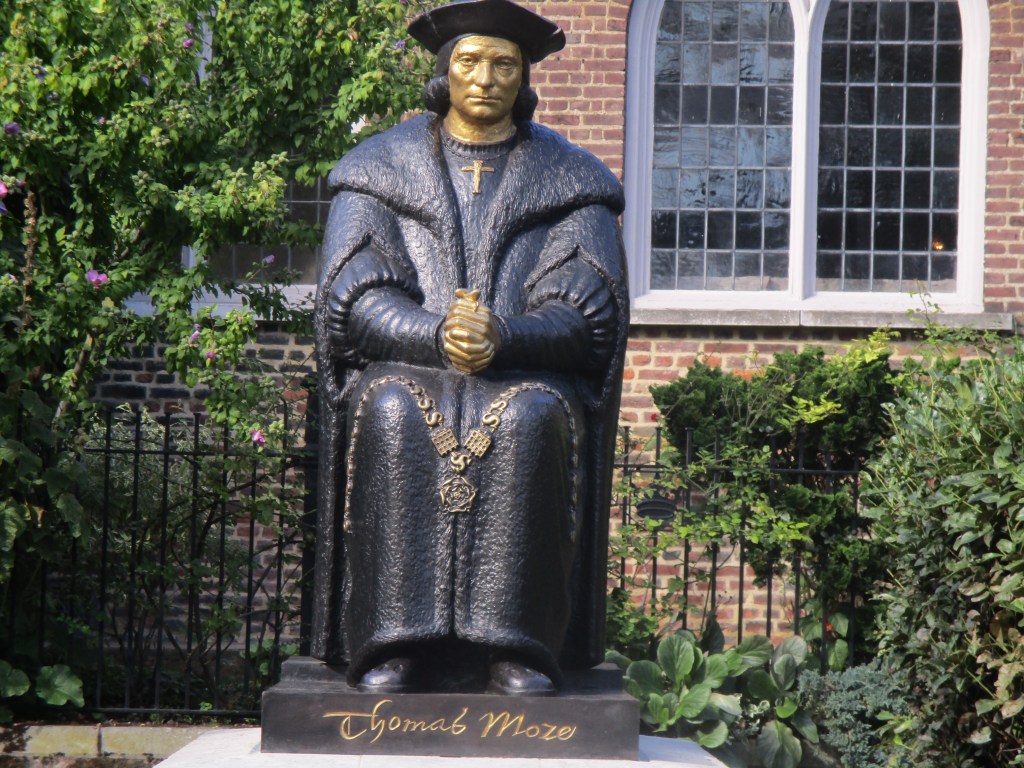
Thomas More, advisor to Henry VIII who would eventually have him beheaded at the Tower of London, moved to Chelsea in around 1520. The house he built there no longer exists but the statue is near Chelsea Old Church where he regularly worshipped.
White’s is the oldest gentleman’s club in London having been founded in 1693; women are still not admitted today. It was established by an Italian immigrant called Francesco Bianco who sold hot chocolate as well as tickets to productions at King’s Theatre and Drury Lane Theatre.
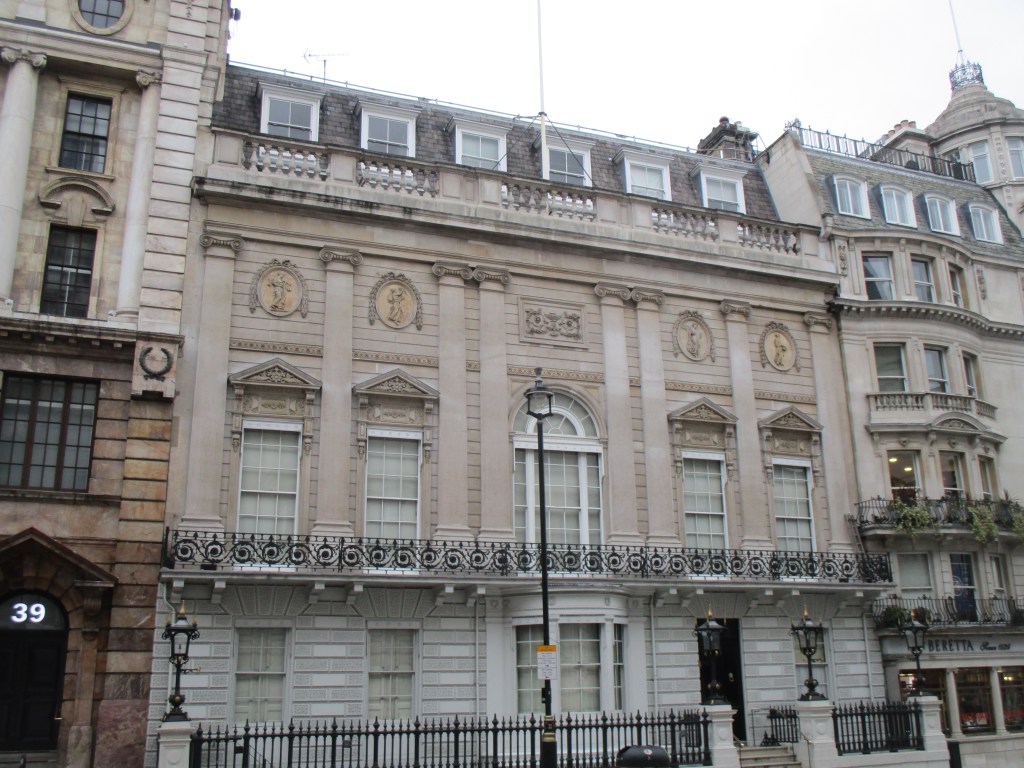
A private members club it was founded in 1862 by six military officers and based at 18 Clifford House but moved several times over the years until it opened at its present location of 4 St James’s Square in 1999. Originally men only, women are now admitted.
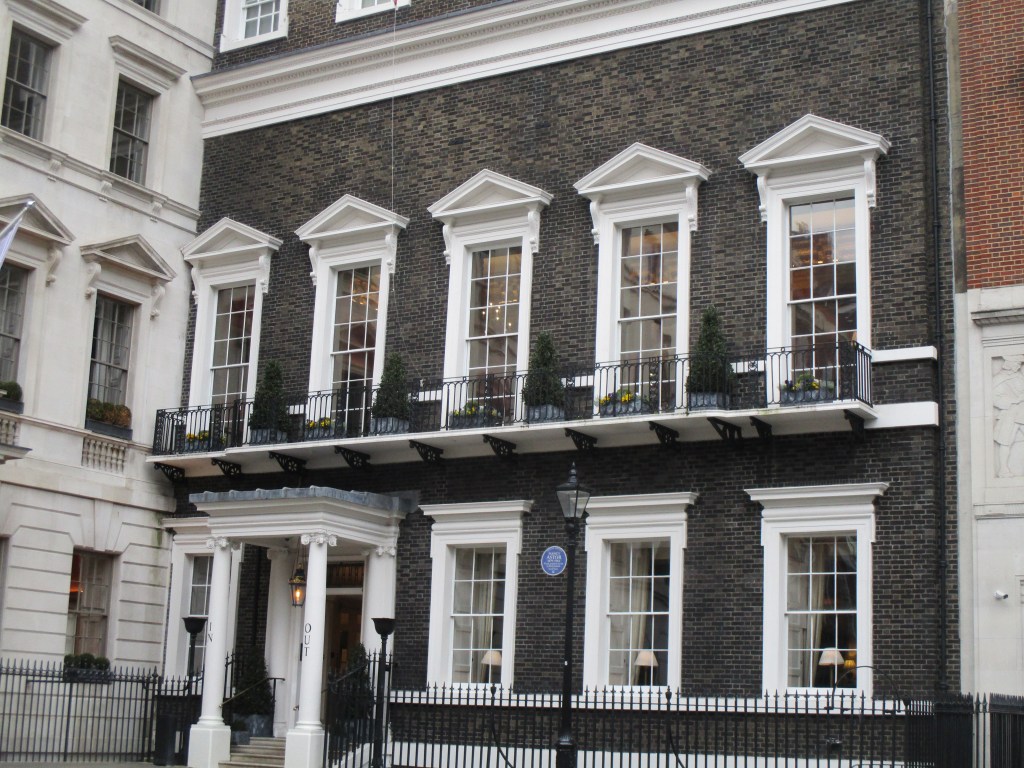
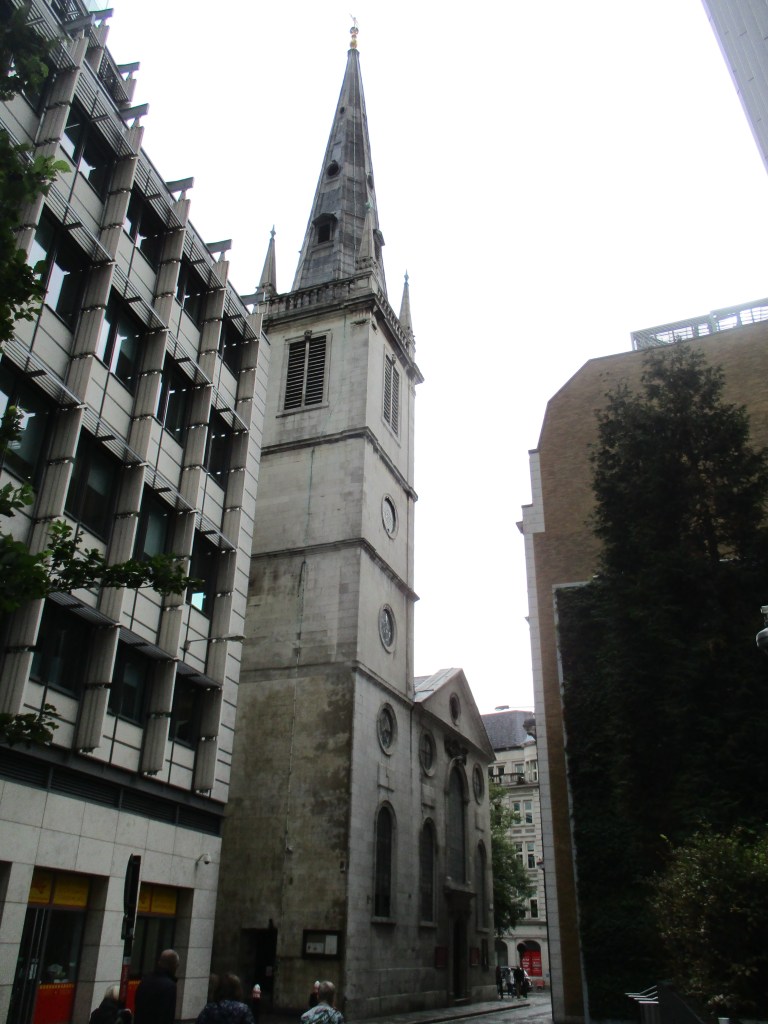
St Margaret Pattens is a church near the Monument to the Great Fire of London. The current building was designed by Sir Christopher Wren in 1687 though records date a previous church on the site from 1067.
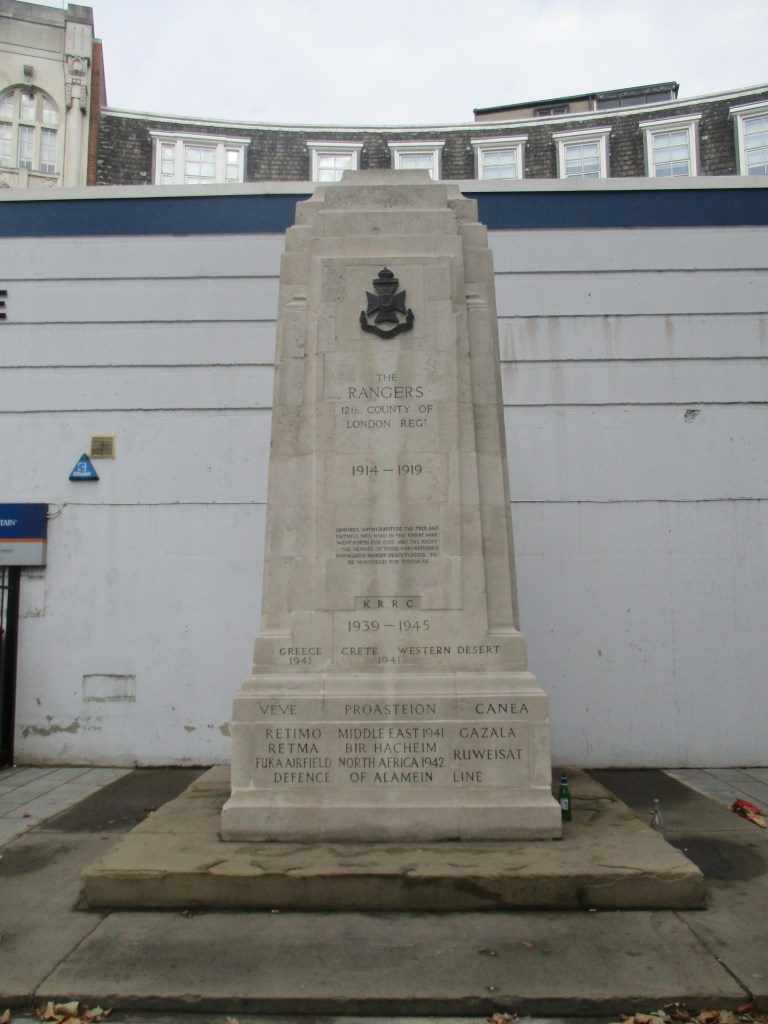
Unveiled in 1923 this memorial on Chenies Street, Camden, is inscribed to “The Memory of 1193 Rangers who died for the Empire.” It also lists the battles in which the regiment fought in the First and Second World Wars. The memorial is close to the former 1882 drill hall from which the battalion departed in August 1914.
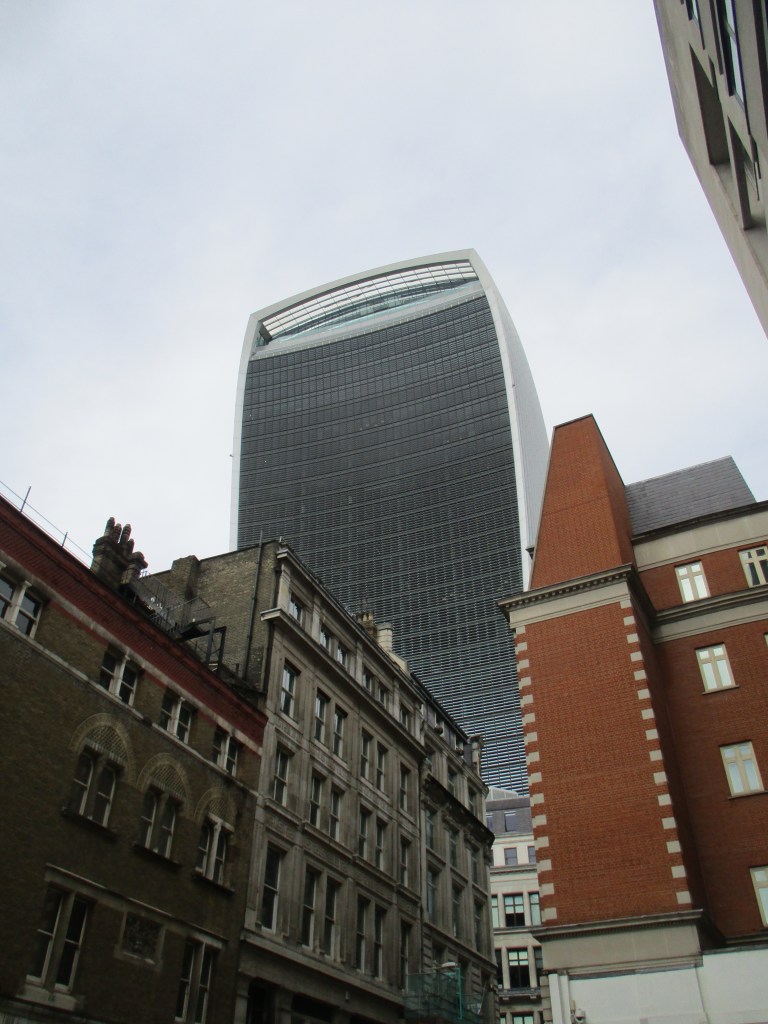
Nicknamed The Walkie-Talkie because of its distinctive shape construction finished in 2015. It was designed by architect Rafael Vinoly and cost over £200 million to build.
Just by the Leadenhall Building in London were a series of sculptures of heads. Made of aluminium they are the sculptor’s exploration of Greek, Roman and Egyptian traditions for the 21st century. They were part of the Sculpture in the City programme, an annual sculpture park that uses London streets as its gallery. You can learn more about the programme and this year’s sculptures here. The heads are currently on display at Hauser & Wirth Gallery in Somerset.

A bronze sculpture by Rudy Weller it was installed in 1992 near Piccadilly Circus. The four horses are depicted leaping out of a fountain. They are the four horses of Helios, the Greek god of the sun.

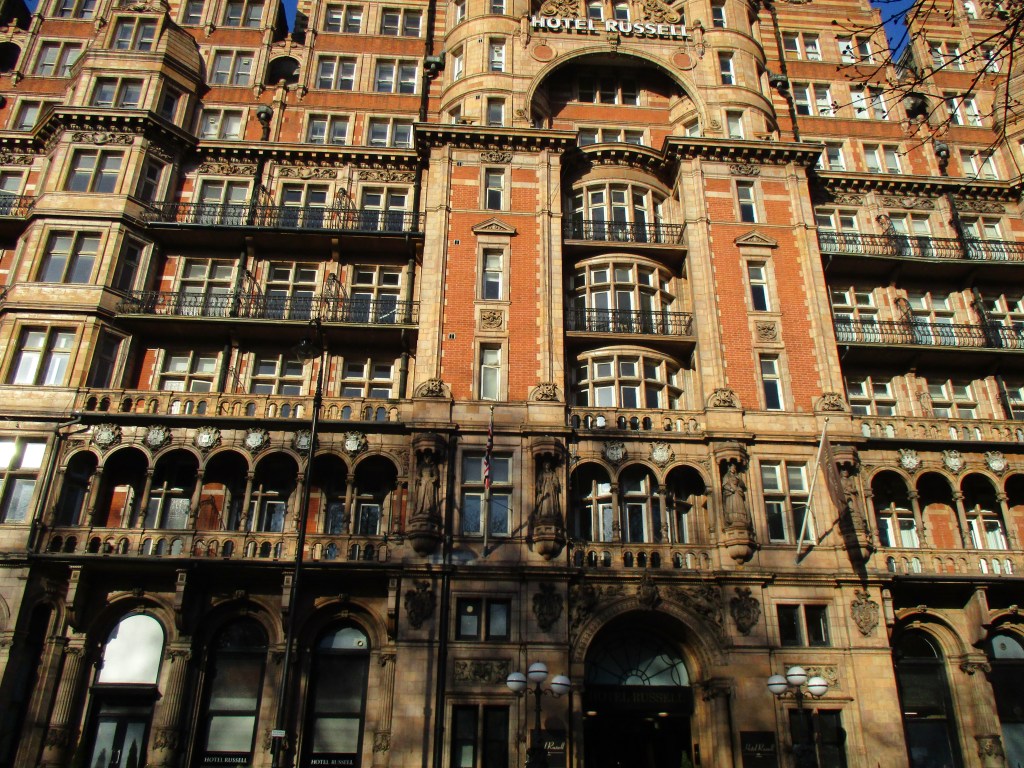
When I took photos of this building next to Russell Square it was the Hotel Russell but now it is the five star Kimpton Fitzroy London. Built in 1898 by the architect Charles Fitzroy Doll it was opened in 1900 and its terracotta decoration was apparently based on the Chateau de Madrid near Paris which was demolished in the 1790s.
Minerva House on North Crescent in Camden is a Grade II building that started out as a car showroom and offices for the Minerva Motor Company. They were a Belgian car company operating from 1902 until 1938. It was designed by George Vernon and the building itself dates from around 1912. The logo of the car company was the goddess Minerva – hence the statue of the goddess above the entrance.


