Nicknamed The Walkie-Talkie because of its distinctive shape construction finished in 2015. It was designed by architect Rafael Vinoly and cost over £200 million to build.
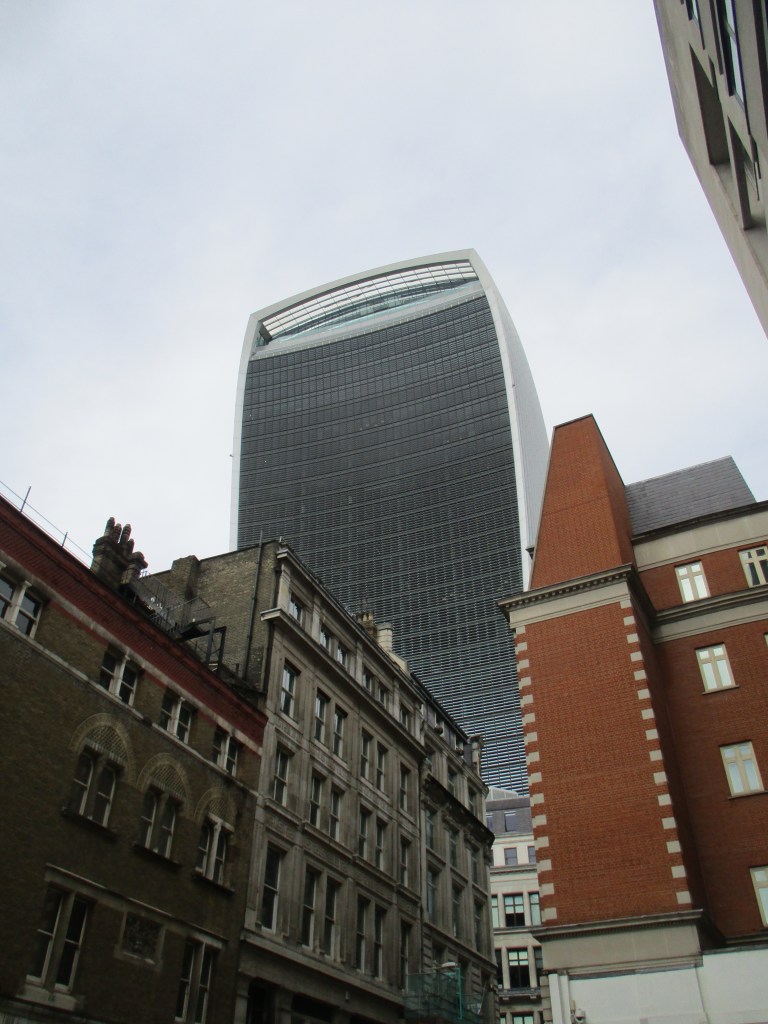
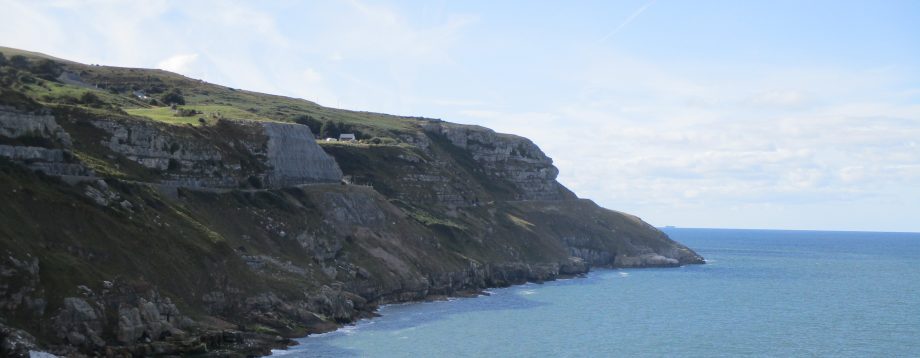
Nicknamed The Walkie-Talkie because of its distinctive shape construction finished in 2015. It was designed by architect Rafael Vinoly and cost over £200 million to build.
Just by the Leadenhall Building in London were a series of sculptures of heads. Made of aluminium they are the sculptor’s exploration of Greek, Roman and Egyptian traditions for the 21st century. They were part of the Sculpture in the City programme, an annual sculpture park that uses London streets as its gallery. You can learn more about the programme and this year’s sculptures here. The heads are currently on display at Hauser & Wirth Gallery in Somerset.

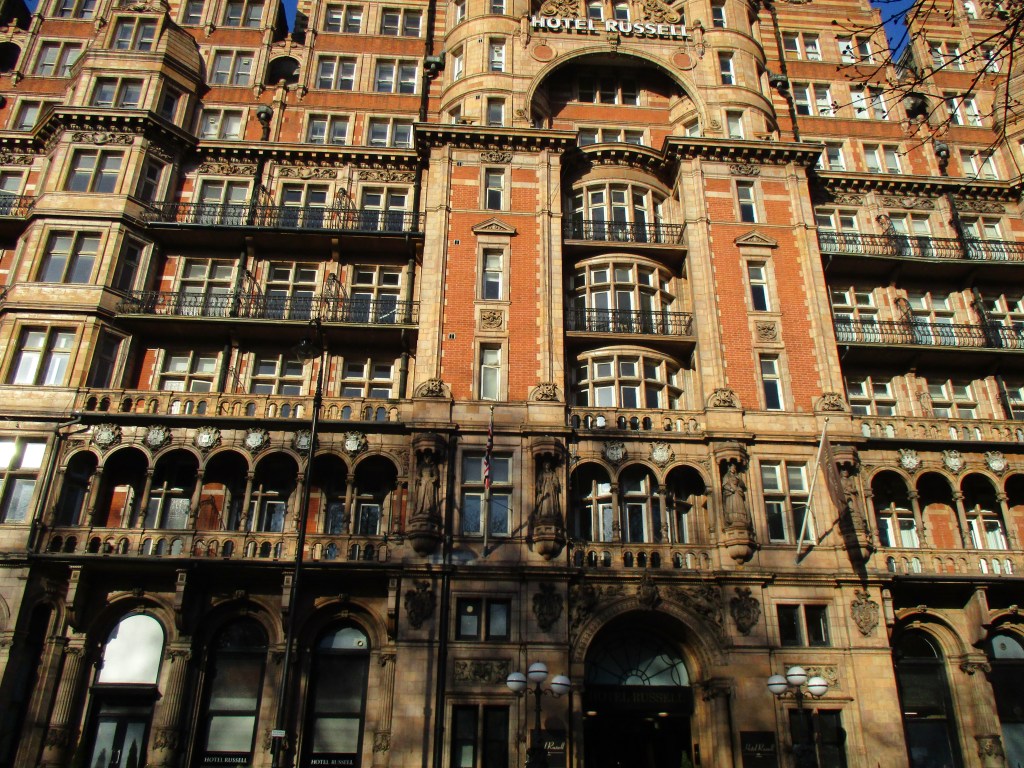
When I took photos of this building next to Russell Square it was the Hotel Russell but now it is the five star Kimpton Fitzroy London. Built in 1898 by the architect Charles Fitzroy Doll it was opened in 1900 and its terracotta decoration was apparently based on the Chateau de Madrid near Paris which was demolished in the 1790s.
Minerva House on North Crescent in Camden is a Grade II building that started out as a car showroom and offices for the Minerva Motor Company. They were a Belgian car company operating from 1902 until 1938. It was designed by George Vernon and the building itself dates from around 1912. The logo of the car company was the goddess Minerva – hence the statue of the goddess above the entrance.

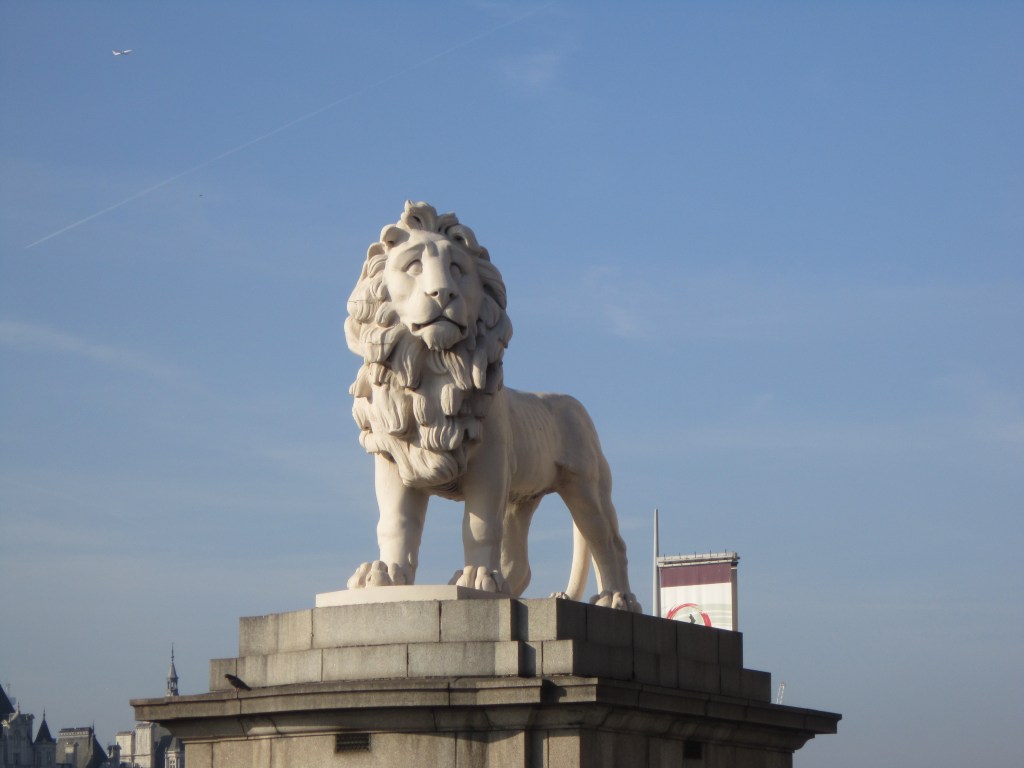
Originally this very impressive lion – made of Coade stone (a type of ceramic stone which is particularly resistant to weathering) – was mounted on top of James Goding’s Lion Brewery building in the 1830s. He was sculpted by William Frederick Woodington and stayed in place until 1949 when the brewery was demolished to make way for the Royal Festival Hall.
Currently the address of a large Foyle’s bookshop, 107 Charing Cross, built in 1938, used to house the college for the Distributive Trades and St Martin’s School of Art.

The Venezuelan Francisco de Miranda lived at 58 Grafton Way between 1802 to 1810 and it became the centre of South American revolutionary meetings. The statue is a copy of one made by the Venezuelan sculptor Rafael de la Cova and was placed here in 1990. He’s described on the sculpture as the precursor of Latin American independence and that he died a prisoner in Spain (in 1816).

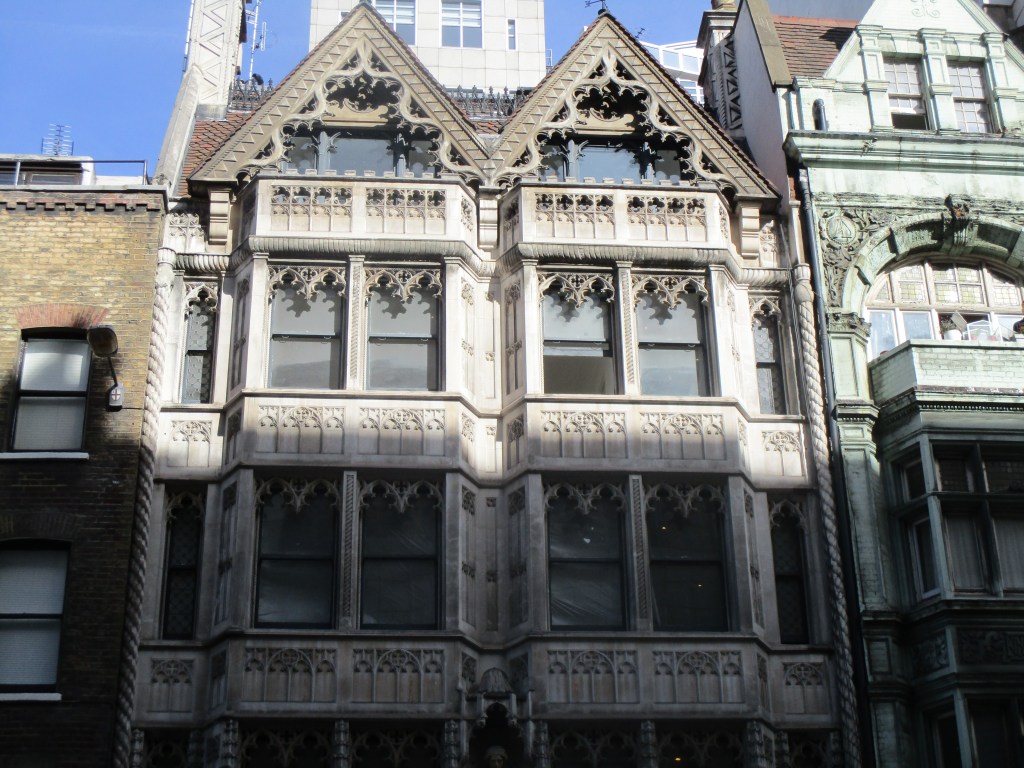
In the early 20th century Scottish landowner and politician Sir John Tollemache Sinclair acquired the land at 143-144 Fleet Street and in 1905 commissioned architect Richard Mauleverer Roe to design a Neo-Gothic office.
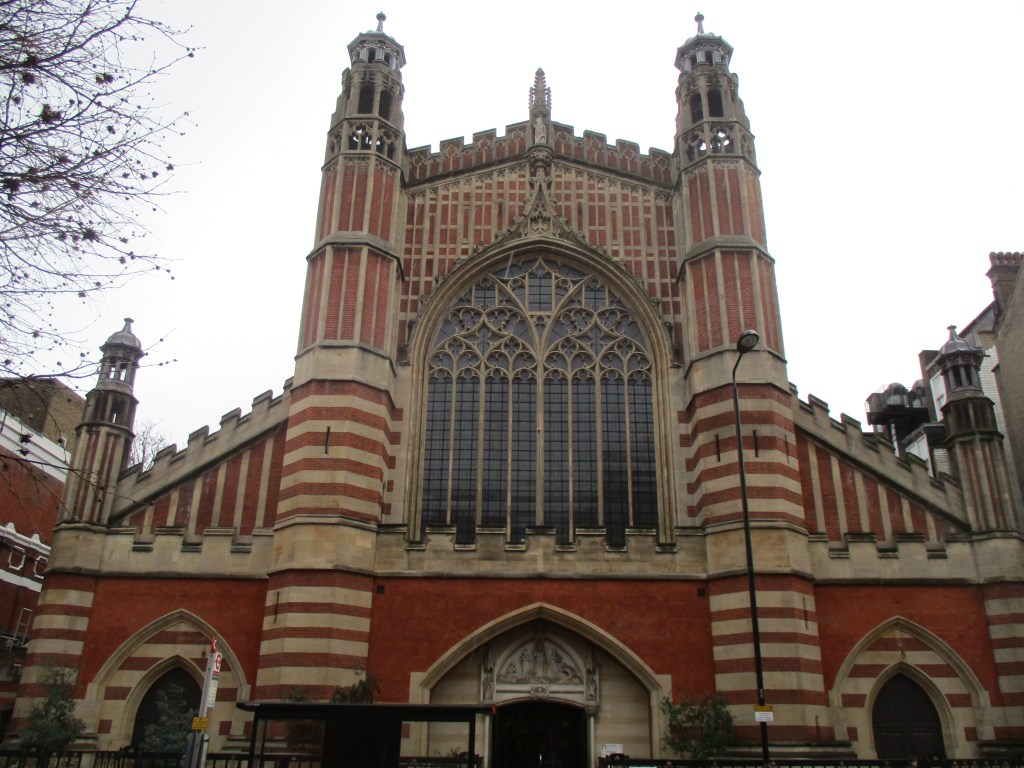
With some time to kill while in the area (pre-COVID) I ventured into Holy Trinity Church which was designated as the Cathedral of the Arts and Crafts Movement by Sir John Betjeman. The message of the movement (members included William Morris and Edward Burne-Jones) was to revere nature through crafts, painting and architecture as demonstrated by the church which was designed by John Dando Sedding in 1888.
Please note photos have been removed due to lack of hosting space.
Unlike Highgate Cemetery West, the East side is self-guided – you are given a map which marks the most notable people buried there and then left to explore at leisure. The East Cemetery was opened by the London Cemetery Company in 1860. The aim of the cemetery was to maximise space, which is why it was designed with less ornate decoration and buildings then the West Cemetery.

