Whilst visiting the V&A Museum I came across this sculpture on the opposite side of the street. It is a memorial to those killed after being forcibly repatriated by the Allies to the then Soviet Union at the conclusion of the Second World War.

Whilst visiting the V&A Museum I came across this sculpture on the opposite side of the street. It is a memorial to those killed after being forcibly repatriated by the Allies to the then Soviet Union at the conclusion of the Second World War.
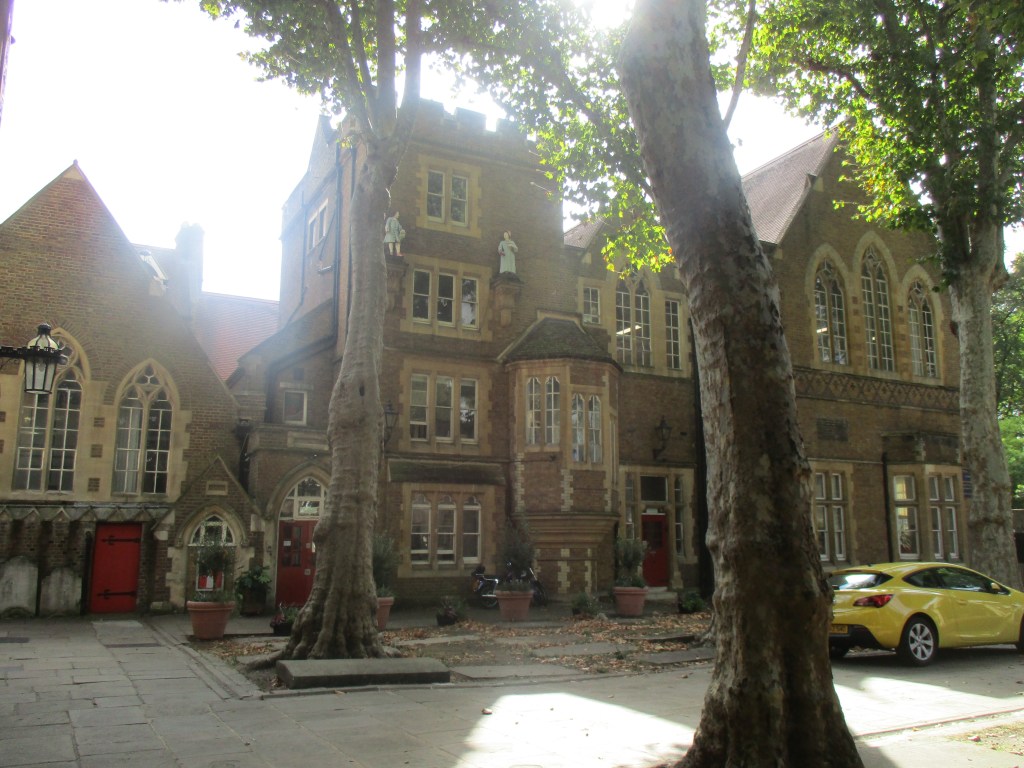
The school was first endowed in 1645 as a free school for the children of the poor. A school was actually built about 1709 elsewhere but they moved to the current building next to St Mary Abbots Church around 1860.
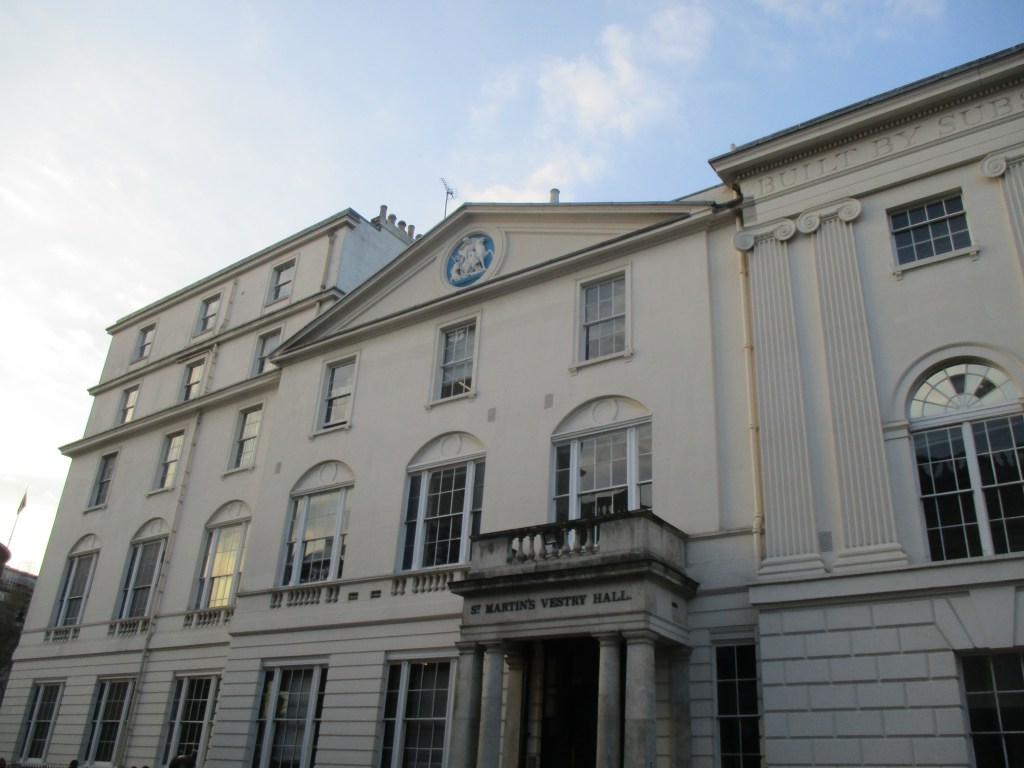
The Vestry Hall, Vicarage and National Schools in St Martin’s Place were built around 1830. The inscription around the roof reads “St Martin’s National Schools. Built by Subscription on Ground the Gift of His Majesty King George IV. MDCCCXXX”. The land was gifted for a school to educate the poor children of the parish.
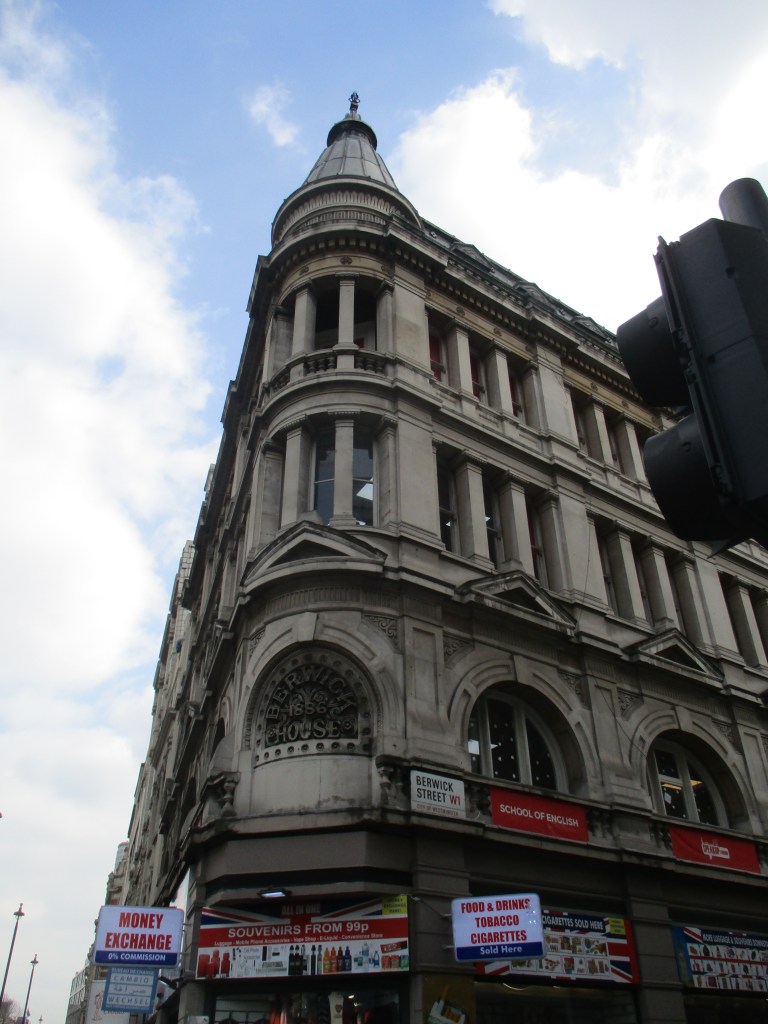
Berwick House on Oxford Street dates from around 1886 and has a rather interesting spire and pillars along the front.
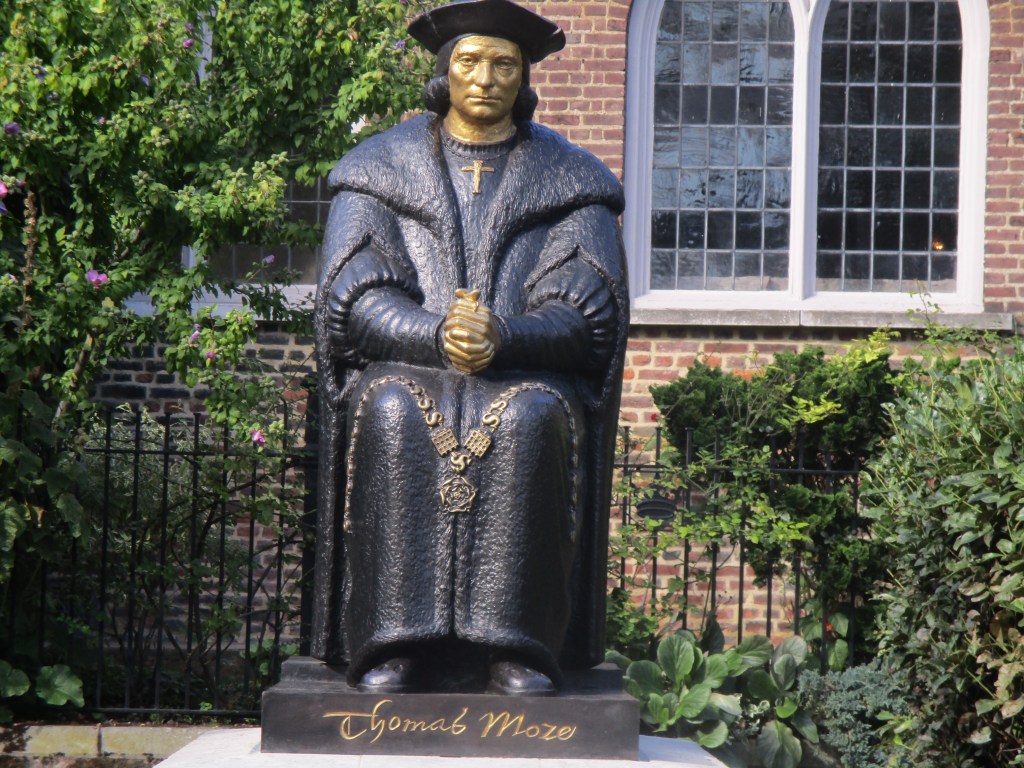
Thomas More, advisor to Henry VIII who would eventually have him beheaded at the Tower of London, moved to Chelsea in around 1520. The house he built there no longer exists but the statue is near Chelsea Old Church where he regularly worshipped.
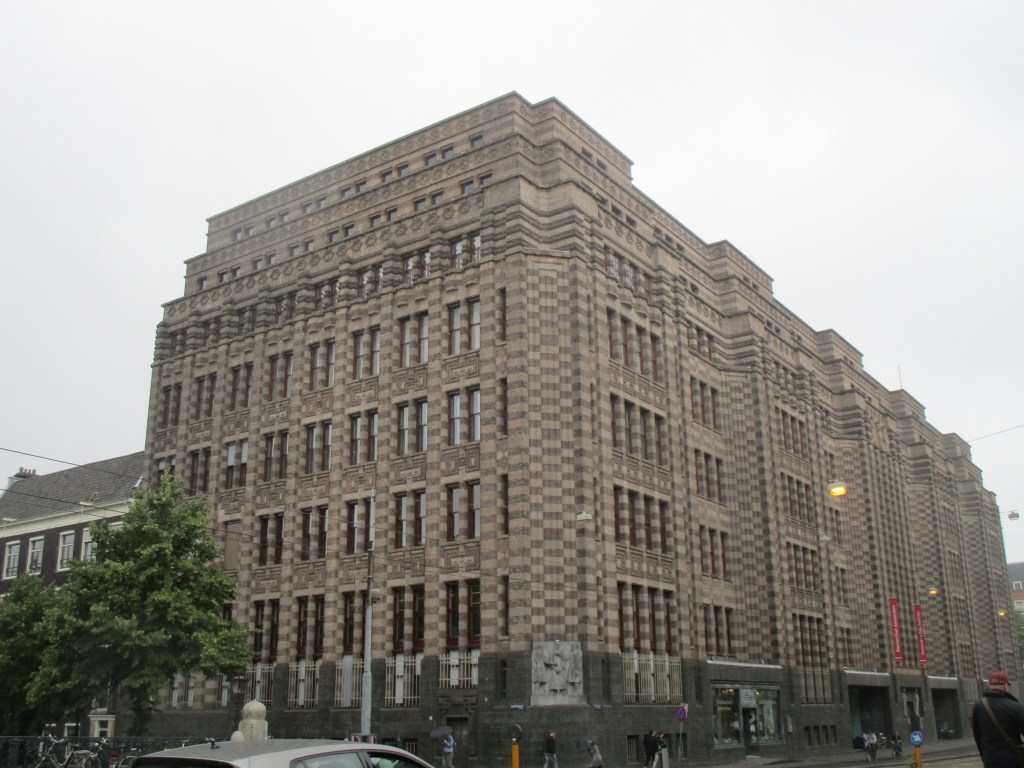
This impressive building is named for its architect Karel de Bazel, designed in the Brick Expressionism style and was built between 1919 and 1926. It is ten stories high and 100 metres wide.
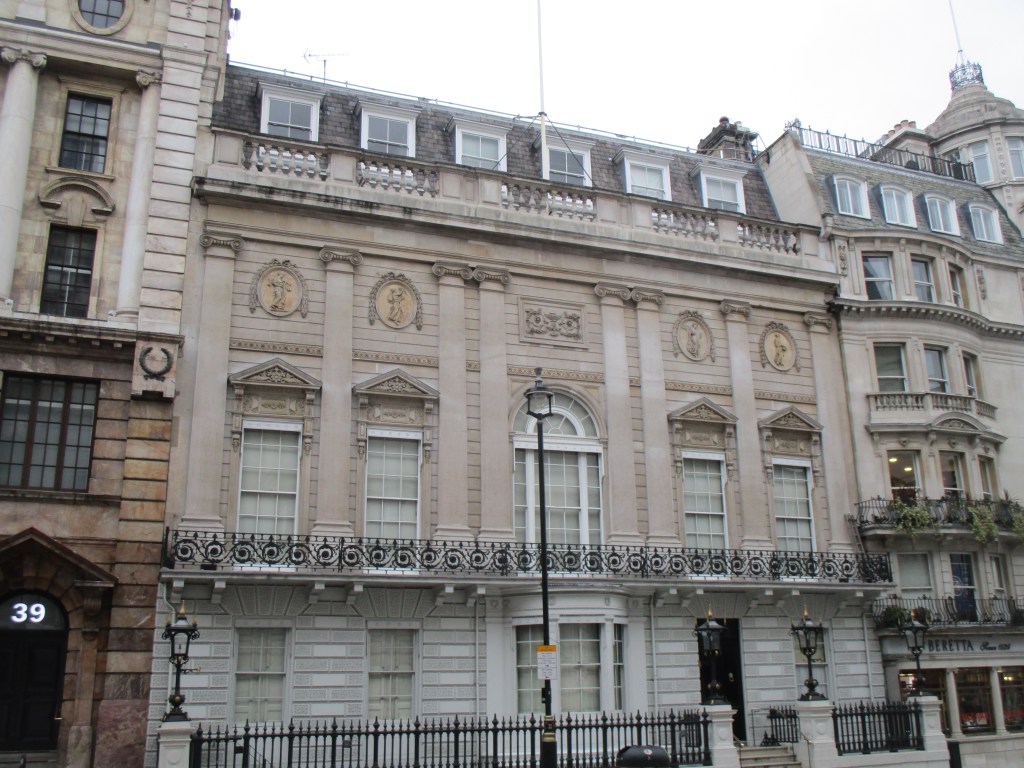
White’s is the oldest gentleman’s club in London having been founded in 1693; women are still not admitted today. It was established by an Italian immigrant called Francesco Bianco who sold hot chocolate as well as tickets to productions at King’s Theatre and Drury Lane Theatre.
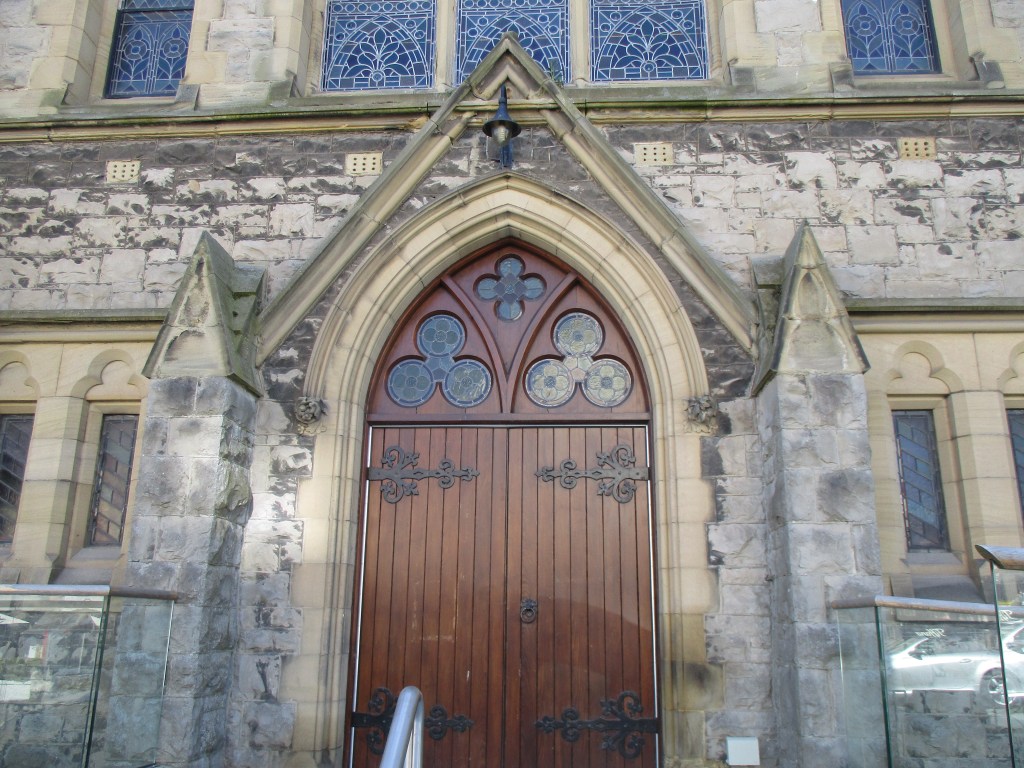
Inspired by The Red Phone Box Travels posts about doors, here are some interesting doors found around Llandudno in Wales. The first picture is of a side door to Gloddaeth Church which has some pretty stained glass windows.
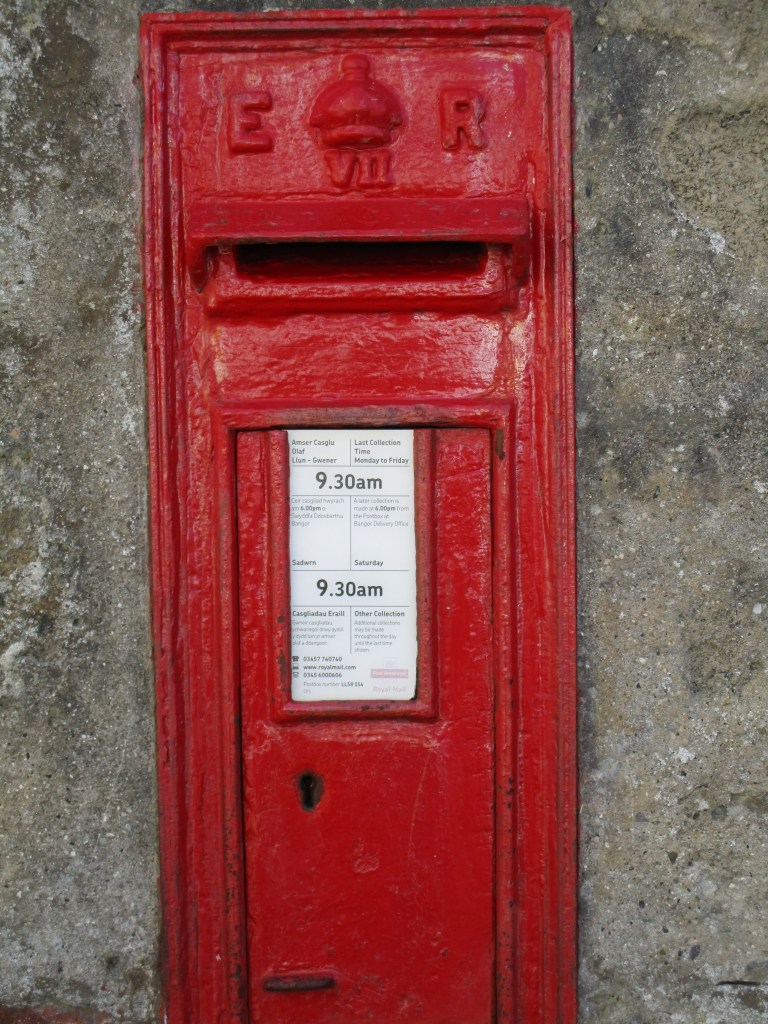
This is an example of a wall mounted post box; this type were introduced in around 1857 as a cheaper alternative to the pillar box style for small towns and rural areas. They were either mounted into existing walls, as this one was, or into purpose built brick pillars.
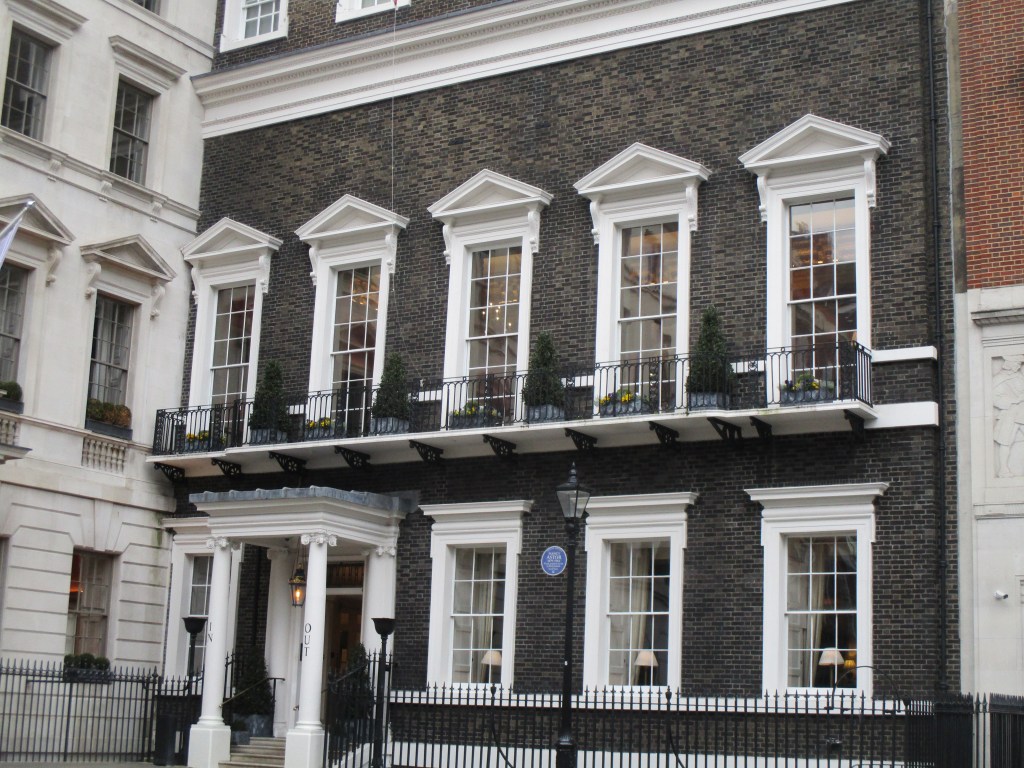
A private members club it was founded in 1862 by six military officers and based at 18 Clifford House but moved several times over the years until it opened at its present location of 4 St James’s Square in 1999. Originally men only, women are now admitted.
 Louise Jayne's Blog