The Lighthouse is Scotland’s National Centre for Design and Architecture. Originally it was the offices of the Glasgow Herald newspaper, designed by the architect Charles Rennie Mackintosh as his first public commission and completed in 1895.
Author Archives: Louise Jayne
The Lighthouse, Glasgow
Provand’s Lordship, Glasgow
Provand’s Lordship was built in 1471 and is one of Glasgow’s few surviving medieval buildings located not far from the Cathedral. It was built by Andrew Muirhead, the Bishop of Glasgow, as part of the then St Nicholas’ Hospital.
Glasgow Cathedral
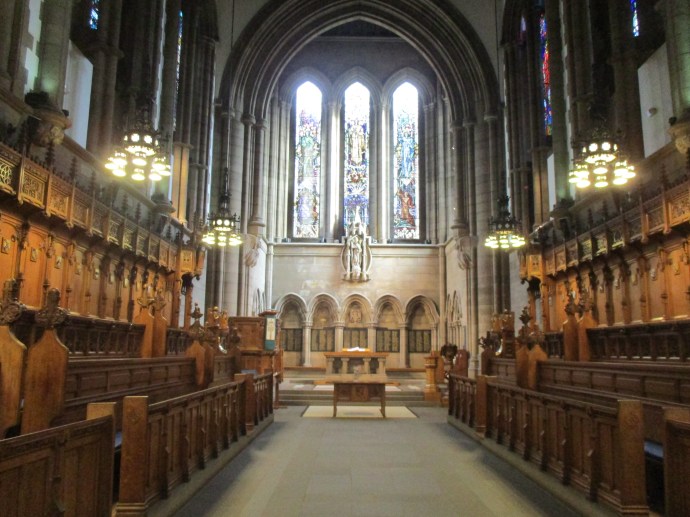
Glasgow Cathedral is the oldest cathedral on mainland Scotland, the present building being consecrated in 1197. It’s a large impressive stone building with very high ceilings next to the Necropolis.
Glasgow Necropolis
It should be obvious by now that I enjoy exploring a good cemetery and Glasgow’s Necropolis is one of the best. Established in 1832 it’s located on a hill next to Glasgow Cathedral (featuring in a future post) that, like Highgate in London, was inspired by Père Lachaise Cemetery in Paris.
Glasgow Street Art
Glasgow is renowned for its impressive street art and while I didn’t go on one of the many walking tours of the artwork available I did take some time one afternoon to seek some of them out. A few of my favourites are below.
The above, unofficially titled St Mungo, is probably the one I’ve seen the most shared around social media but it really is a stunning piece and definitely worth seeing in person to take in all the details close up. Completed in 2016 it’s by the artist Smug.
Another one of Smug’s work is this beautiful wildlife scene overlooking Ingram Street car park. Tricky to pick a favourite but the badgers are particularly adorable. I love the way it looks like you’re peering through holes in the wall.
Created for his 75th birthday by the artist Rogue One this is a great portrait of Billy Connolly that you can find in Osborne Street.
Another one of Smug’s works is this image of a girl with a magnifying glass not far from Glasgow Central Station.
St Mary Abbots Church, London
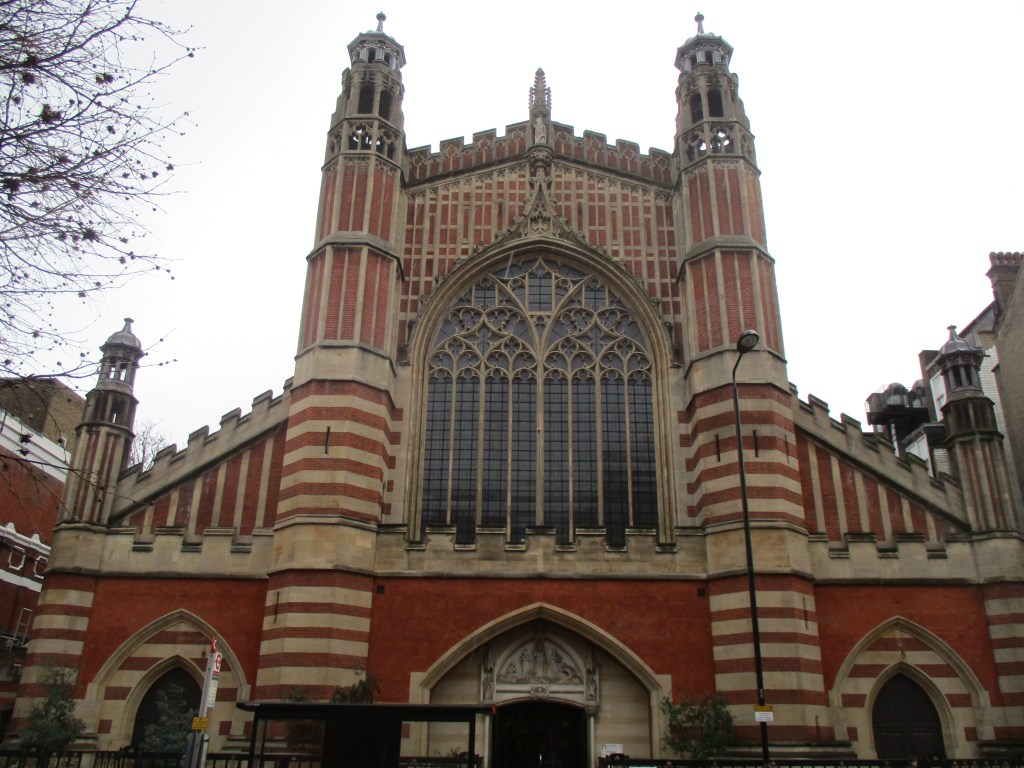
St Mary Abbots Church on Kensington High Street was built in 1872 and designed by Sir George Gilbert Scott (architect of the Midland Grand Hotel at St Pancras and the Foreign and Commonwealth Office among many others), though church buildings had been on the site before then.
Christ Church, Spitalfields
I wandered into Christ Church, Spitalfields mostly to shelter from a sudden downpour. Built between 1714 and and 1719 it was designed by Nicholas Hawksmoor who worked alongside Christopher Wren. It was one of the first “commissioners’ churches” which had been established by Act of Parliament in 1711 to build fifty new churches for London’s expanding population.
Brompton Cemetery, London
After my very successful tour of Highgate Cemetery I decided that I would like to cross off all the so-called “Magnificent Seven” cemeteries in London, starting with Brompton. Opened in 1840 over 200,000 people are buried here and it is the only cemetery in the country managed by the Royal Parks on behalf of the nation. At over 40 acres it was specifically designed to resemble the layout of an open air cathedral and has some stunningly impressive architecture as well as being the final resting place of a large amount of interesting and notable people.
Shoreditch Street Art
As I was in the Shoreditch area by the time I’d finished my planned Open House London visits I decided to have a wander around and look at some of the street art the area is famous for – with apologies that I didn’t make note of where exactly each photo was taken, here are some of my favourites.
Sandys Row Synagogue, London
I visited Sandys Row Synagogue in Spitalfields as part of Open House London and was impressed both by the warm welcome and the interior which is much more beautiful than its exterior would suggest. The building started out as L’Eglise de L’Artillerie (the Artillery Church) in 1766 being consecrated as a synagogue in 1876 for the Dutch Ashkenazi Jews, economic migrants who had begun moving to the area in the 1840s.