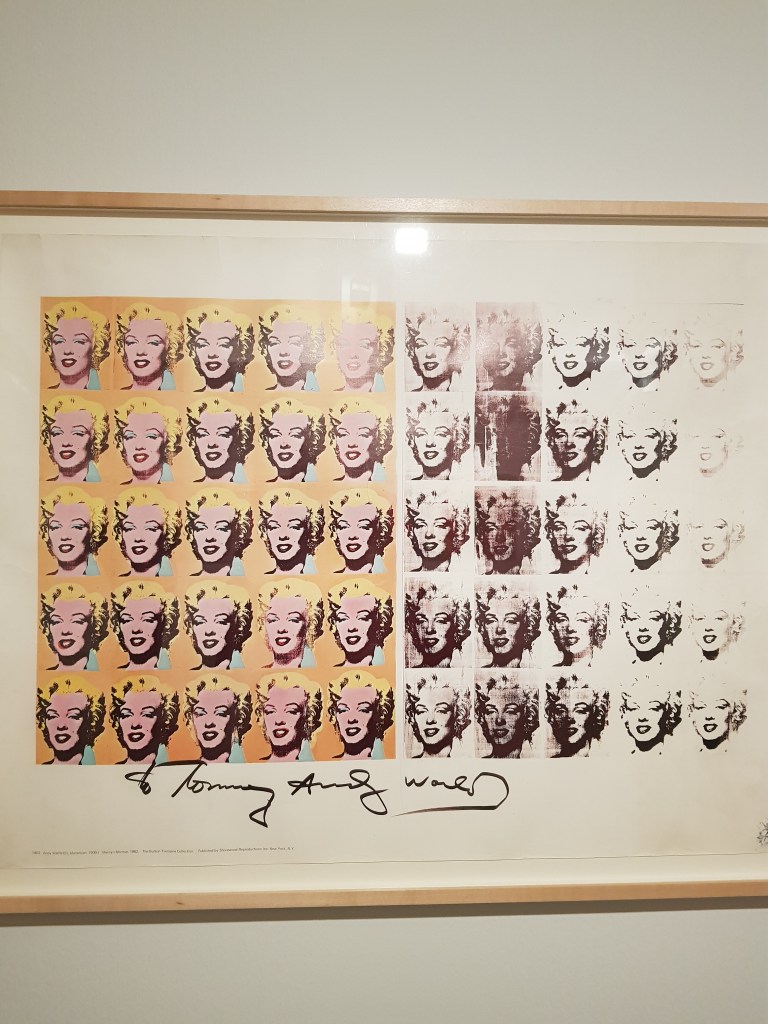
Recently I headed to the Djanogly Gallery, part of the Lakeside Arts complex on the University of Nottingham campus for the Andy Warhol: Pop Icon Exhibition. It was made possible by ARTIST Rooms, a touring collection of artwork owned by Tate and National Galleries of Scotland to showcase artwork that, let’s face it, would never normally make its way to the East Midlands.
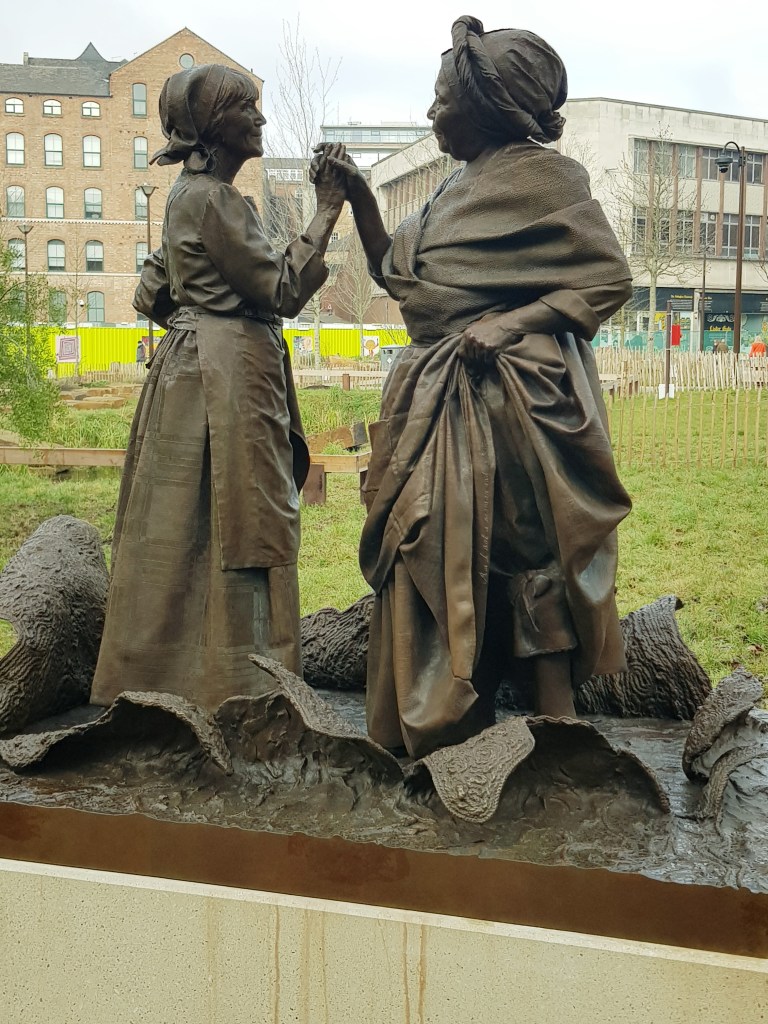
Earlier today I went into Nottingham city centre to take photos of this recently unveiled sculpture in The Green Heart, Nottingham’s newest green space near the Central Library and on the way up from the train station. The statue represents a white lace worker and a black enslaved woman greeting each other. As someone from a long line of men and women who worked in the Nottingham lace trade from working in factories to designing lace patterns the fact that none of their work would have been possible without the cotton supplied by enslaved people has never been lost on me but it’s not something that gets highlighted as much as it should and this sculpture goes some way to rectifying that as well as emphasising the contributions made by women to the economy and society in general.
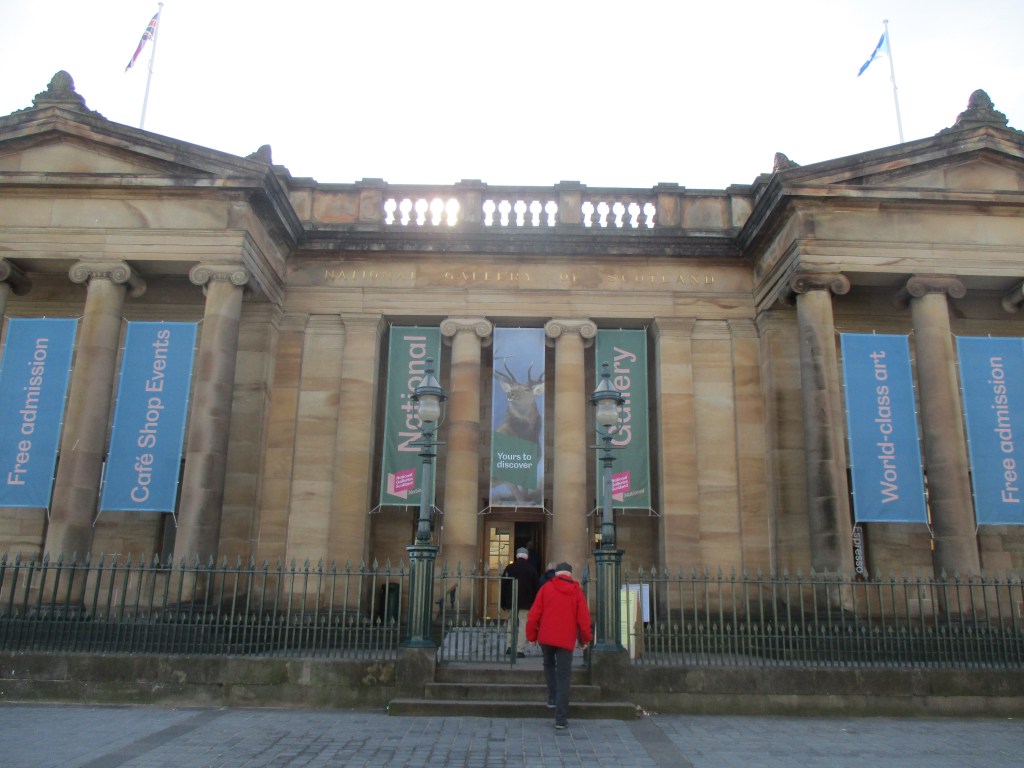
The National (as it’s recently been renamed) was another one of the those places I hadn’t managed to get to on my previous visit to the city so I made sure to pop in this time. I arrived in Edinburgh just at the right time as they had recently revamped the building with newly opened galleries specifically to highlight Scottish artists in their collection which I was particularly eager to see. Free to enter the gallery can be found just off Princes Street by the Scott Monument.
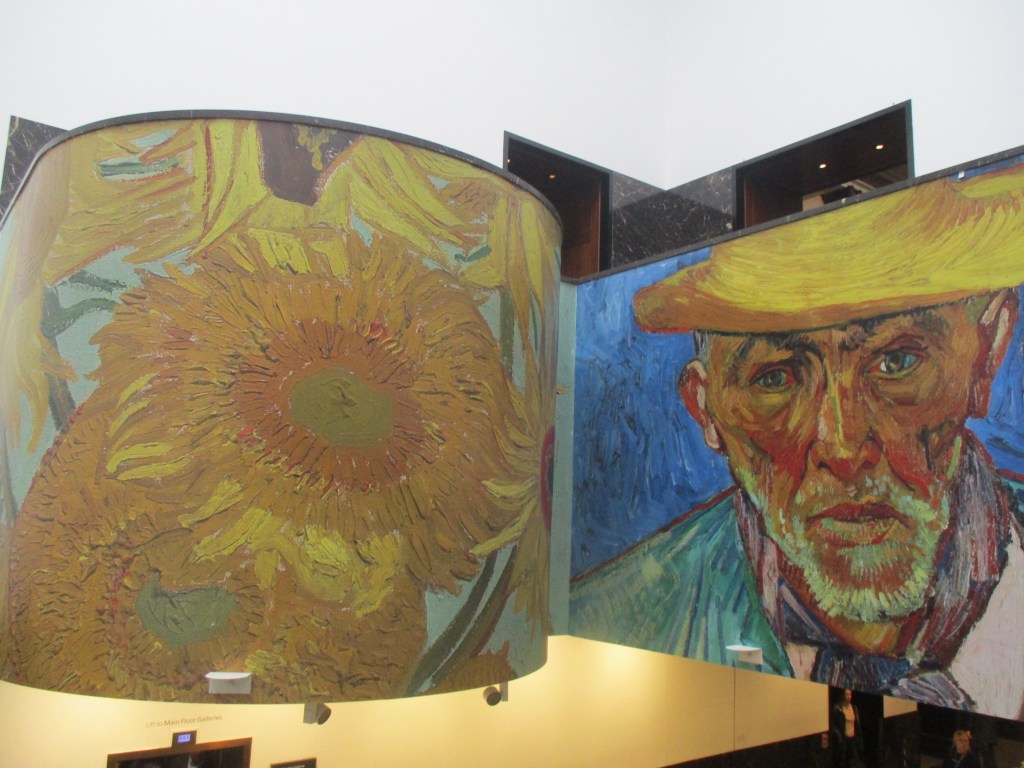
Last week I headed down to London for a couple of days to attend two exhibitions, the first of which was the Van Gogh exhibition at the National Gallery. Van Gogh is one of my favourite painters so when I saw the announcement I knew that I would be attending. The exhibition is being billed as a once in a century event and it was easy to see why, there are paintings on loan from galleries as far away as the United States and Japan and some that are in private collections and rarely ever seen in public. There were also paintings that are displayed together again for the first time since Van Gogh painted them.
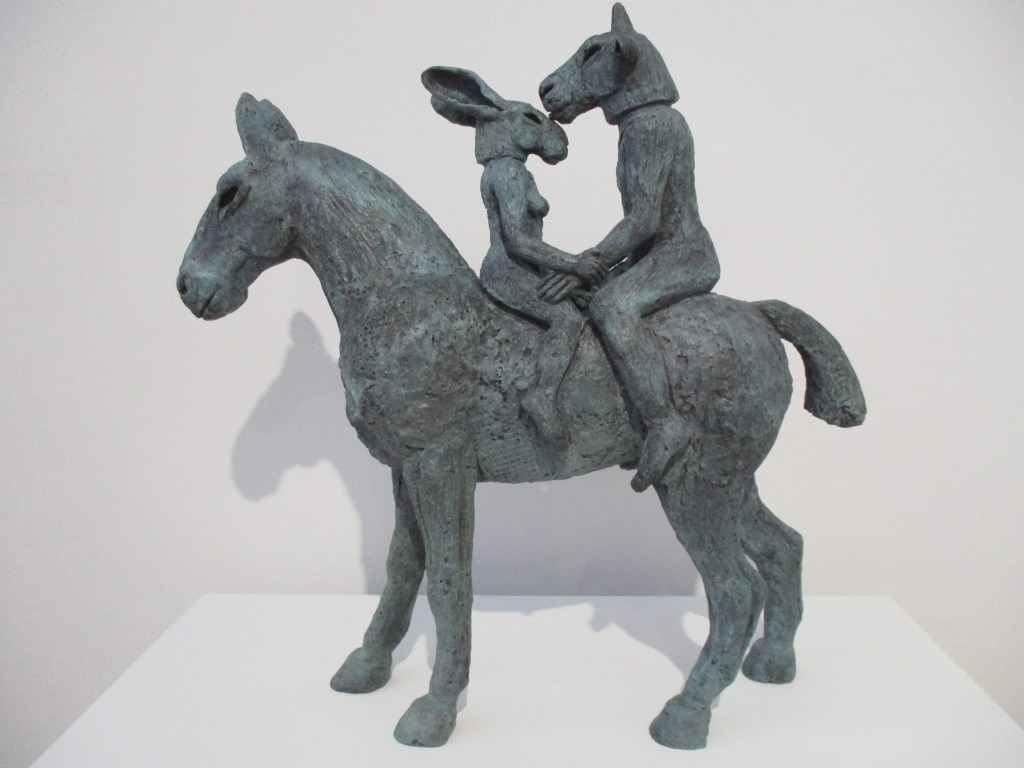
I have to admit I’d never heard of Sophie Ryder before but I am on the mailing list for Lakeside Arts which covers Djanogly Gallery (based on the University of Nottingham campus) and I was intrigued by the photos of her work so I made a mental note to go visit and as is often the case with these things didn’t actually get around to it until it was in its last week (it closed on 12 March).
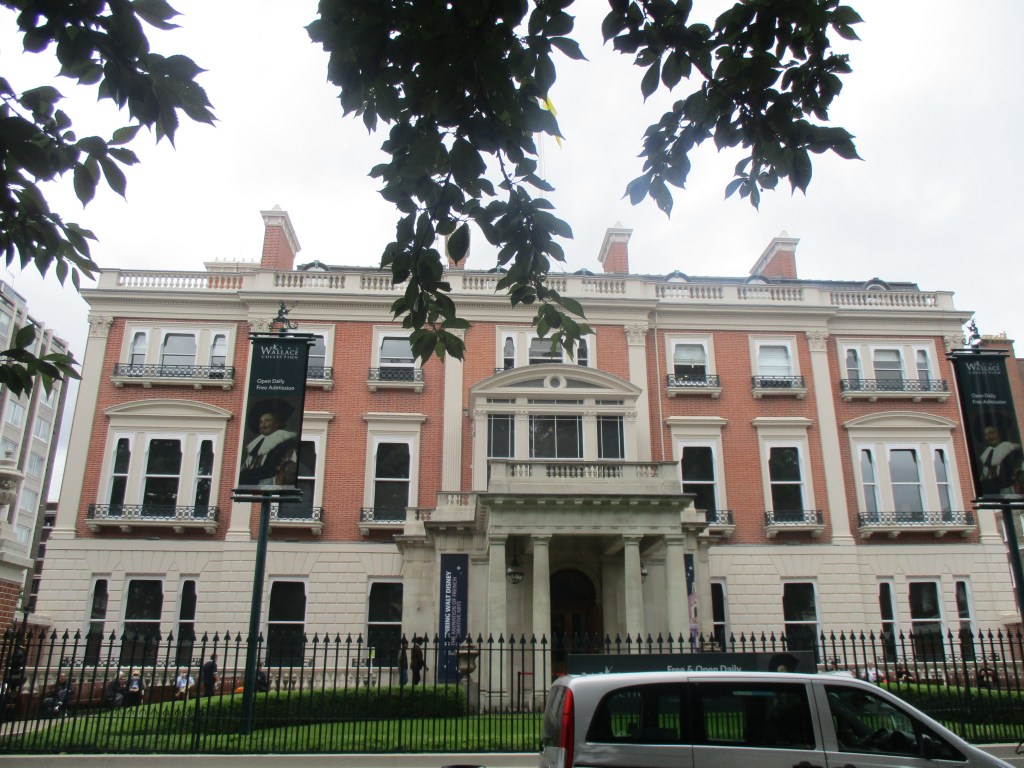
Back in May I went to the Wallace Collection to visit the Inspiring Walt Disney: The Animation of French Decorative Arts exhibition. In collaboration with New York’s Metropolitan Museum of Art this exhibition, which finished recently, focused on how 18th century French art influenced Disney animators, particularly for the original Cinderella and Beauty and the Beast. I enjoyed the exhibit, particularly the hand drawings of the transformation of Cinderella’s dress from rags, and the audioguide which was included in the £14 for adults admission price was really well done. Somewhat inevitably photography wasn’t allowed in the exhibition. Photography is allowed however in the Wallace Collection itself, which is free to enter.
Just by the Leadenhall Building in London were a series of sculptures of heads. Made of aluminium they are the sculptor’s exploration of Greek, Roman and Egyptian traditions for the 21st century. They were part of the Sculpture in the City programme, an annual sculpture park that uses London streets as its gallery. You can learn more about the programme and this year’s sculptures here. The heads are currently on display at Hauser & Wirth Gallery in Somerset.
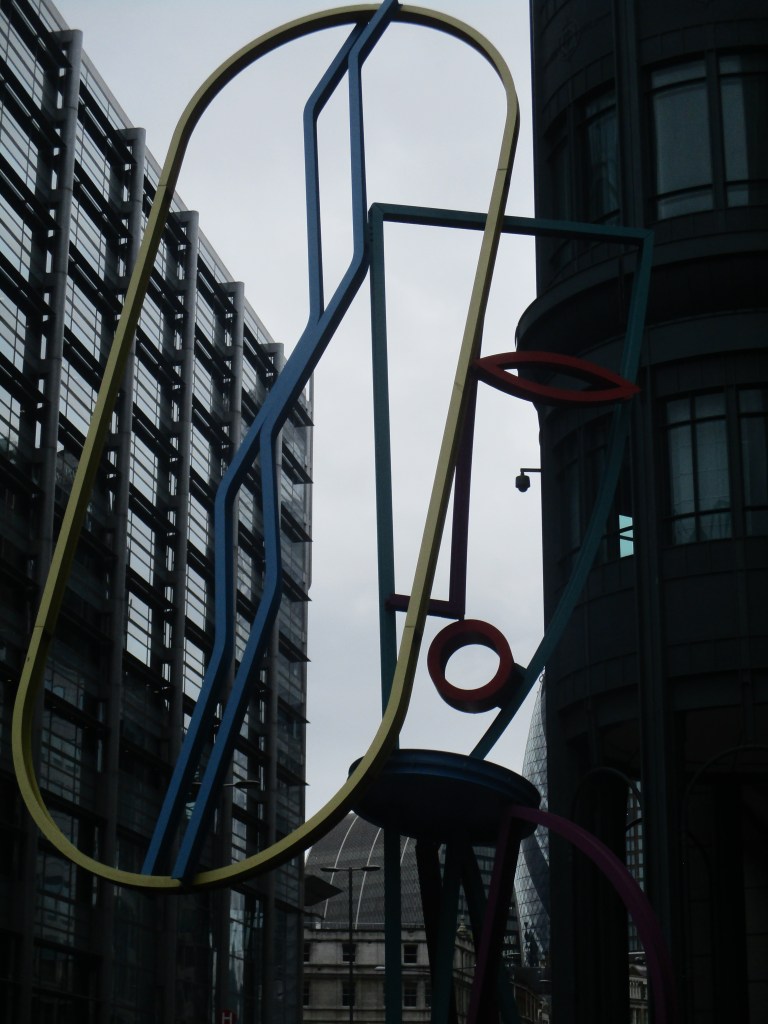
This abstract female face is by Glasgow born Bruce McLean and can be found outside 199 Bishopgate in London. Created in 1993 the title apparently refers to Glasgow’s “aye-aye” greeting. Made of steel it really is a fun addition to the surroundings.
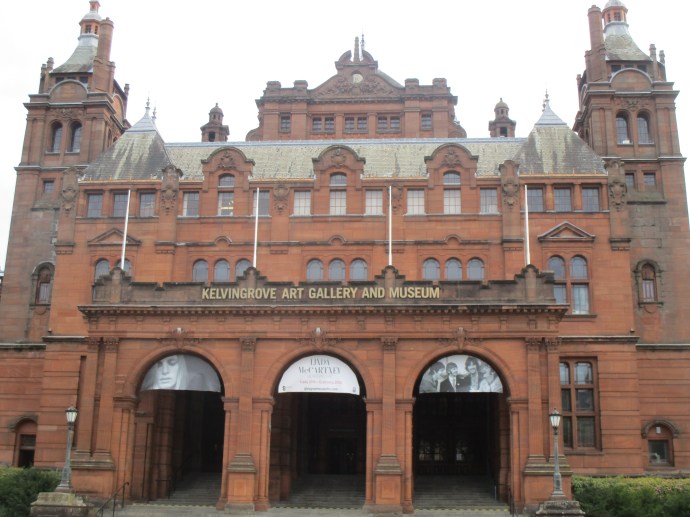
The main reason I wanted to visit Glasgow last October was to go to the Kelvingrove Art Gallery and Museum and it turned out to be an even better experience than I’d been expecting, in fact I ended up spending most of the day there. The building itself is beautiful inside and out, designed in a Spanish Baroque style in red sandstone by John W. Simpson and E. J. Milner Allen and opened in 1901.

 Louise Jayne's Blog