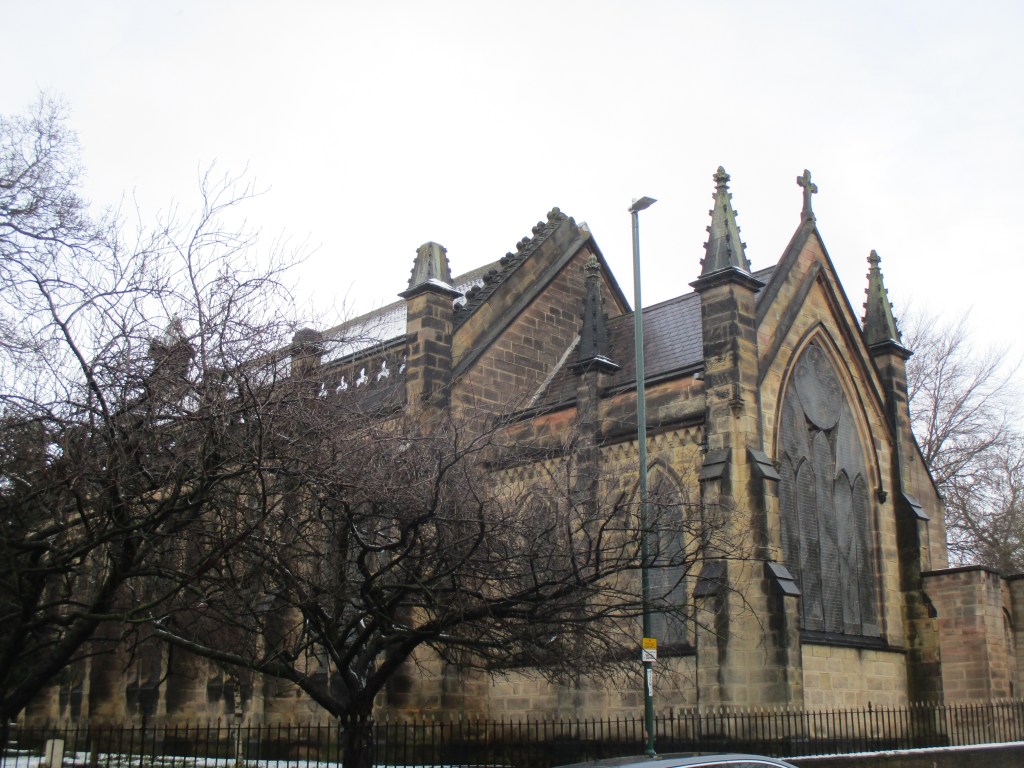
I visited St. John’s Church in Carrington back when we had some snow in March. The doors were locked so I couldn’t go inside but the graveyard proved to be quite interesting on its own. Building of the church began in 1841 thanks to an endowment from Ichabod Wright, a local banker who lived in Mapperley Hall not far from the church and which has since been turned into flats.
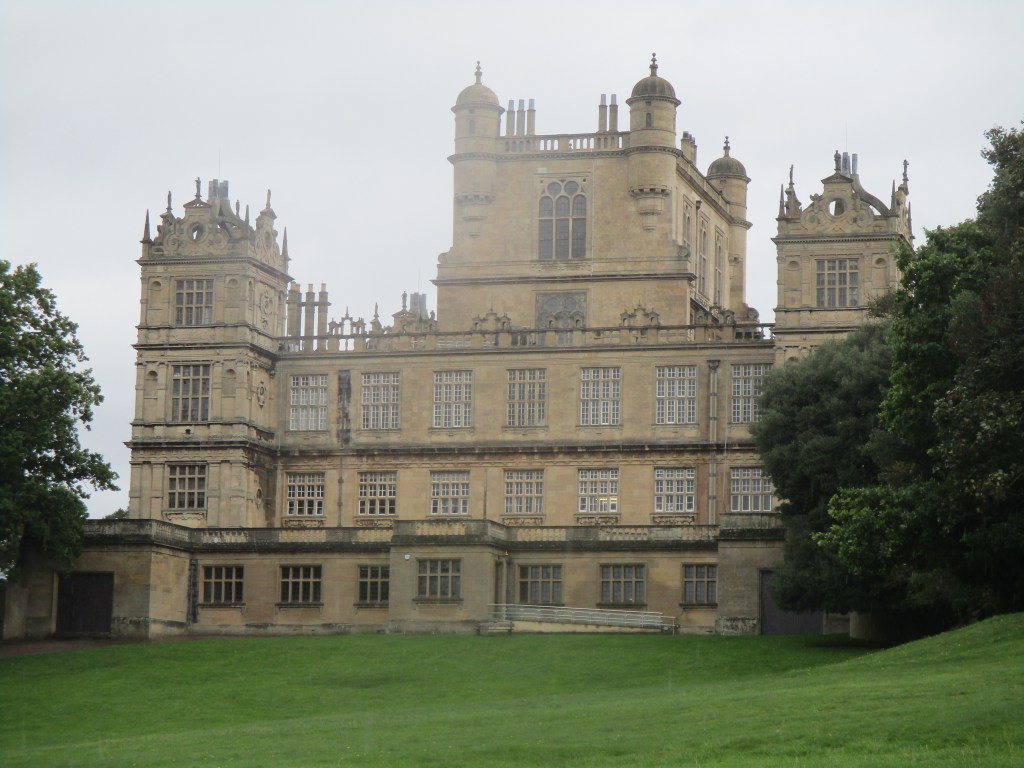
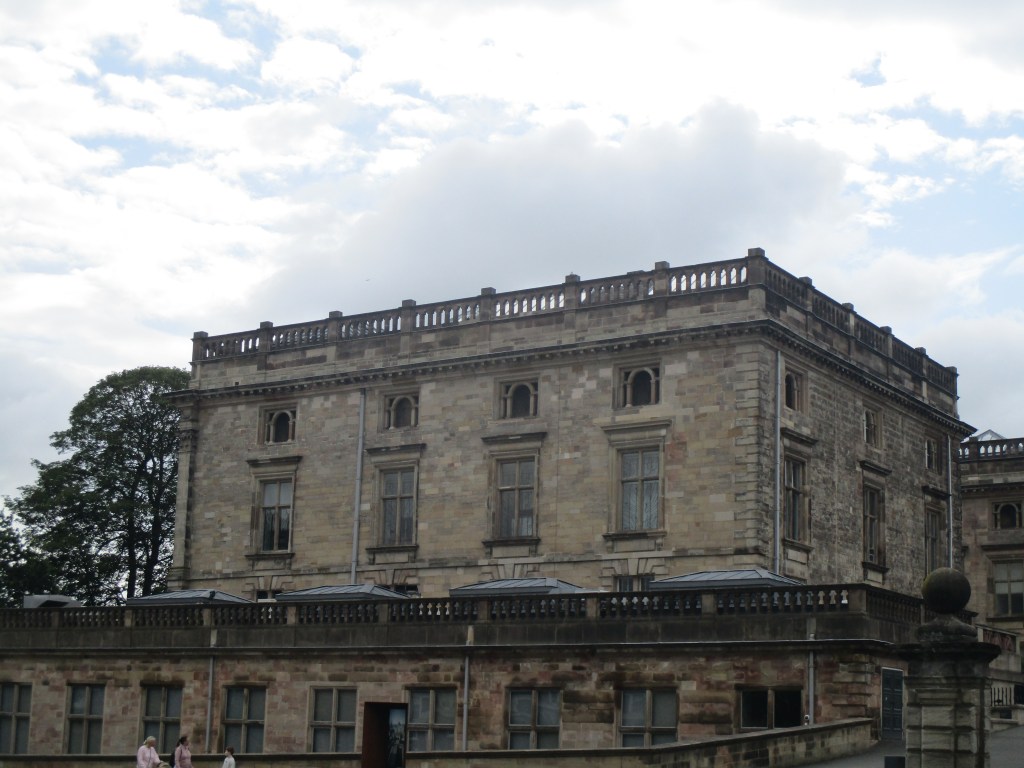
After visiting the Sophie Ryder exhibition I decided to walk up through the University of Nottingham campus and enter Wollaton Park by the Derby Road gate of Beeston Lodge which I’ve never actually entered through before, despite having visited Wollaton Park since childhood. The lodge is Grade II listed and dates from 1832 – it was built by the then owner of Wollaton Hall, Henry Willoughby, 6th Baron Middleton and, along with other gatehouses around the park, was built after the Nottingham Reform Riots in October 1831.
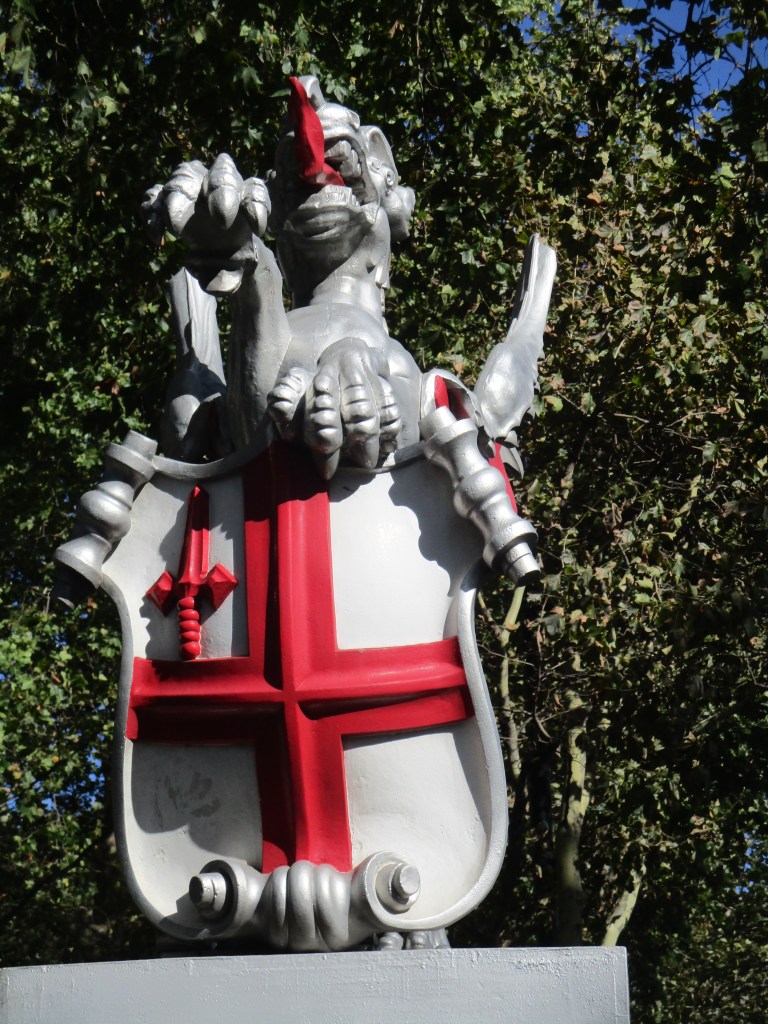
Marking the boundary of the City of London these dragons are from the London Coal Exchange which was demolished in the 1960s. The Corporation of London’s street committee selected the statues as the model for the boundary markers in 1964 and replicas were erected at main entrances to the City.
I have to admit I’d never heard of Sophie Ryder before but I am on the mailing list for Lakeside Arts which covers Djanogly Gallery (based on the University of Nottingham campus) and I was intrigued by the photos of her work so I made a mental note to go visit and as is often the case with these things didn’t actually get around to it until it was in its last week (it closed on 12 March).
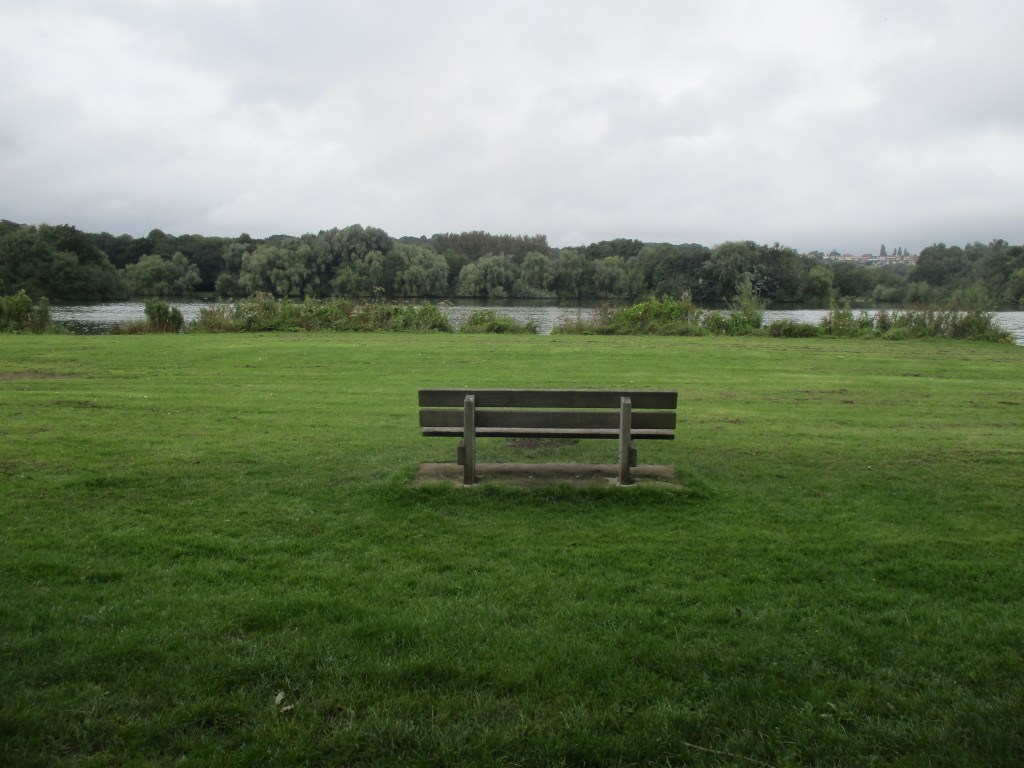
Nottingham has a great deal of green spaces many of which I’ve never actually visited, so this year I’ve decided to try and visit more of them. Arnot Hill Park was the first of these, which I picked solely because I happened to be roughly in the area on the day. It was easy to get to by bus – there’s a stop right outside the entrance on Nottingham Road.
St Mary’s is an Anglo-Catholic church that dates from the 12th century though its impressive looking tower and spire were added later in the 13th and 14th centuries. The tower is covered in blind arcading – those bits that look like windows – which means they are decorative and have no actual opening. We didn’t have chance to go inside on this visit, but were impressed by the beautiful exterior.
On this trip I entered the reserve via the Beeston Canal towpath which I haven’t done before. It was foggy to start off with though not actually all that cold, even though large parts of the lakes and ponds were frozen. You can’t get lost on this route (or really any of the different routes around the nature reserve) so we just followed it until we decided we needed a cup of tea (first time I’ve used a flask in ages!) and then headed back the way we’d come to where we’d parked the car.
Christopher Wren died on 25 February 1723 so today marks the 300th anniversary of his death. The Georgian Group (which is a charitable organisation set up to preserve Georgian buildings that I only discovered existed this year) are spearheading a range of activities/lectures etc. about Christopher Wren for this anniversary throughout the year – you can find their events page here. One of my low key bucket list items is to visit every building connected with Wren and I’ve managed to tick off quite a few. St Paul’s Cathedral is of course one of them (though somewhat annoyingly when I visited – back in 2015 it turns out! – you couldn’t take pictures of the inside which is now permitted) but there are plenty of other interesting churches to visit, some of which are highlighted below.
Originally recognised for the design of at least 52 churches after the Great Fire of London it’s understood nowadays that many of those probably had much of the principal work, if not all, done by those who were working for Wren, such as Nicholas Hawksmoor, now a renowned architect in his own right. St-Mary-at-Hill is one of those churches that Wren restored after the fire and which was probably overseen by another architect, this time Robert Hooke.
A few weekends back I decided to go for a walk around Attenborough Nature Reserve. I was planning on getting the train there (a quick 10 minutes or so from Nottingham Railway Station) but my dad asked if he could tag along so he drove us there. However the car park was the busiest I have ever seen it, we couldn’t find a parking spot anywhere, so instead we drove to near the Beeston Lock/Beeston Marina section of the canal where you can park on the street for free and walked along the canal and into the Nature Reserve from there. It was very sunny if a bit cold near my house but once we reached the canal we were surprised to see a great deal of fog, though it made for some very atmospheric photos.
You can’t visit Conwy without taking a walk along the quayside and admiring the boats and the seemingly larger than life seagulls. There’s a pub and fish and chips shop, plus a stall selling ice creams and hot drinks etc. There are also boat trips available (I did one of these which will feature in a later post) and the quay leads on to part of the Wales Coast Path (various sections of which will also feature in later posts).