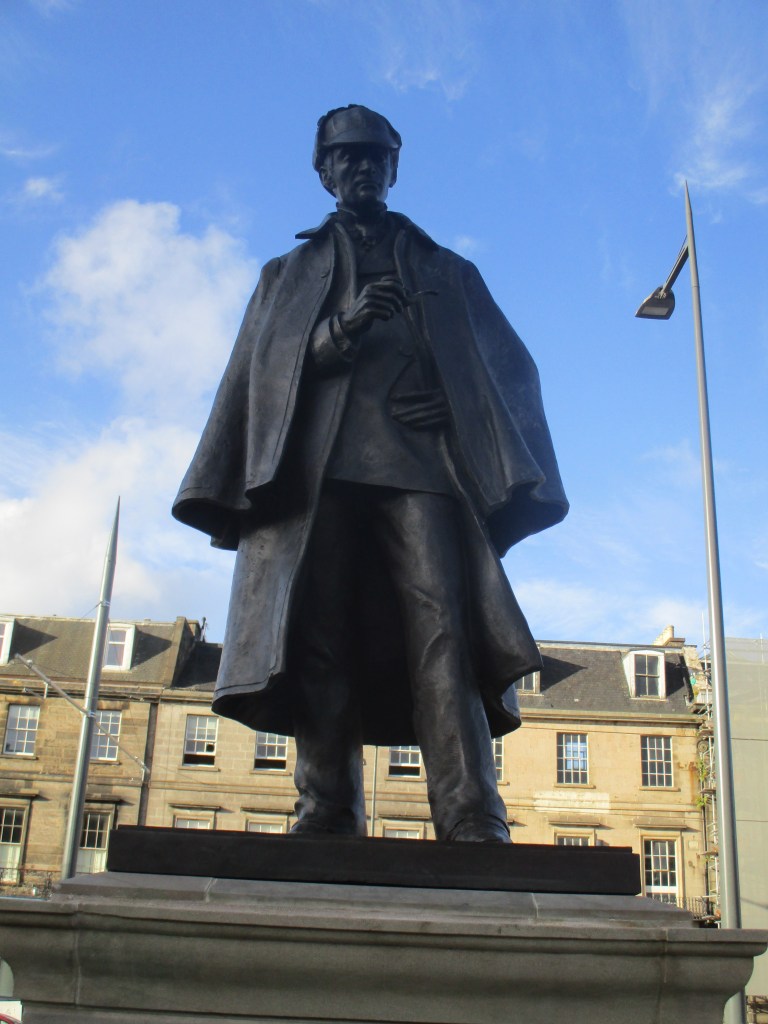
This post goes through all the random statues, streets and buildings that don’t quite amount to enough for their own posts. To start with, we have this statue of the world’s only consulting detective. Arthur Conan Doyle, the creator of Sherlock Holmes, was born on 22 May 1859 at 11 Picardy Place, Edinburgh. That building is no longer there but nearby to where it stood is this quite nicely done statue of his creation. The statue was sculpted by Gerald Ogilvie Laing and was moved to its new home on the traffic island here in 2023 after being taken from its original position for renovation.
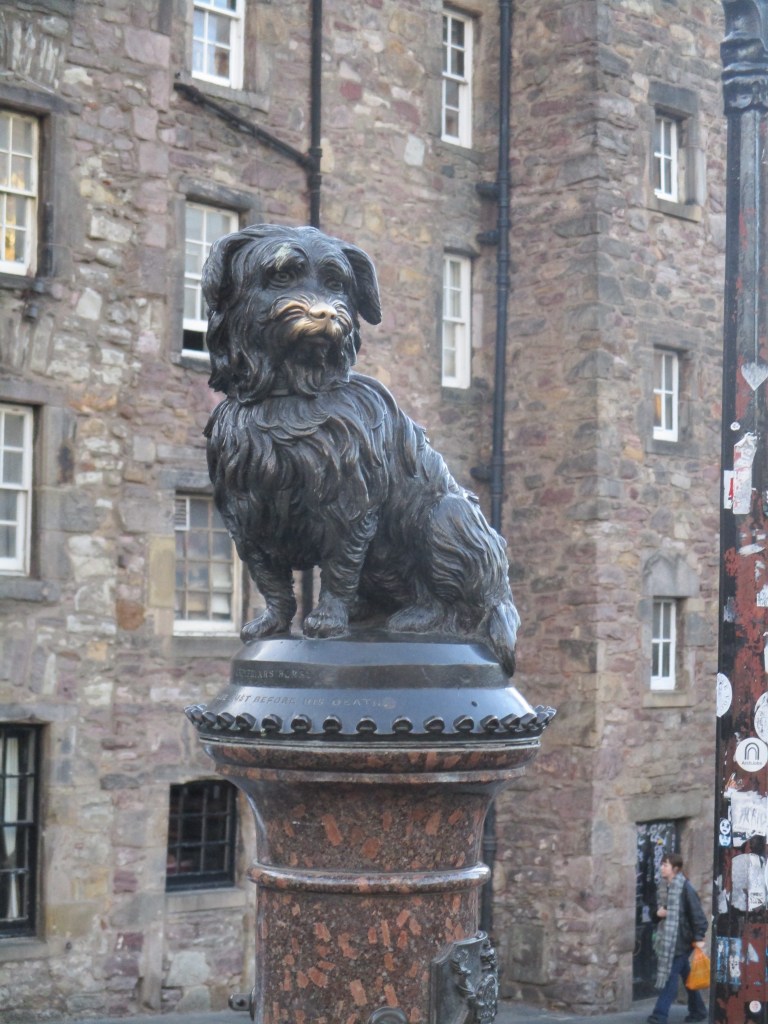
Greyfriars Bobby
The most well known and most photographed dog in Scotland (somewhat to its shame Edinburgh has more statues of animals than it does of women). There are many variations of the story but probably the most well known is that Bobby belonged to John Gray, who when he died was buried in Greyfriars Kirkyard and Bobby loyally spent the rest of his life by his owner’s grave – 14 years in fact. Rubbing his nose is supposed to give good luck, hence the discolouration.
The High Street Wellhead
The original wellhead dated from around 1675 but was damaged by a horse-drawn fire engine and rebuilt in 1897. It provided water from Comiston Springs via the Castlehill Reservoir for the inhabitants of the Old Town – the Wellhead can be found along the Royal Mile. There were originally twelve wellheads around the Old Town, the water fed to them via gravity.


The Binns Clock
The Binns Clock can be found on a building at 145 Princes Street. It was restored in 2021 by Johnnie Walker, the whisky company, who took over the building and now use it as a whisky experience. It was named for the former department store that first installed it in 1960. I didn’t see it working myself but apparently Highland figures march out every 7 and 37 minutes past and it plays traditional Scottish tunes. It was, and perhaps still is, a popular landmark for couples to meet under.

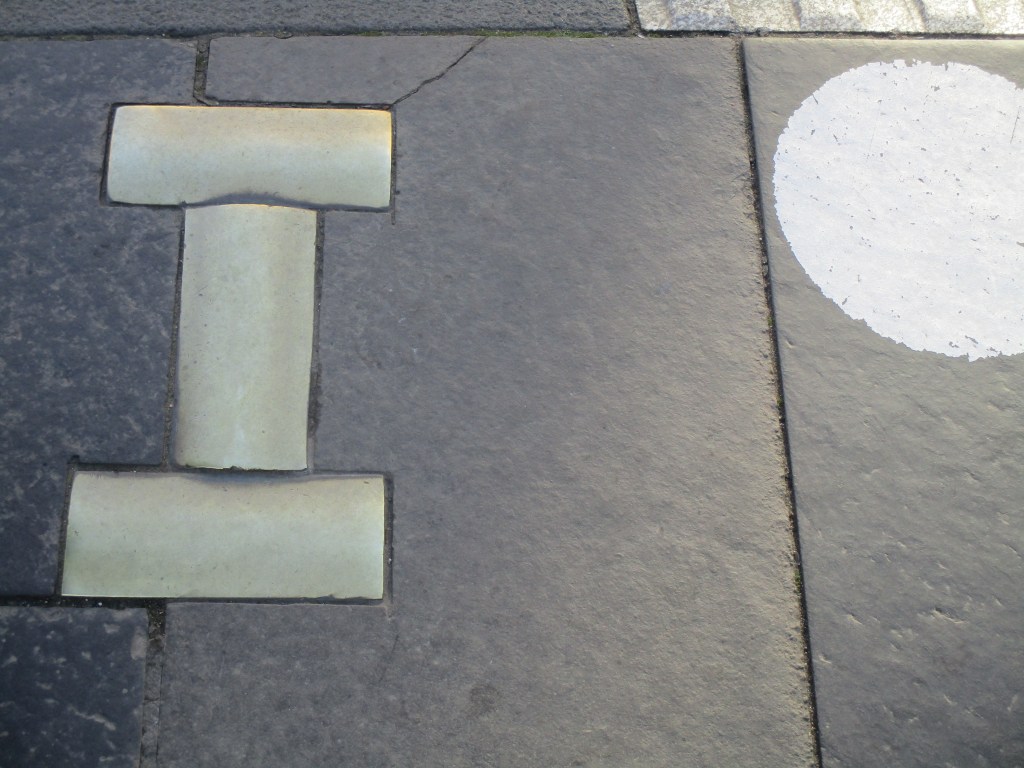
Site of the Last Execution in Edinburgh
These three brass plates at the edge of the pavement at the corner of George IV Bridge and the Lawnmarket denote the spot where the gallows stood for Edinburgh’s last public execution. George Bryce, a convicted murderer, was hanged here in 1864 but things went badly wrong. For a start they had to bring in an executioner from York who by all accounts was either drunk or severely hungover and instead of carefully measuring the length of rope needed for a quick death, the rope was too short and Bryce suffocated in front of the assembled crowd for possibly as long as 40 minutes. Anger at the event lead to the officials and executioner being pelted with stones and the decision was made to no longer hold executions in public, though the last execution behind closed doors in Edinburgh took place in 1954.
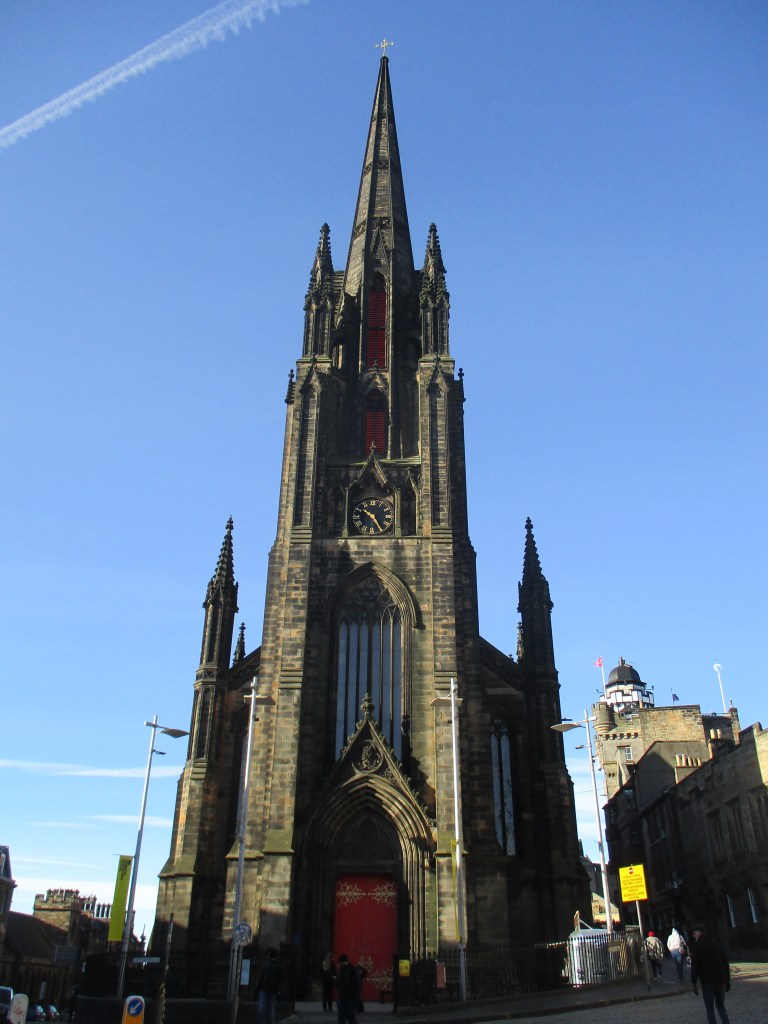
The Hub, Tolbooth Kirk
The hub is now the central tickets office for the Edinburgh International Festival but originally it was a church. Constructed between 1842 and 1845 in the Gothic Revival style by architects J. Gillespie Graham and Augustus Pugin (architect of the interior of the Houses of Parliament) and it’s spire is the highest part in central Edinburgh.
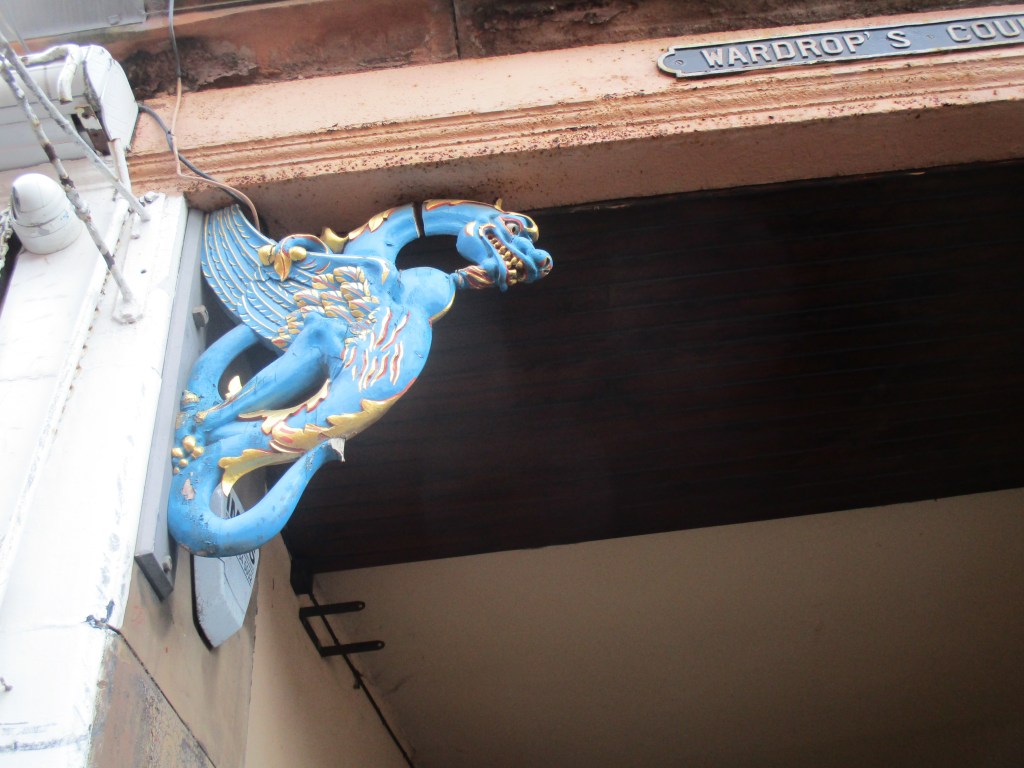
Wardrop’s Court
Wardrop’s Court off the Royal Mile leads down to Makars’ Court and the Writers’ Museum. The entrance is decorated with these lovely blue dragons. There are four in total, two by J. S. Gibson and two by Arthur Geddes. Only 16 when he created them in 1911 Geddes was the son of leading Edinburgh town planner Patrick Geddes.

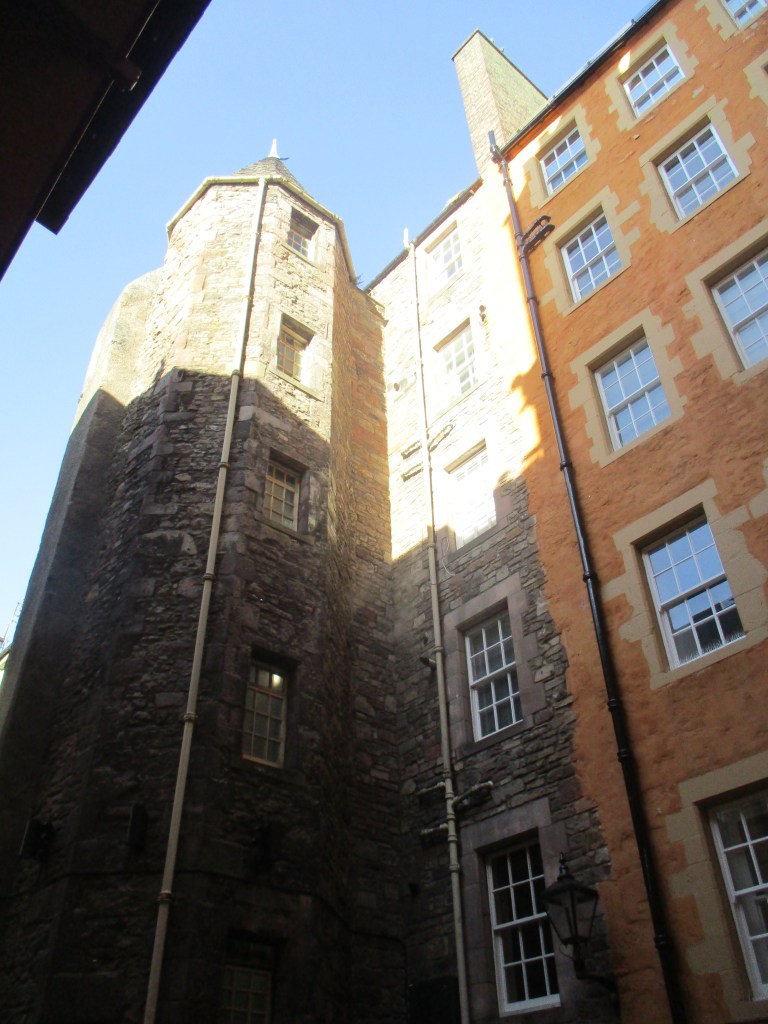
Riddle’s Court
Located in the Lawnmarket in 1590 a ruined building on this site was demolished and in 1726 George Riddle a wealthy tradesman recreated parts of the building which became known as Riddle’s Court. The Scottish Historic Building Trust repaired and restored it. In 1598 King James VI and his wife Anne of Denmark attended a banquet here.


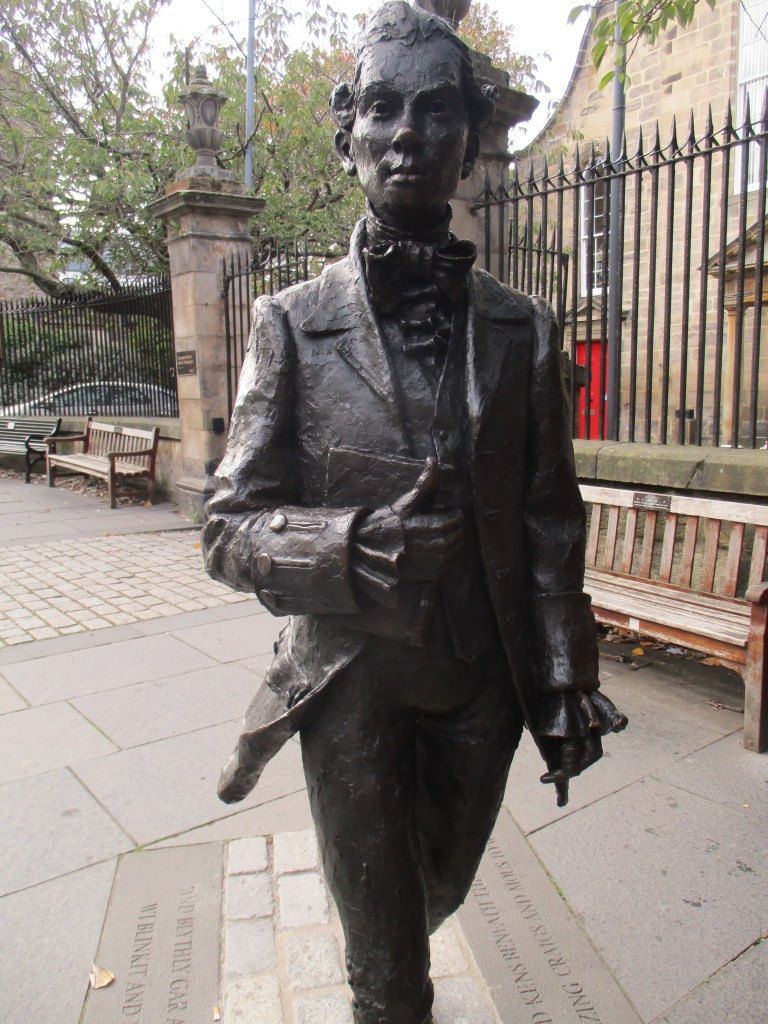
Robert Fergusson Statue
Located in front of Canongate Church on the Royal Mile this statue commemorates the poet Robert Fergusson who was born in 1750 and died just 24 years later. Fergusson suffered bouts of depression and one day he had a fall leading to a serious head injury and ended up being committed to the Edinburgh Asylum for Pauper Lunatics where he died. His death inspired one of the founders of the Royal Society of Edinburgh to improve conditions of asylums and establish the first public lunatic asylum in Edinburgh. The artist of the statue was Andrew J. L. Ansell.
And so ends my series of posts on Edinburgh! Up next, Athens.
 Louise Jayne's Blog
Interesting bits and bobs. I took a photo of Greyfriars Bob and I also have a photo of this last statue
LikeLiked by 1 person