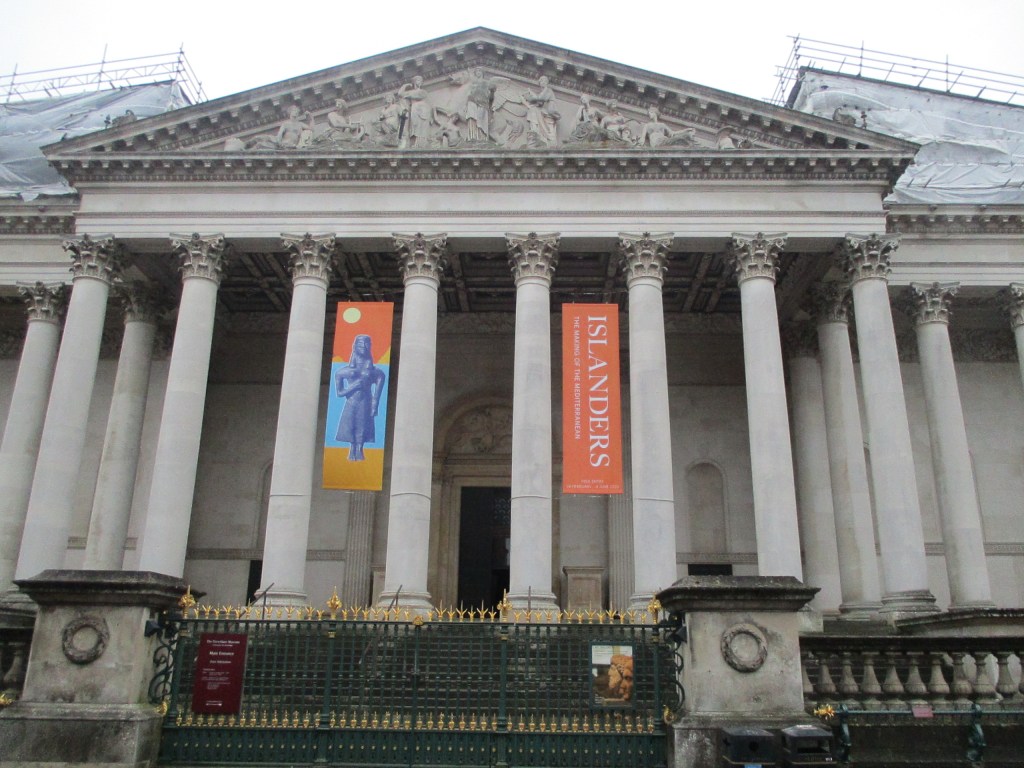
The Fitzwilliam Museum has been on my to visit list for a very long time and I made sure to fit it into my plans on this trip. Entrance is free but it is advised to book a timed ticket anyway for the exhibitions even though they’re also free. When I visited the exhibition was Islanders: The Making of the Mediterranean and I had a ticket for opening time at 10am which meant I had plenty of time to wander around the exhibition and then through the rest of the museum without it feeling too crowded.
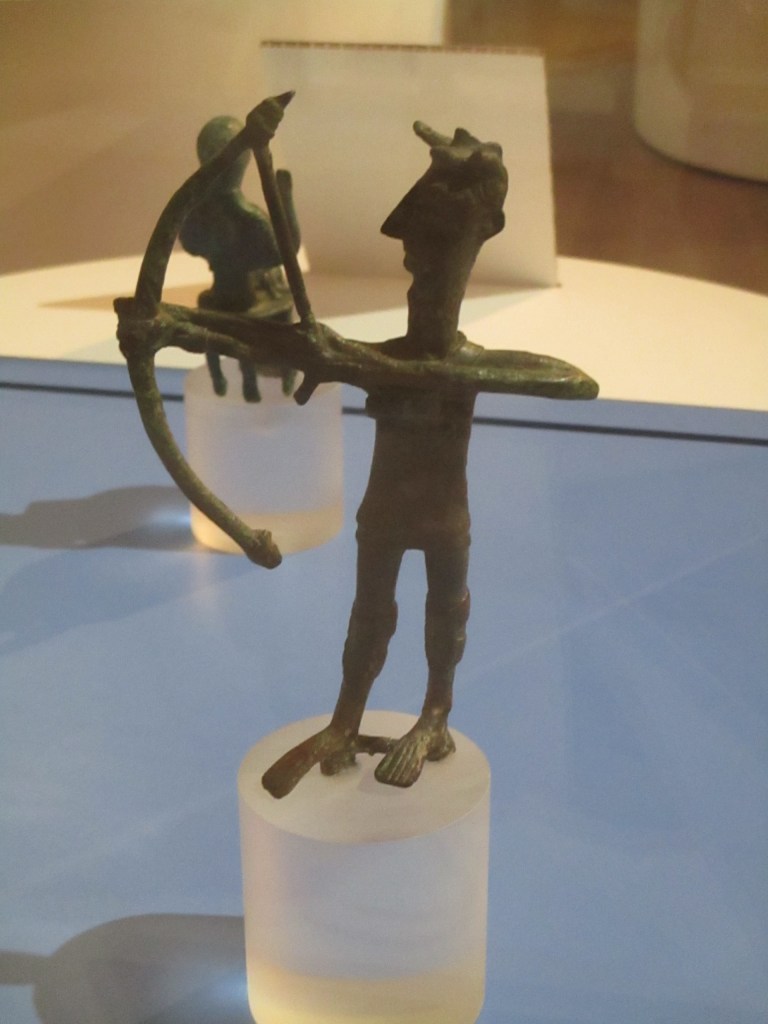
Islanders was excellent, well laid out and informative it displayed over 200 objects from Cyprus, Crete and Sardinia dating back over 4,000 years. They showed how islanders back then lived their lives and the kinds of items that were important to them. One of my favourite items on display was this archer which was left in Abini Teti, Sardinia in an Iron Age Sanctuary (1000-700BCE). It may have been left as an offering to protect the livestock that would have been moved by the sanctuary.
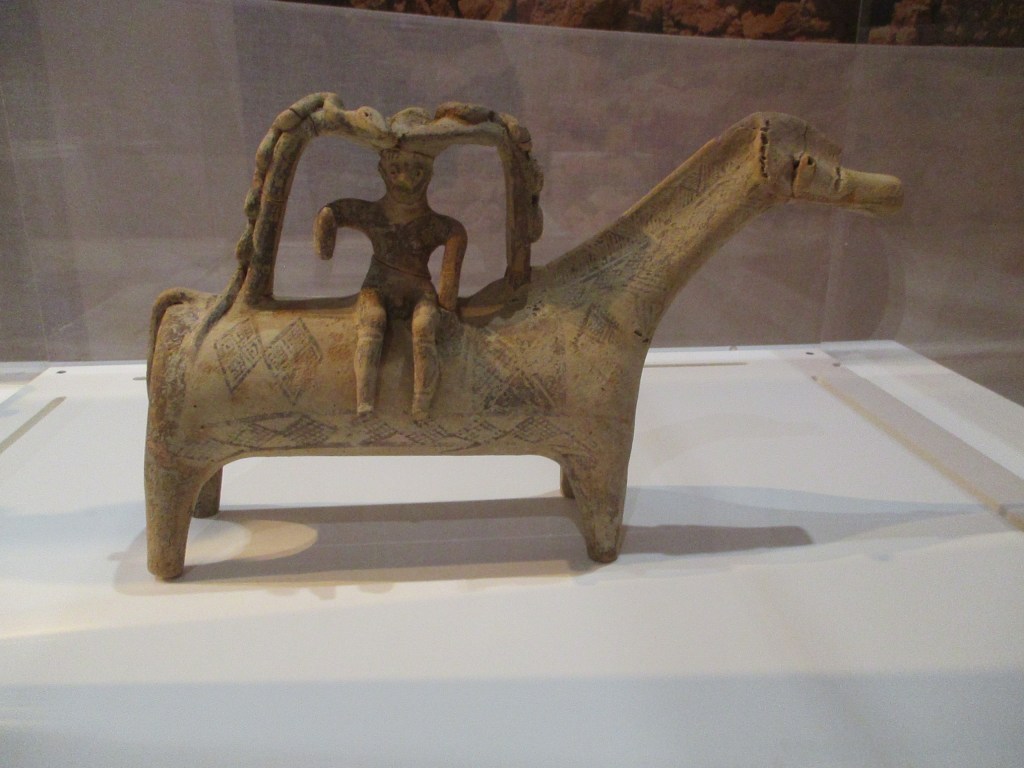
Another item which caught my eye was this fun drinking vessel from Cyprus (c1000-1050BCE). Drinking vessels apparently often took the form of a bull and it has some lovely painted designs.
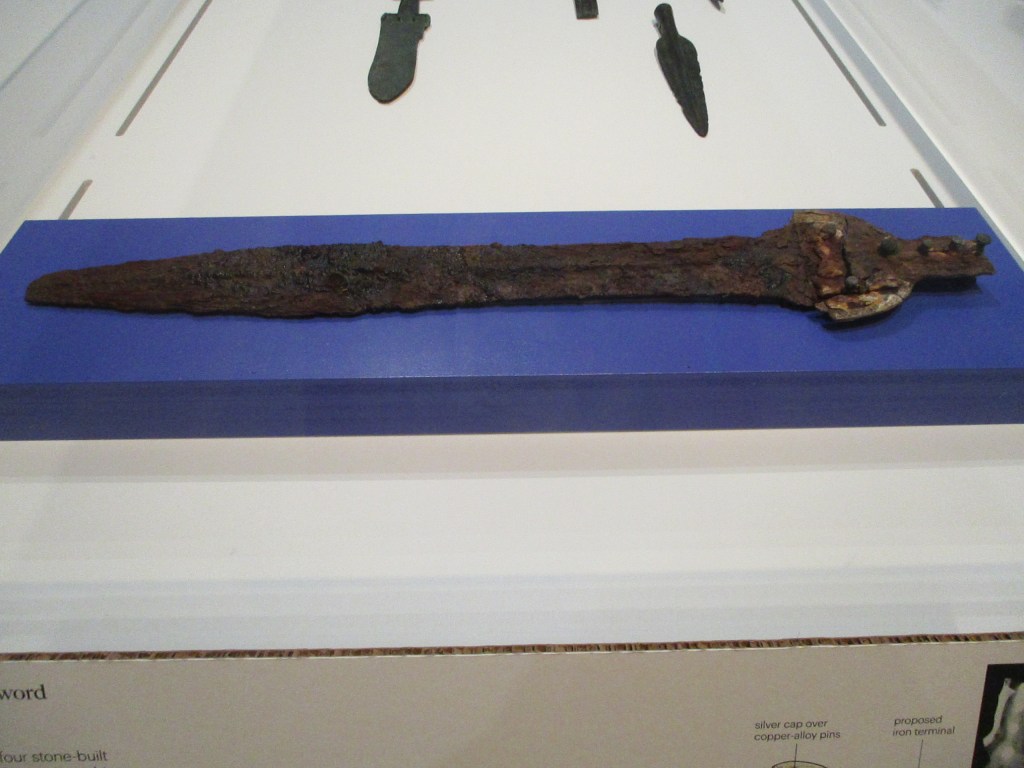
Another interesting item was this sword placed in one of the tombs of the Kings of Tamassos in Cyprus. Dating from 500-480BCE the handle has traces of ivory, silver and tin.
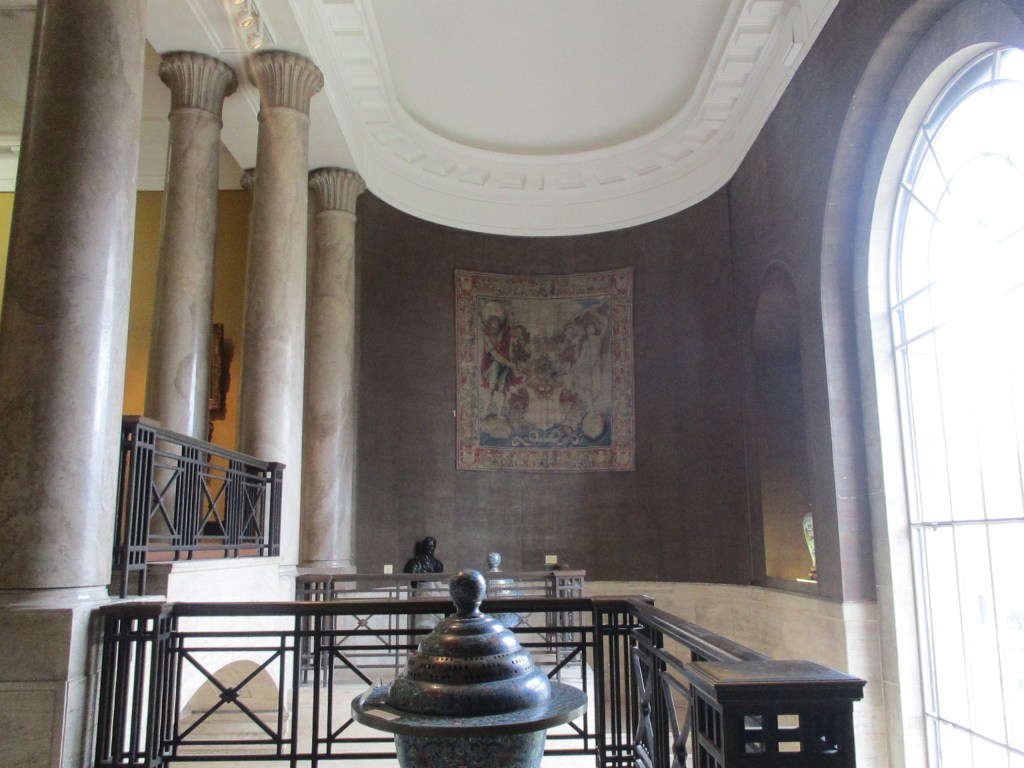
After that I walked around the permanent exhibitions. Unfortunately there was some renovation work going on so I didn’t get a real look at the Founders’ entrance and the impressive staircase but there was plenty of other beautiful things to take in. The foundation stone of the museum was laid on 2 November 1837. The architect of the Founder’s entrance was George Basevi who created a Neoclassical design for the building based on Roman and Greek temples. Basevi unfortunately didn’t live to see the museum open to the public in 1848 – he died after falling through an opening in the floor of the West tower at Ely Cathedral in 1845.
The museum’s name comes from its founder – Richard Fitzwilliam, 7th Viscount Fitzwilliam, who left a bequest in his will in 1816 for the creation of the museum. There are over half a million items and some of the areas I enjoyed wandering through included the Ceramics Gallery. My particular favourite was this owl with a removable head. The head can be moved side to side to change its expression. It dates from 1903 and was made by Robert Wallace Martin.

The museum was great, very spacious and had some of the friendliest staff I’ve encountered at any museum. I spent most of the morning here and probably could have stayed for longer. I stopped off at the very nice cafe for a fortifying cup of tea and some cake before heading off to what would prove a long afternoon of museum visits.
 Louise Jayne's Blog
Pingback: Hobson’s Conduit Fountainhead, Cambridge | Louise Jayne's Blog
Pingback: Eltham Palace, London | Louise Jayne's Blog
Pingback: Museum of Classical Archaeology, Cambridge | Louise Jayne's Blog