On the day that I was travelling via the Keighley and Worth Valley Railway I knew that I wanted to visit somewhere in Keighley and settled on Cliffe Castle Museum. I knew almost nothing about it other than it was an easy 20 minute walk from Keighley Railway Station and had free entry. I’d given myself roughly an hour to an hour and a half to explore before I had to head back to the station to catch my next train but could have spent a lot longer there as I was blown away by just how great the place was.
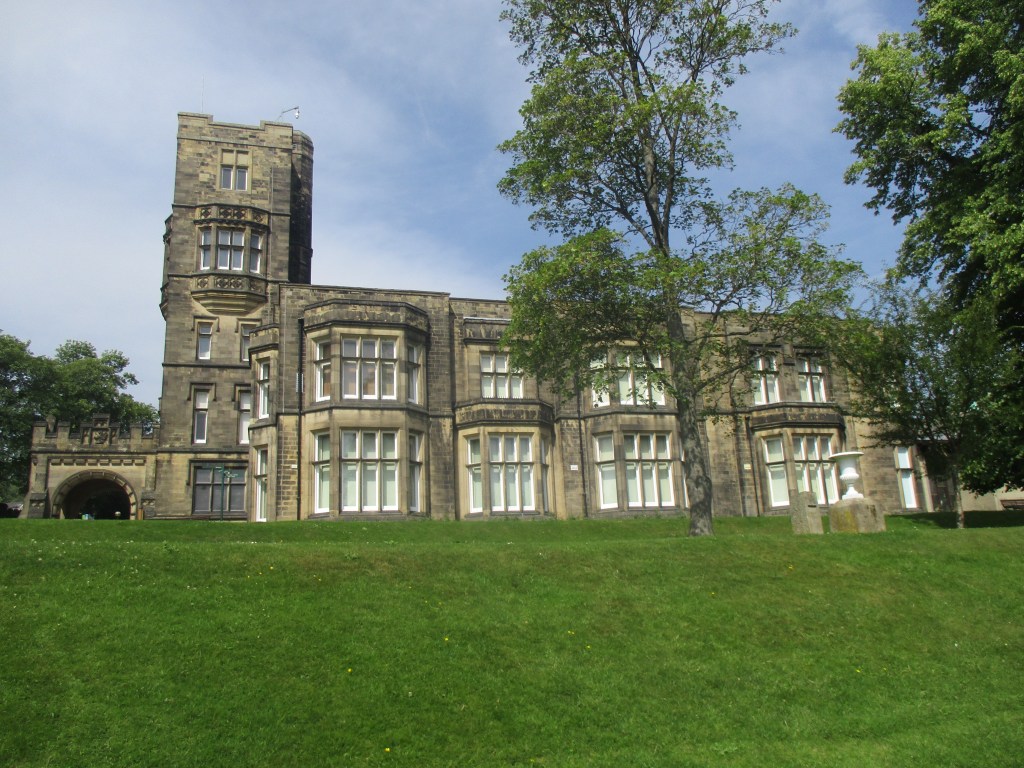
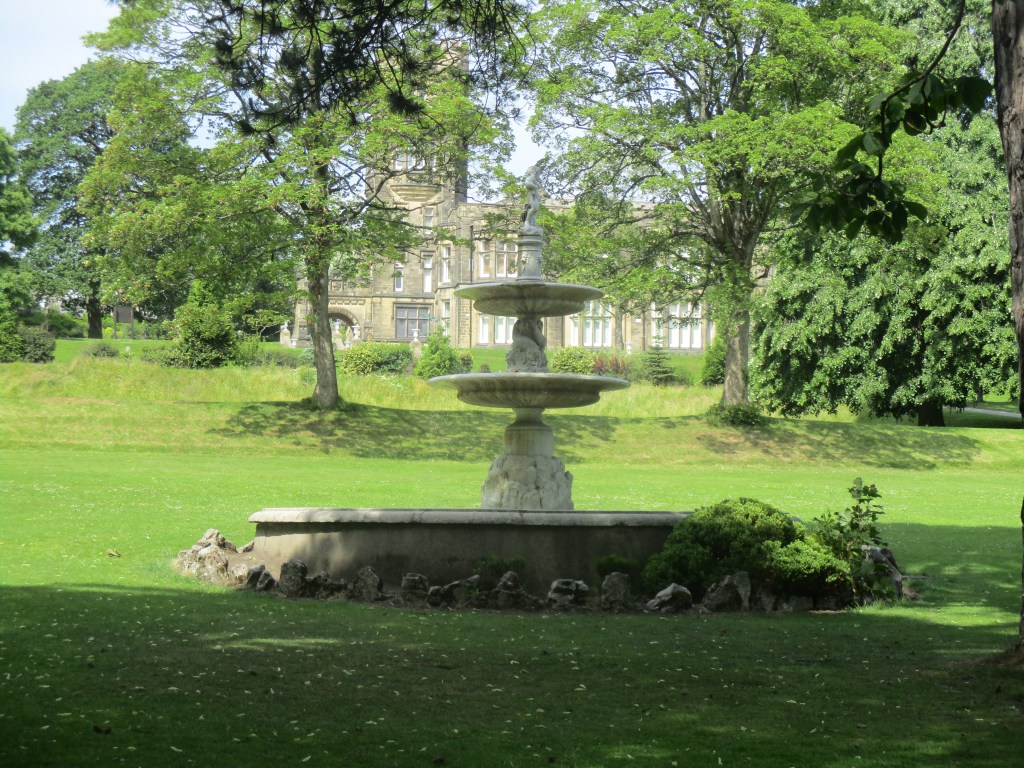
You walk to the museum through a very nicely laid out park – I hadn’t realised it was going to be so extensive so I hadn’t factored in any time to explore. Some of the highlights of my brief foray into the grounds included the fish pond and the rather impressive fountain. The original pond dates from the late 1800s but the current version is a restoration from the 1980s. The fountain is one of a pair that were probably bought from Italy in the 1880s.
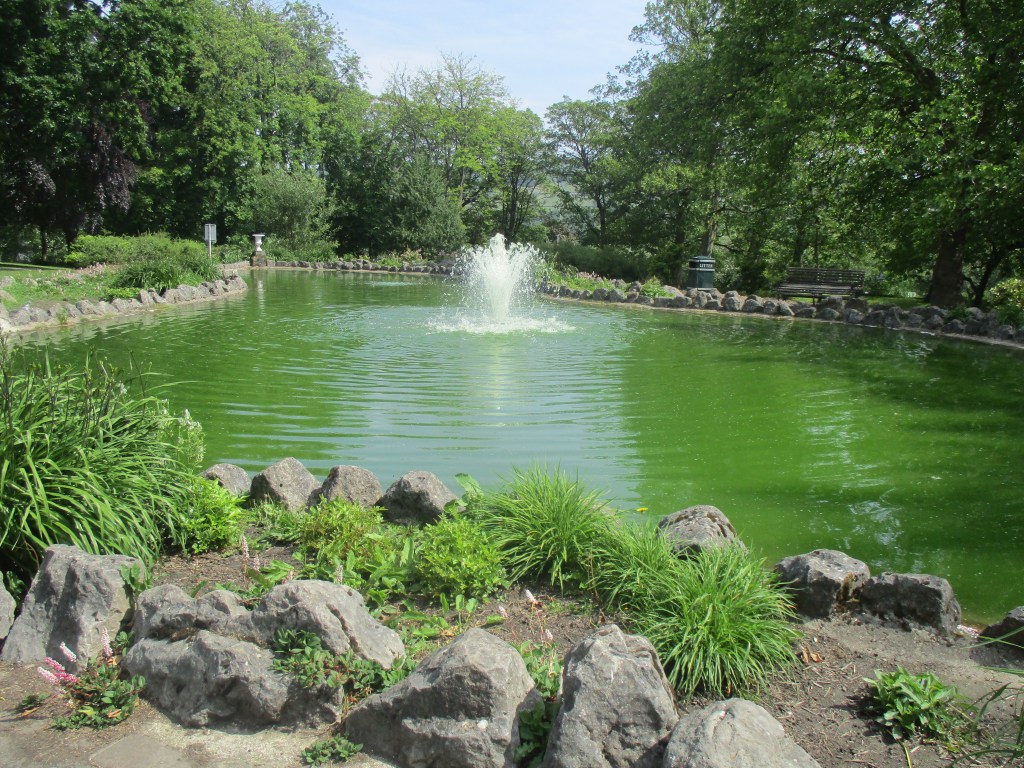
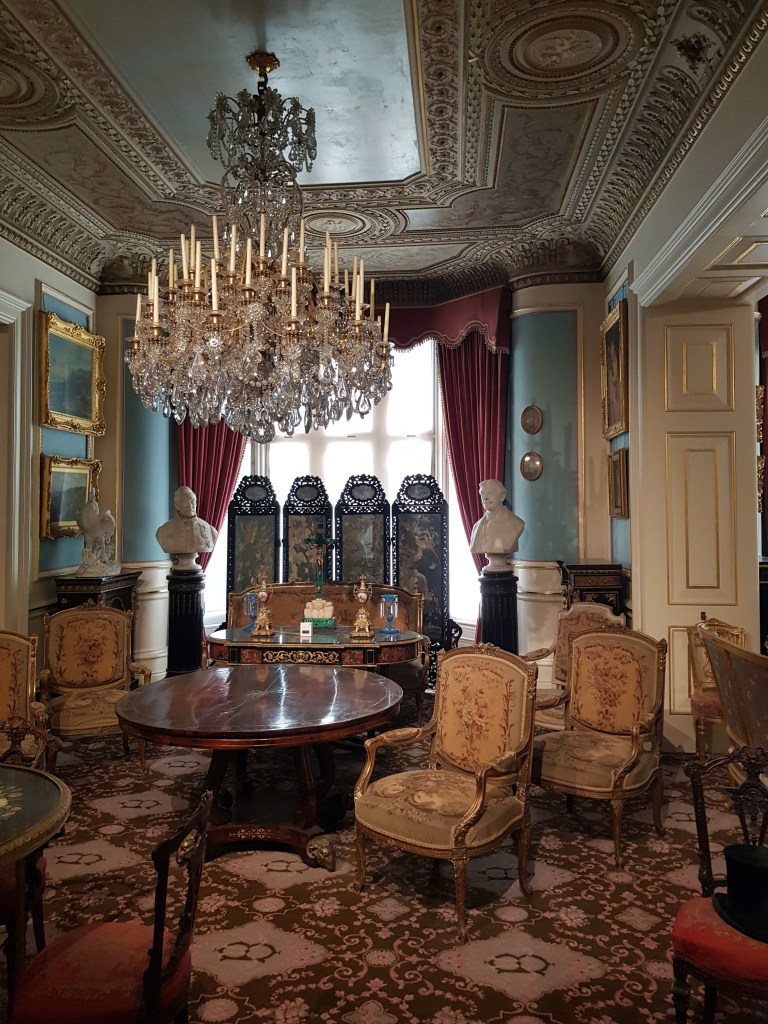
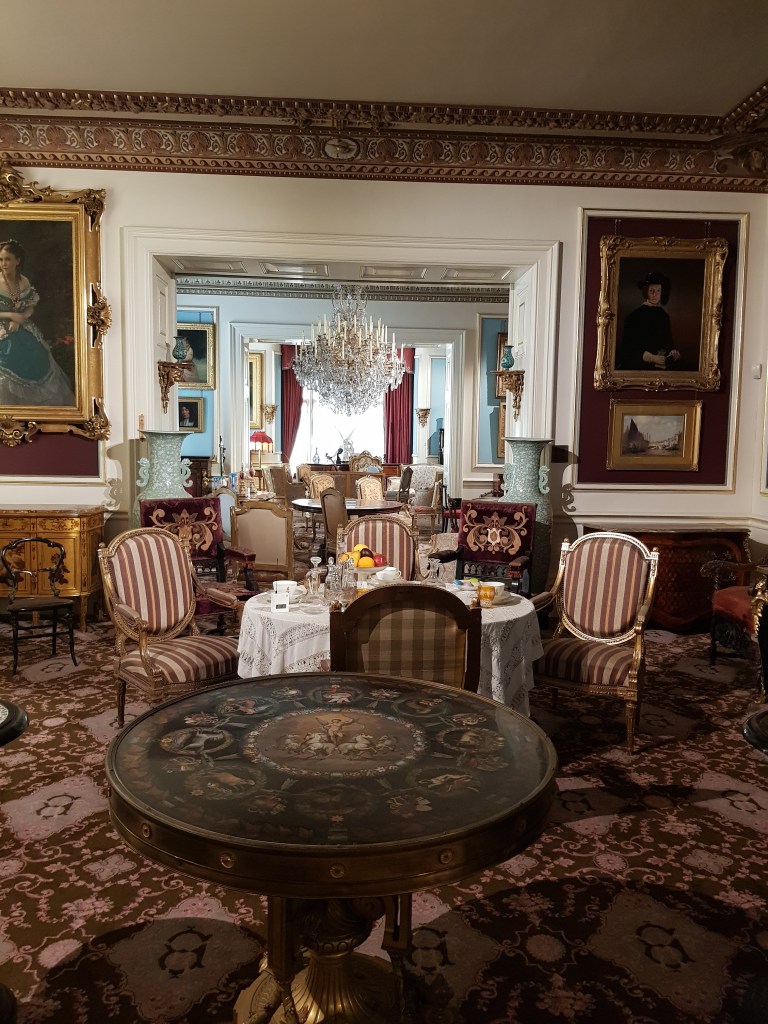
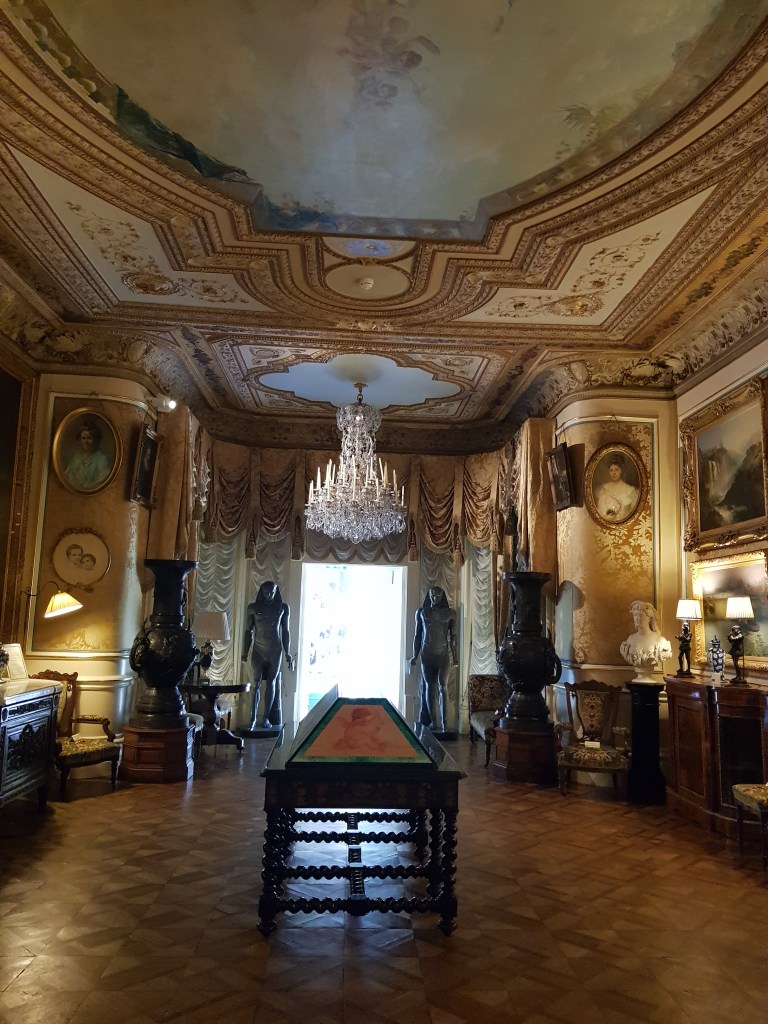
Grade II listed Cliffe Castle was originally a mansion built in 1828 – 1833 for a local lawyer before being owned by textile manufacturer, and millionaire, Henry Isaac Butterfield and gained its name in the 1840s. I was greeted at the entrance and informed that you can wander around at leisure but its best to turn left to explore a bit about the original owners before exploring the downstairs which is laid out as it would have been when the Butterfields lived here before going on to visit the upstairs, which is roughly the route I chose to follow. From the beginning it was renowned for its art and French decoration. The Butterfield family were connected to both the Roosevelts in America and members of the court of Napoleon III which gives you some idea why their remaining reception and drawing rooms are so lavish.
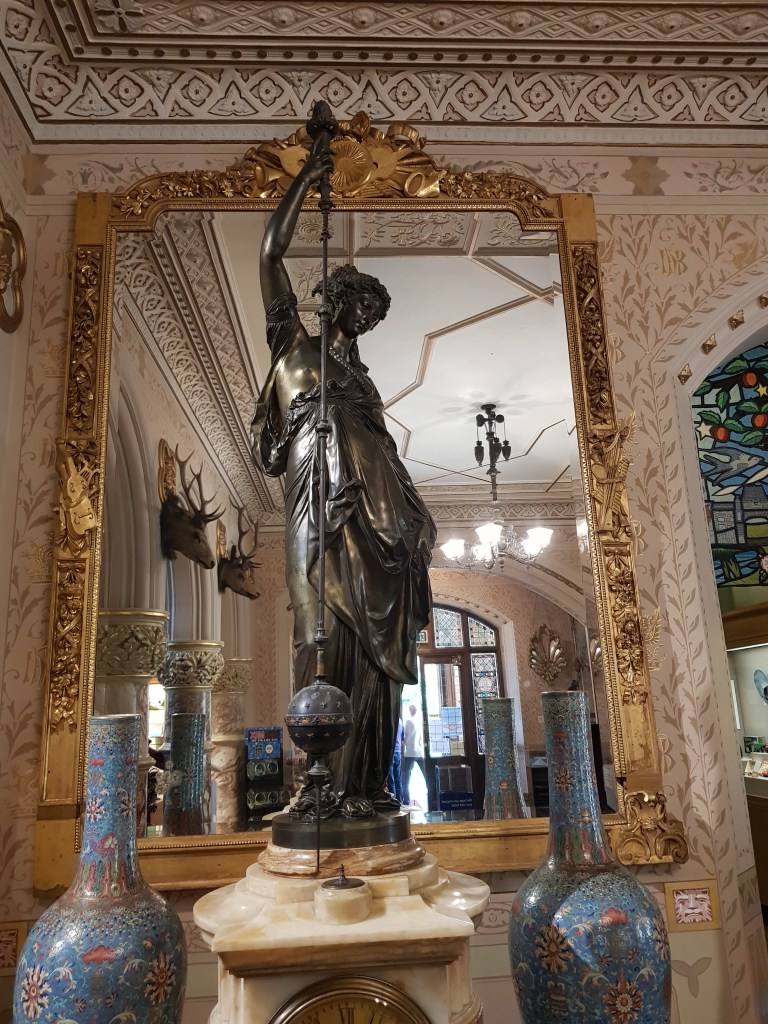
One thing to look out for on the ground floor is this clock that was brought to the castle from one of the Paris International Exhibitions and dates from around 1867. Rather than a normal pendulum movement this one rotates in a circle and controls the clock below through contact between the tip of the pendulum and a small arm projecting up from the desk.
In the 1950s the castle was brought by Sir Bracewell Smith a local businessman who would go on to spend some time as Lord Mayor of London. He turned the gardens into a public park and the castle into the free museum it is today. There are so many different areas to explore that I won’t cover them all here though they include sections on paleontology, natural history, geology, the history of Yorkshire, minerals and pottery.
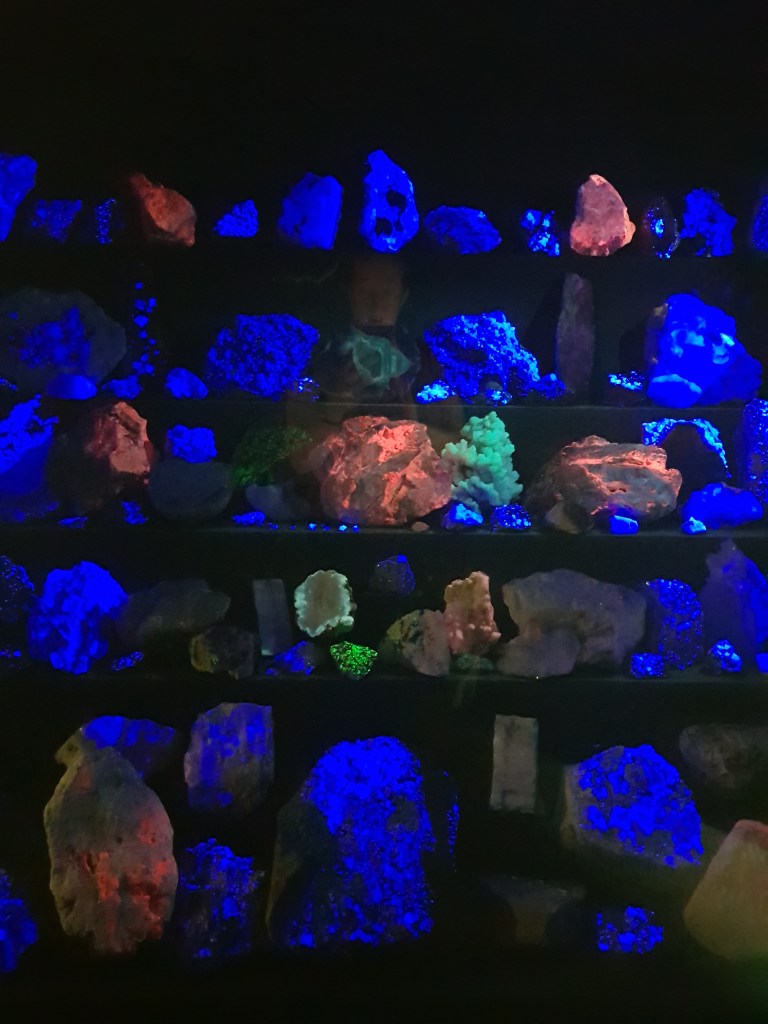
One of the areas that really delighted me was the minerals gallery, particularly the display below in the ultraviolet gallery triggered by motion sensor so one moment the display is in darkness, the next it looks like this.
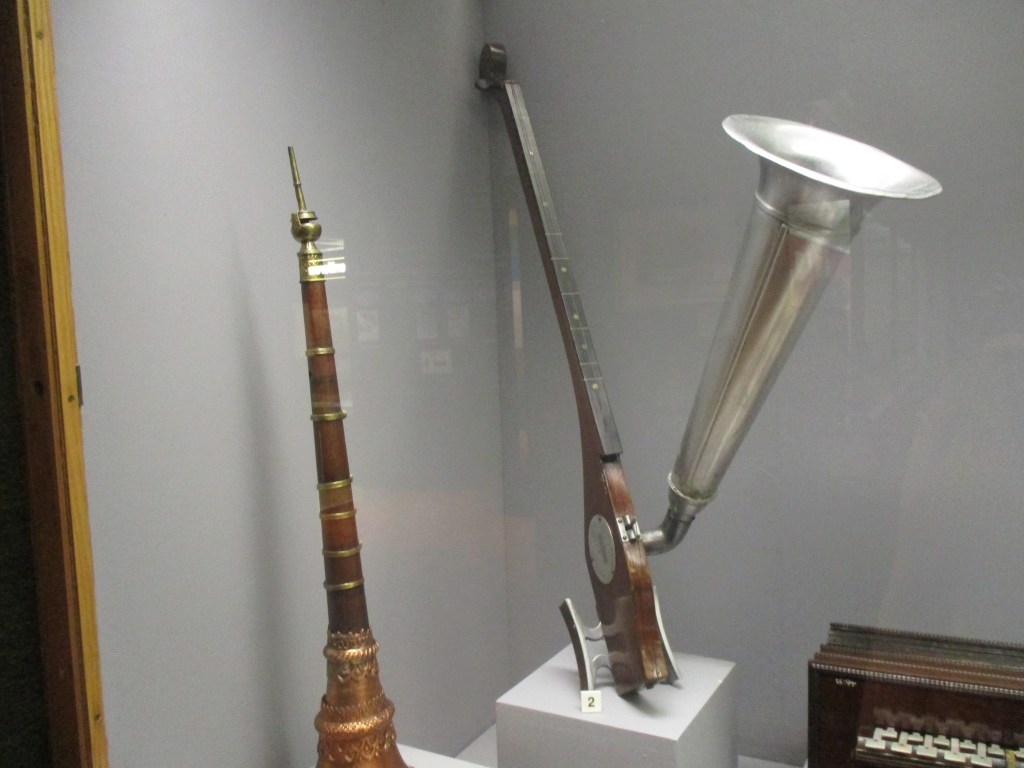
Another fun thing that caught my eye was this Strohviol (pronounced stroll-vile) which was invented in 1899 by Johannes Matthias Augustus Stroh. A bit like a gramaphone with a horn to amplify sound it was an early method of recording music.
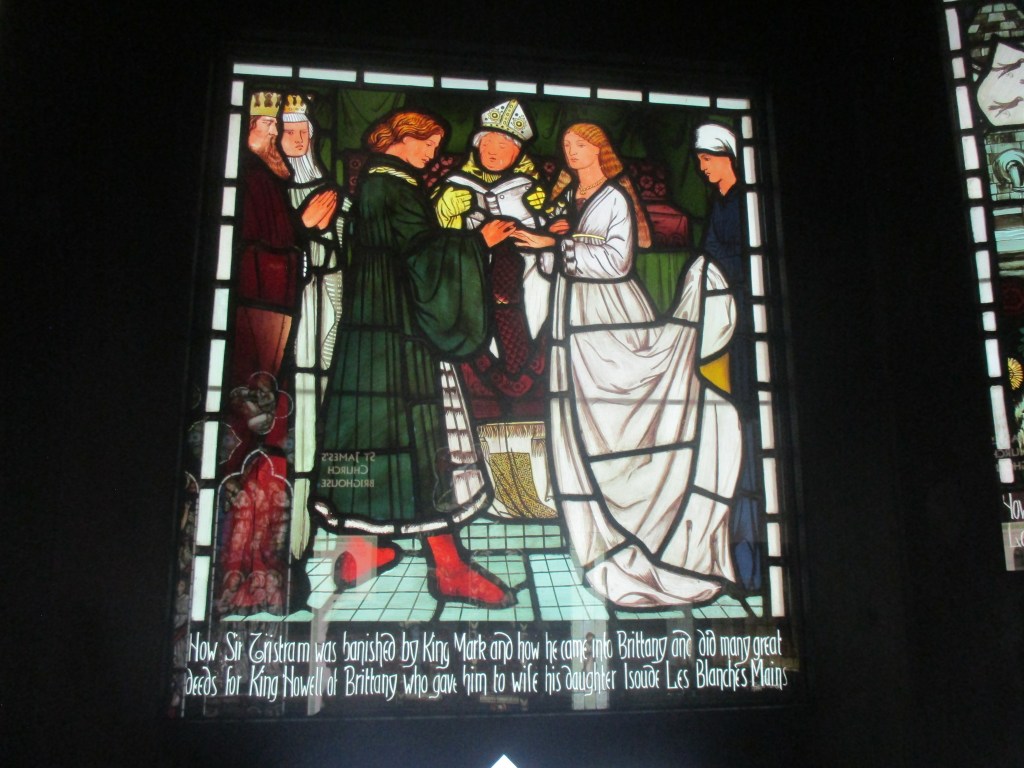
There was one other area that really impressed me. If you’ve been reading my blog for a while you’ll know that I really like the Pre-Raphaelites and all the associated artists. I had known that William Morris’ firm had made a series of stained glass pieces about the story of Tristan and Isolde, a sub-plot to Le Morte d‘Arthur by Thomas Malory all about King Arthur and his court. What I hadn’t really given any thought to was where this work might now be and I got my answer when I walked into this room in the castle dedicated to the stained glass series – the whole room, just with panels like these in it (I only photographed a handful). Simply amazing.
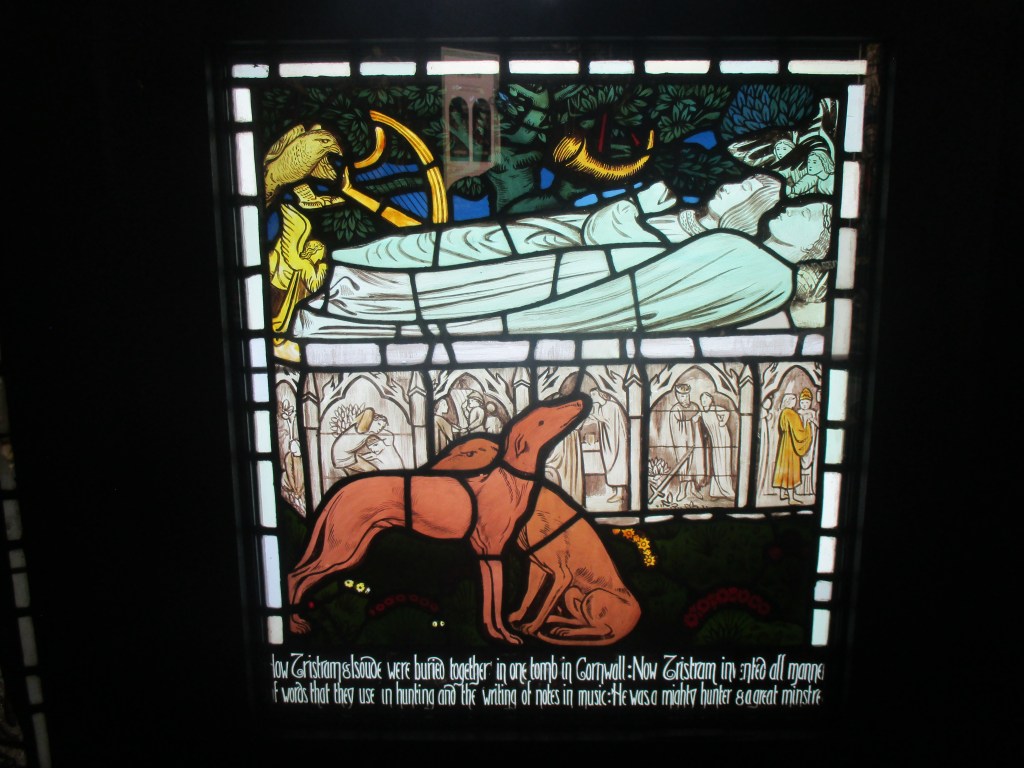
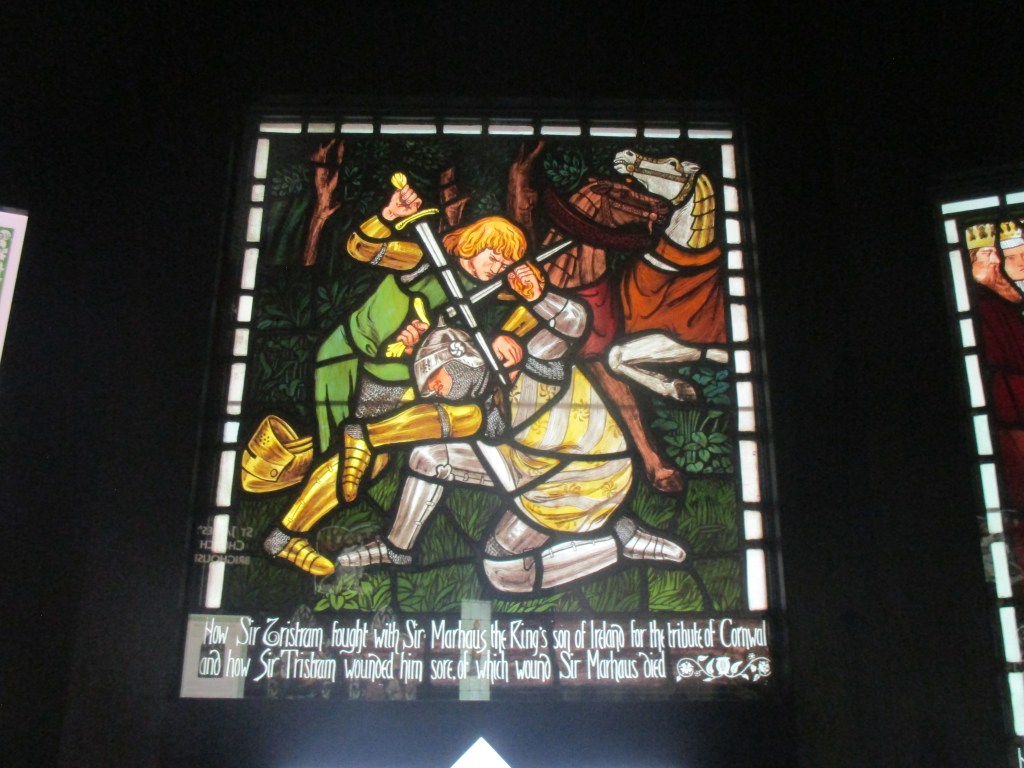
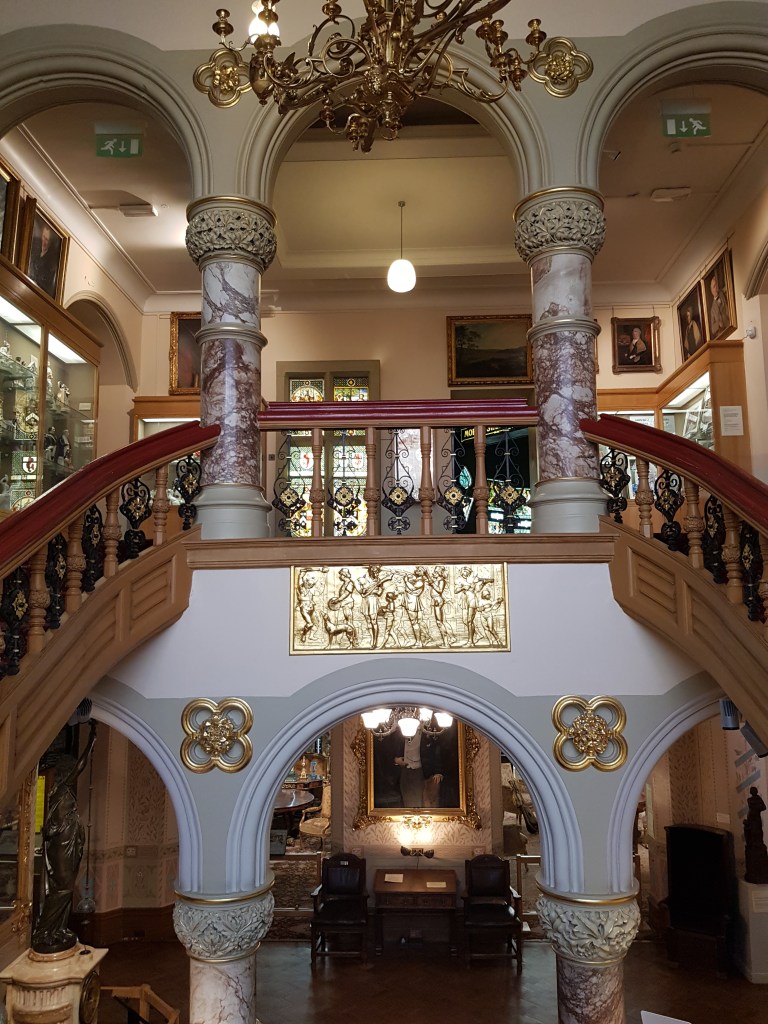
A wonderful musuem with so many things to see you could easily spend a day here walking all round the museum and the gardens.
The Practicalities:
Free entry.
There is a handy map here of how to get to the museum from Keighley Railway Station – this is essentially the route I followed.
There is a small shop inside the museum and a cafe in the grounds along with an aviary and a playground. There’s also an Egyptian gallery which includes an Egyptian sarcophagus and the mummy of a teenage girl. This was the only area I didn’t get the chance to visit as there was a school group working in there.
 Louise Jayne's Blog
Pingback: 2025 Round-Up | Louise Jayne's Blog