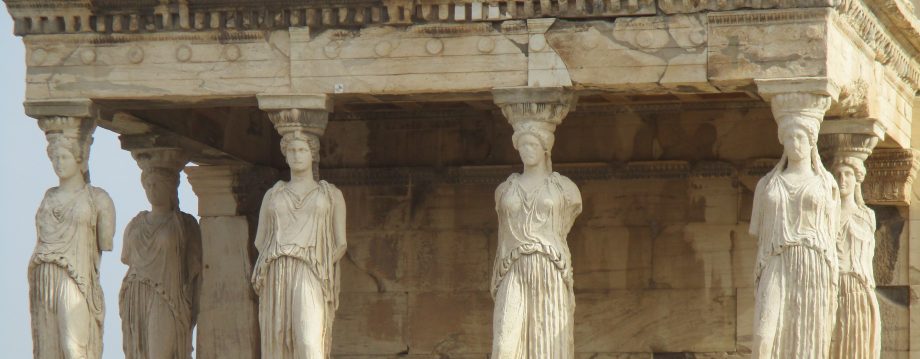
You may remember that my last visit to Bath was cut short due to Storm Darragh. My friend and I had to reschedule our Roman Baths tickets and chose the last weekend in March figuring, quite rightly as it happened, that we would have some nice weather for our return. Driving in Bath is very much not recommended so we parked as usual at the Lansdown Park and Ride and took the bus into Bath – the Roman Baths are only about a 10 minute walk from where the bus drops you off.
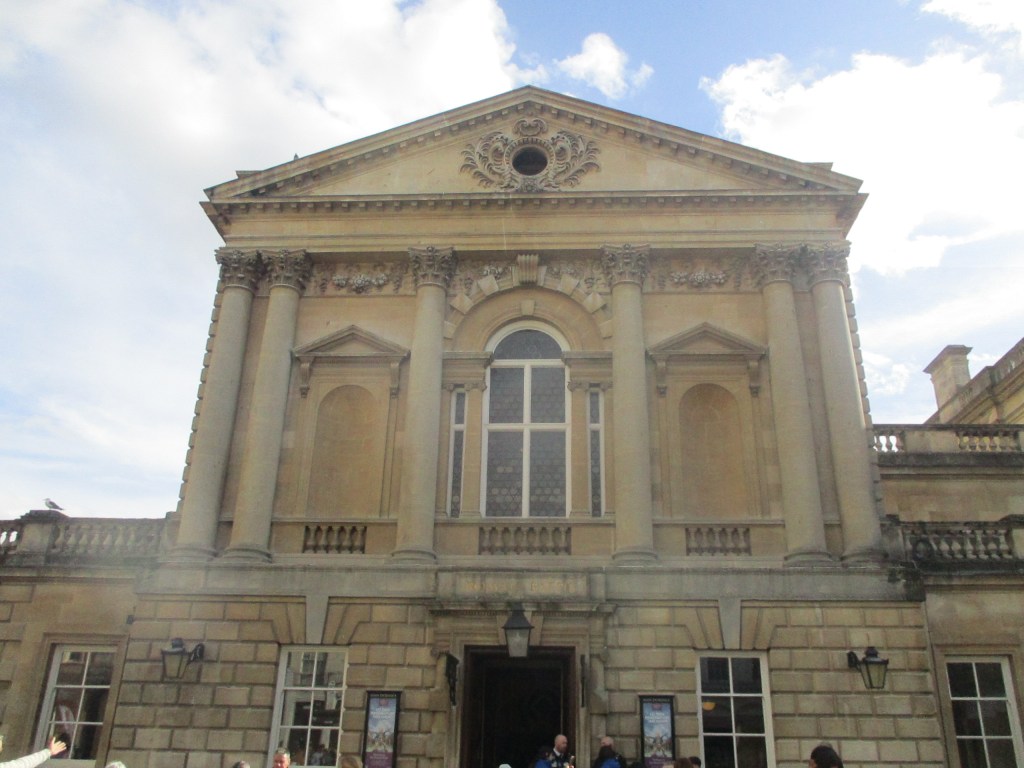
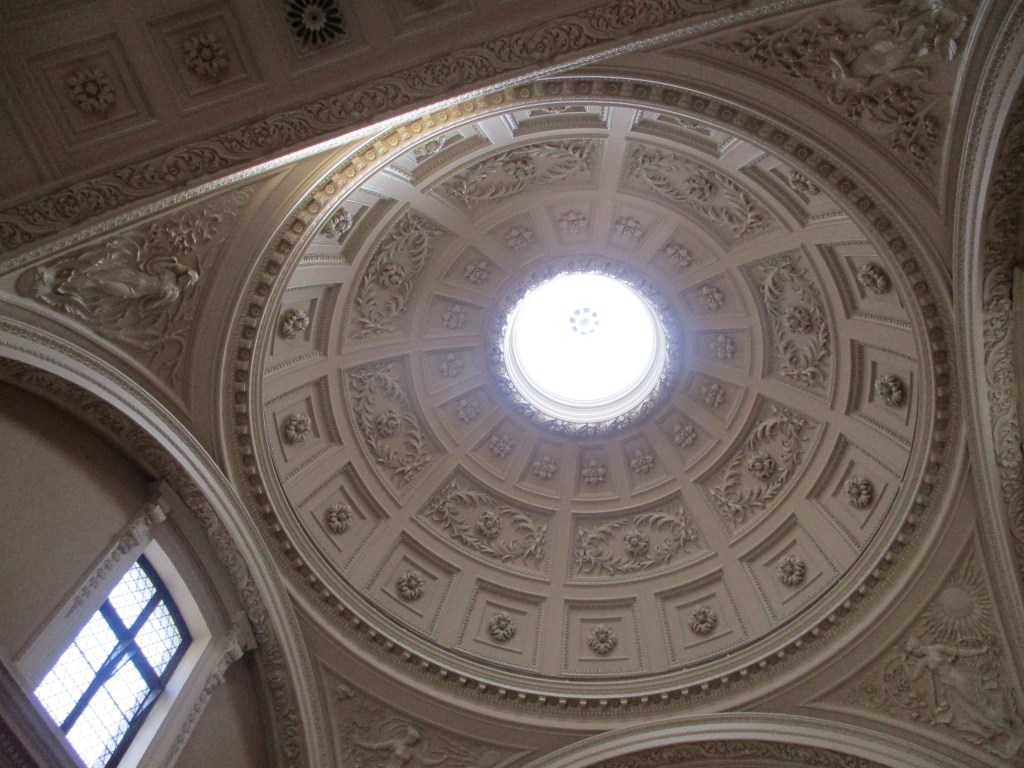
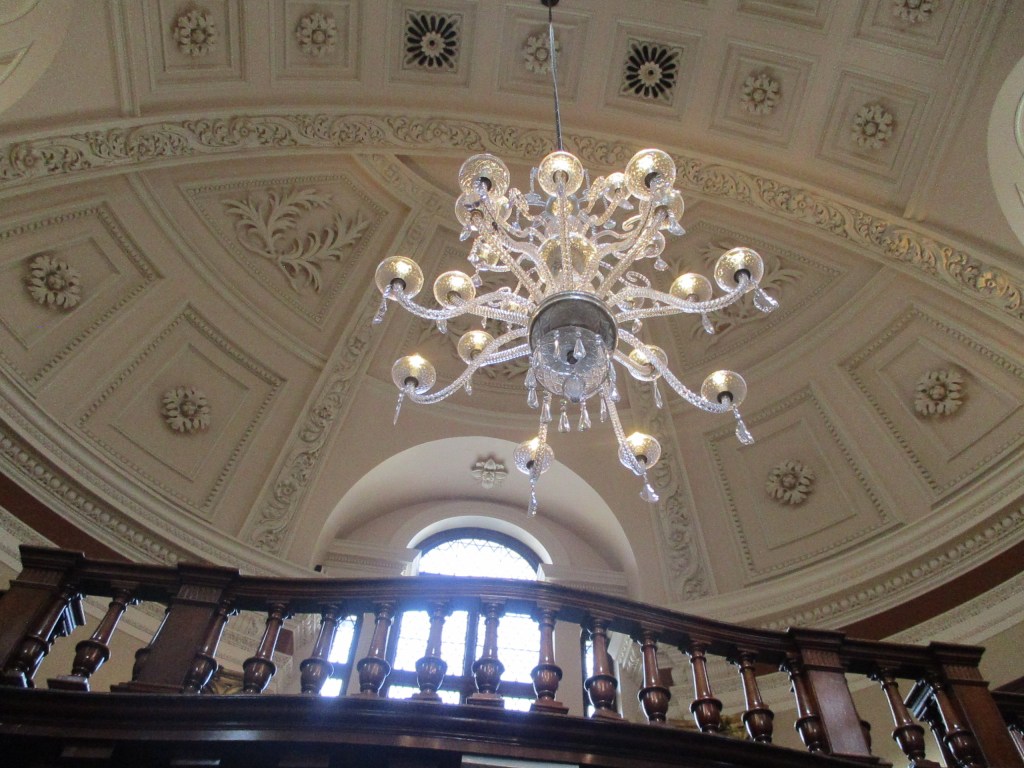
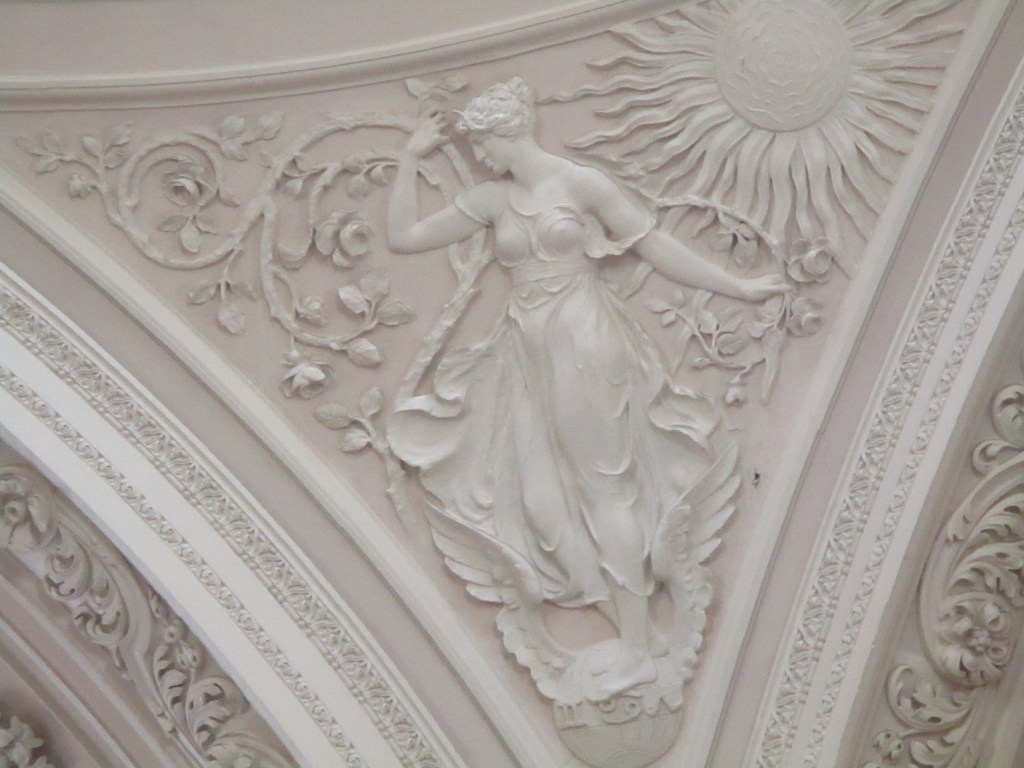
You enter through the beautiful reception hall which was installed by the Victorians with wonderful details. It’s here you show your ticket – get given a lanyard with the time of your guided tour provided on it if applicable – and pick up your audio guide which is included in the price.
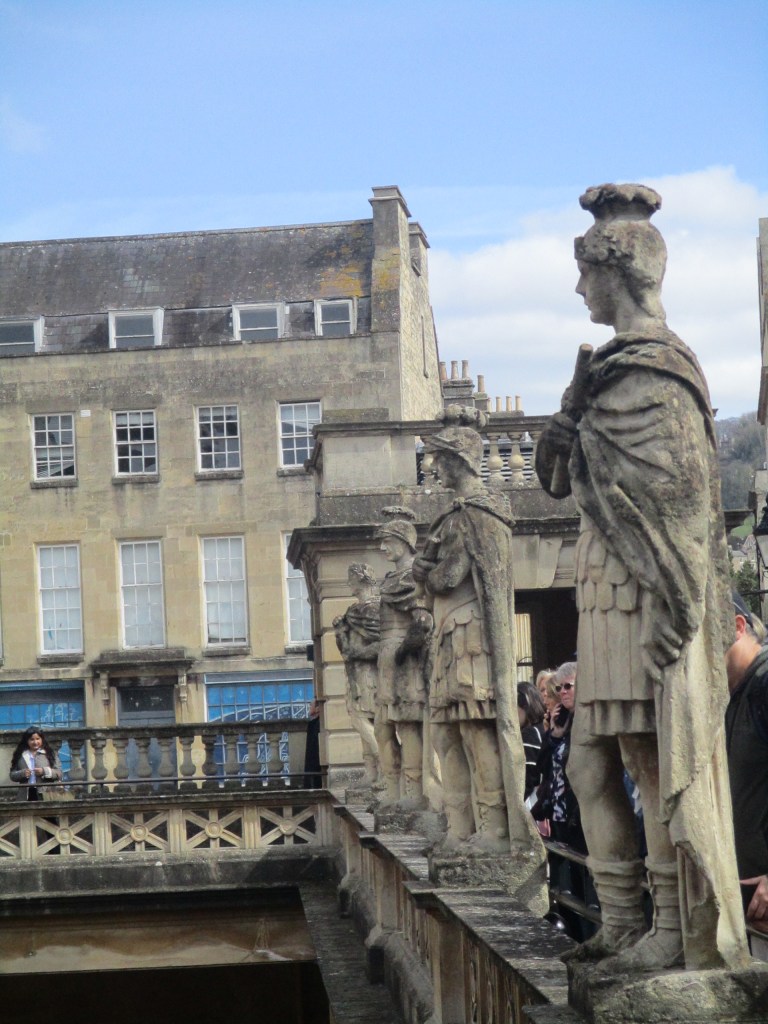
You then head outside and walk around the terrace which is lined with statues of Roman emperors and governors of Britain which were installed by the Victorians in 1894. It’s hard to believe but the Roman Baths – built around 76AD – fell into such disrepair that they weren’t discovered until the late nineteenth century.
The Baths are much bigger than you might expect because they are below the modern street level – on our guided tour we were shown some photos of the houses that once stood on top of the Baths before, and during, excavation.
If you have a tour booked you first wander through the museum downstairs and then out to the meeting place by the Great Bath. Once you’re in the Baths you can spend as much time as you like inside so if like us you run out of time to see everything in the museum before your tour time you can just head back to see what you’ve missed.

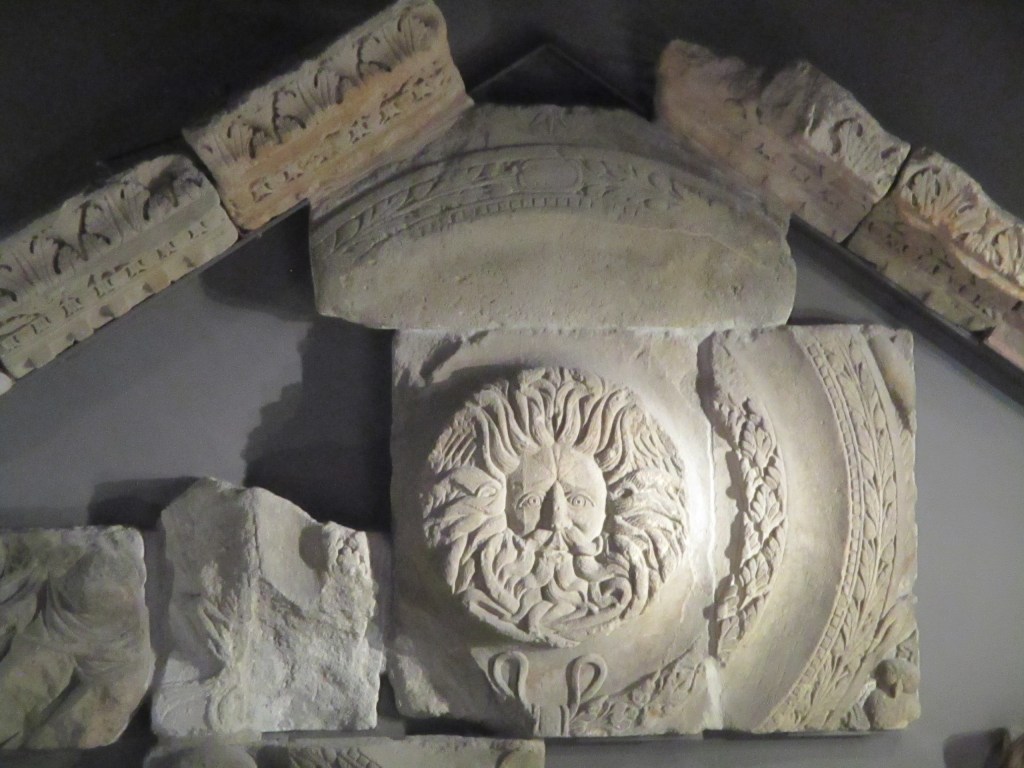
Things to look out for are the Temple Pediment with a Gorgon’s head in the centre. Only fragments have survived but they’ve been re-erected in such a way that an animation shows how it would probably have looked when complete.
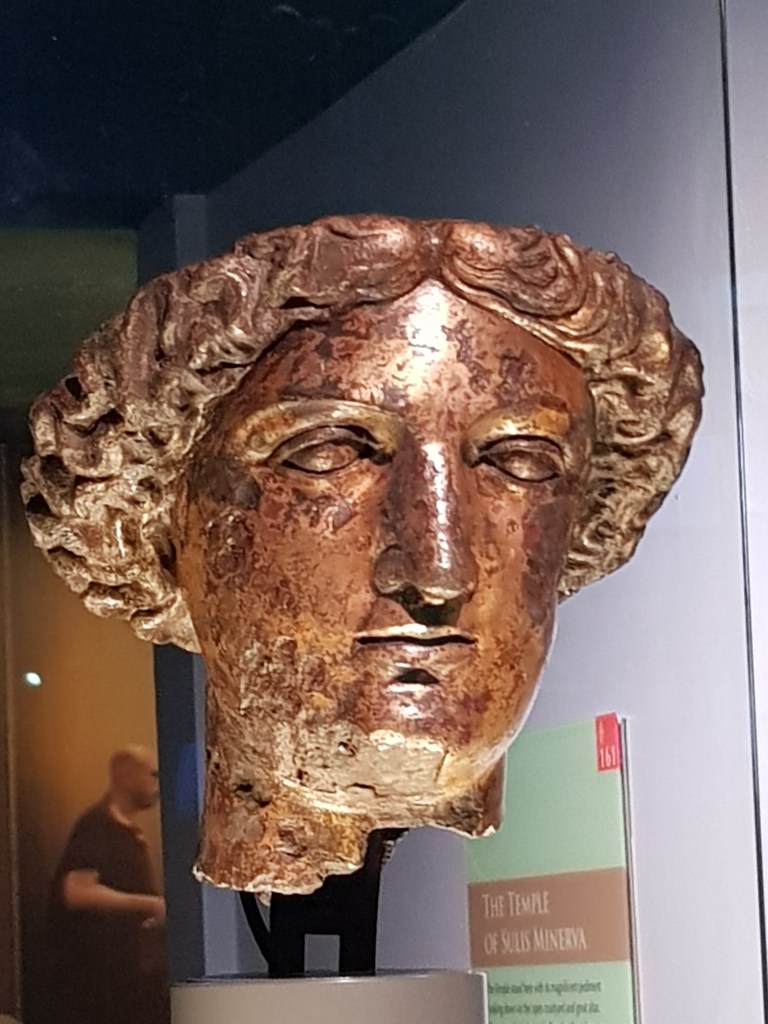
There is also this rare statue of Sulis Minerva (a merging of the goddess the local tribe believed lived here and the Roman goddess Minerva). Made of gilt bronze it was discovered in 1727, and by that point was likely over 300 years old. It’s probably from a statue of the goddess that would have stood near the sacred spring – where the hot water comes from.
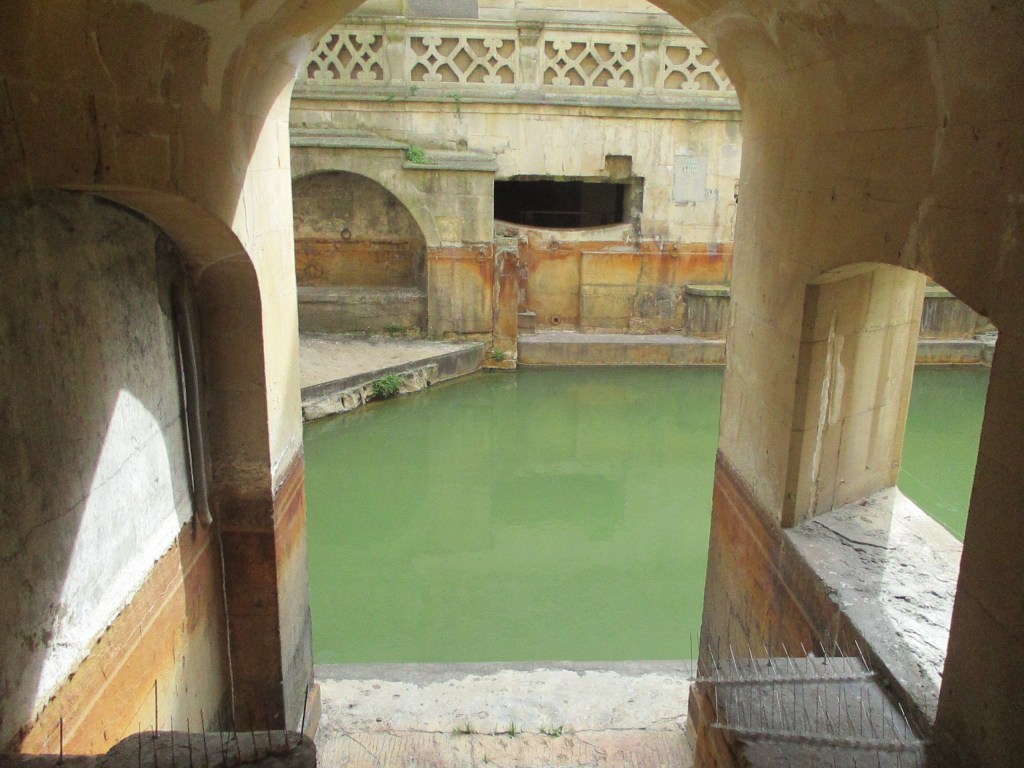
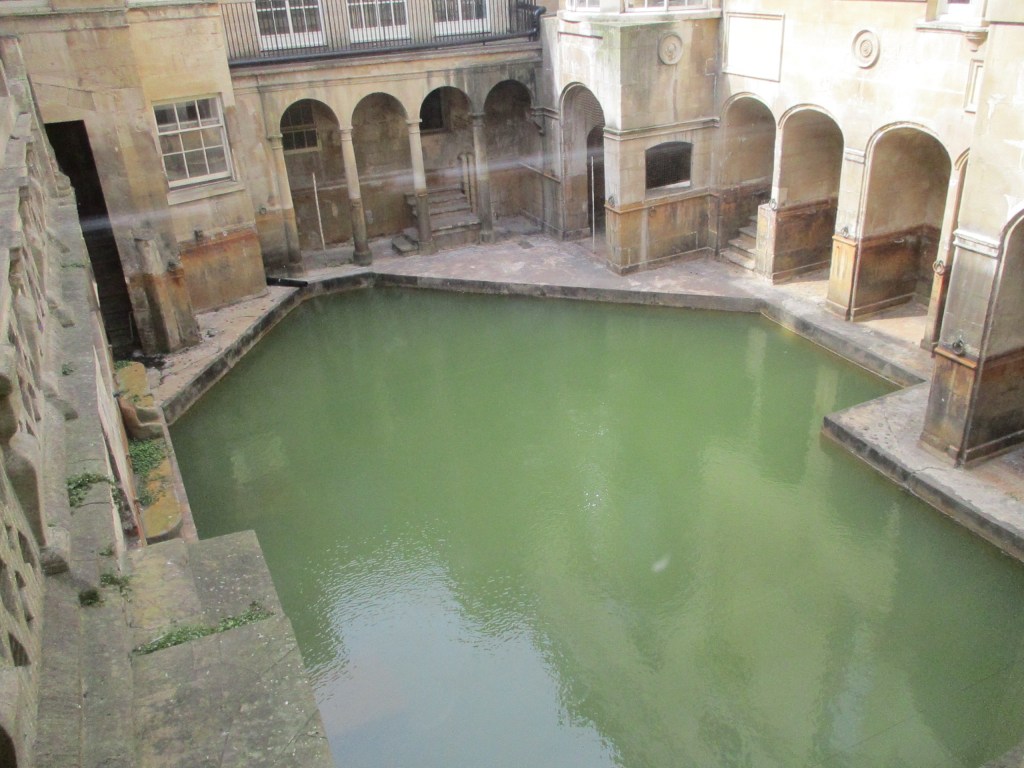
The Sacred Spring, below, reaches temperatures of 46C and 1,170,000 litres of water rises here every day. The Romans were fond of throwing objects in here as offerings to the local goddess, coins of course but also larger objects such as metal pans and vases.
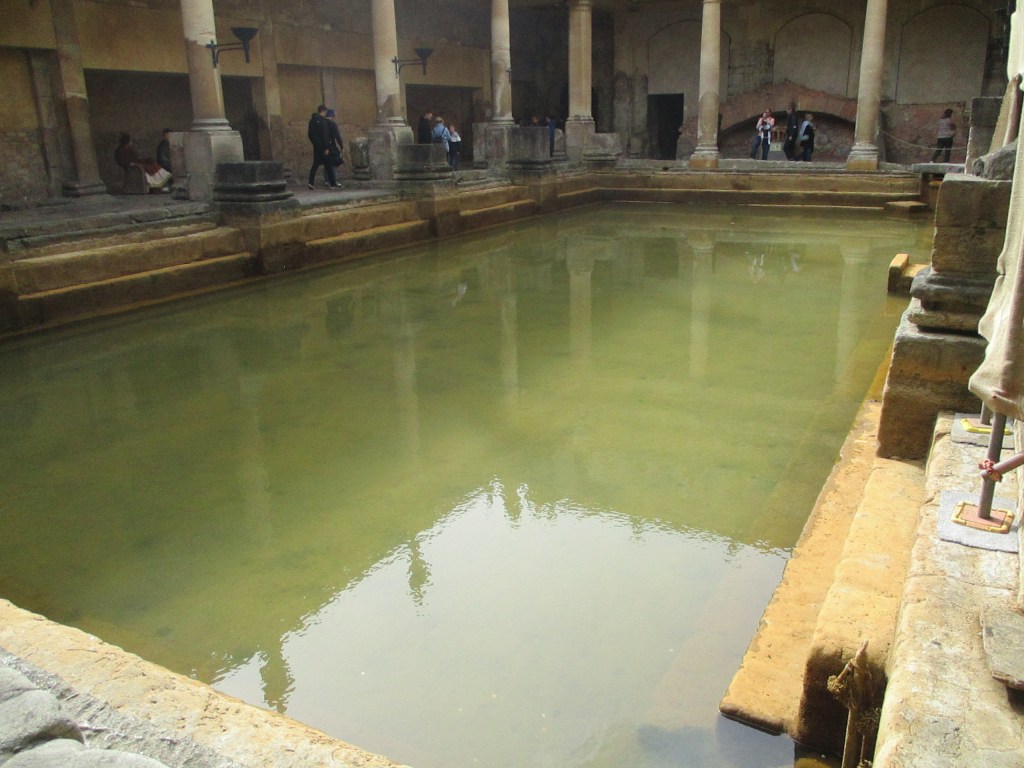
The centrepiece is of course the Great Bath, and this is the focus of the guided tour. Lined with 45 sheets of lead men and women from all walks of life would have bathed here. (The sexes were only separated fairly late on). It is 1.6 metres deep with steps on all sides. It used to have a roof but that collapsed into the Baths some time in the 6th or 7th century; it is now of course very open to the elements. Around the Great Bath are various other rooms where bathers would have prepared and cleaned themselves.
One fun thing to keep an eye on in the museum are the curse tablets. (I didn’t manage to get a good photo of them due to the reflection of the sun). They were written as prayers to the gods asking for punishment to those who had caused them an injustice – such as stealing their clothes while they were bathing!

We had a great time here, spending roughly two and a half hours exploring. Our guide, Isabel, was very informative and all the staff were friendly and helpful. Definitely one of Baths’ must sees. Booking in advance, particularly during the summer months, is definitely recommended.
 Louise Jayne's Blog
Lovely post, thank you for reminding me of my own visit years ago
LikeLiked by 1 person
Pingback: 2025 Round-Up | Louise Jayne's Blog