A few weeks ago I went along to the University of Nottingham Museum to visit an exhibition on the discoveries made in the 1960s at what turned out to be an Anglo-Saxon cemetery at Broughton Lodge in Willoughby-on-the Wolds, a small village in Nottinghamshire. The site was excavated between 1948 and 1968 and contained about 120 graves, including evidence of horses being buried alongside people. The items from the dig were held jointly by Nottingham City Museums and the University of Nottingham Museum and had never been seen all together until this exhibition.
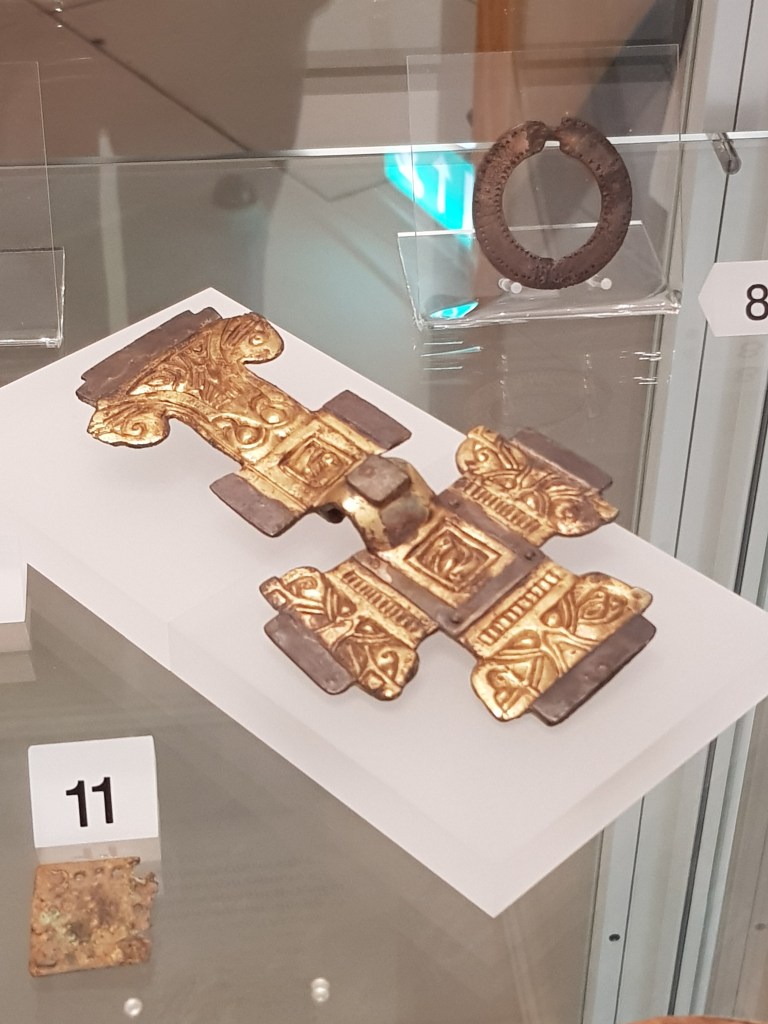
I will admit to being slightly disappointed, given the publicity this has received locally including being featured on the BBC News that more wasn’t actually made of the displays. There are about 40 items on display according to the literature (presumably they’re counting the collection of beads individually) and they’re slotted in cabinets next to the usual displays in the museum, and not even all together in one section.

What I did like was the exploration of how the items these people were buried with shows the interconnectivity of the world even back then. The item below for example is a purse ring made from elephant ivory which would have been imported across the Mediterranean, perhaps originating in Egypt.

The cemetery site was discovered in 1963 due to nearby excavations for roadworks and, worried about the possibility of the site being destroyed, a local maths teacher and amateur archaologist called Malcolm Dean, along with a dedicated team of volunteers, started to record their finds from 1963 to 1968 – there are some photos projected onto a screen at the exhibition showing the team at work, including a lot of curious children.

One item I did find intriguing was this so called window pot. Dating from the 5th and 6th centuries, if you look at the reflection you’ll see a piece of blue Roman glass that’s been positioned into the bottom of the pot. The explanation at the exhibition said it could be part of an unspecified ritual function, other sources suggest it could be for cremated remains.

It had some interesting things on display I just always feel like wanting more whenever I come to an exhibition here. The exhibition is on until 12th July. Note the museum is only open Thursday-Sunday 12-4pm. As before it’s easy to get to, just next to the Djanogly Gallery; there is parking, a tram stop and a bus stop nearby. The exhibition is free.

 Louise Jayne's Blog