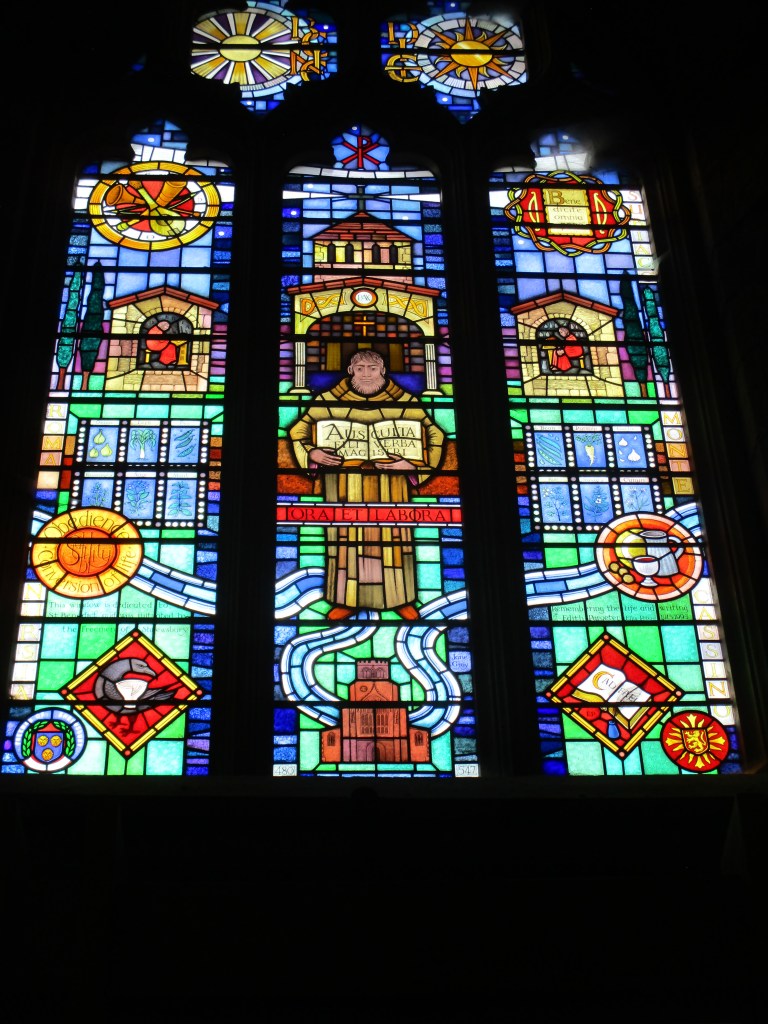
I’d heard of Shrewsbury Abbey of course which is why it was on my list of things to see in the town but I had completely forgotten that the Cadfael series of books was based there (I’ve seen the TV series with Derek Jacobi but never read any of the books). I mention this to start with because the lovely friendly volunteer who greeted me on entry was surprised that Cadfael wasn’t my main reason for visiting and directed me to a very nice stained glass window dedicated to Cadfael author Ellis Peters (real name Edith Pargeter).
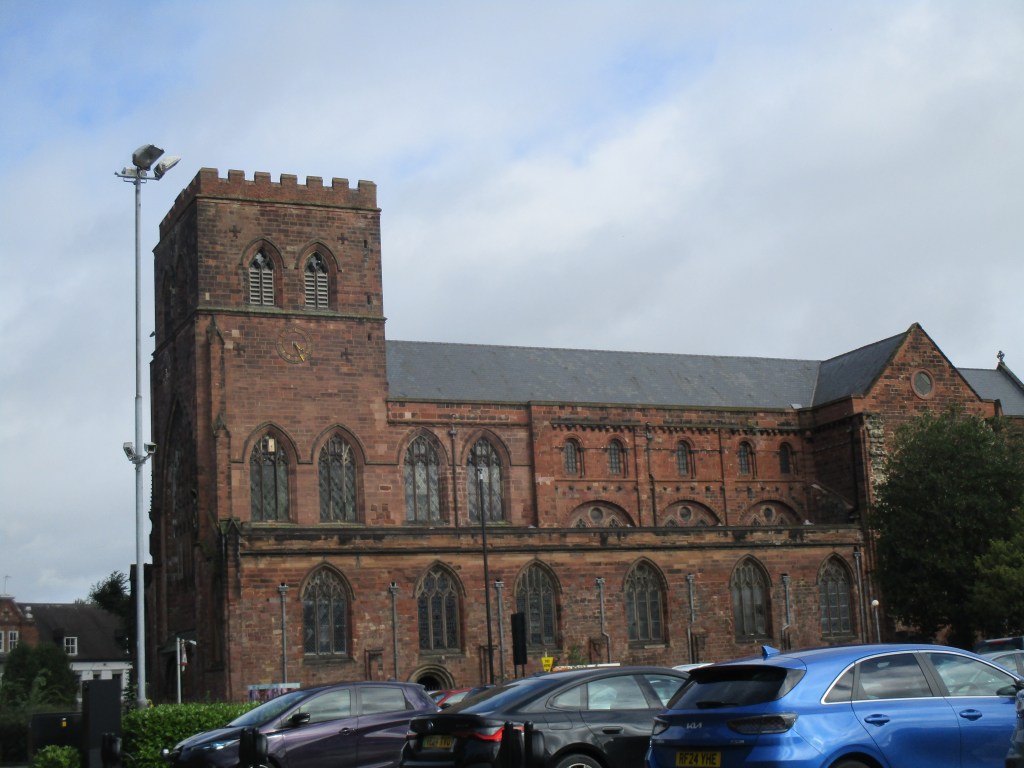
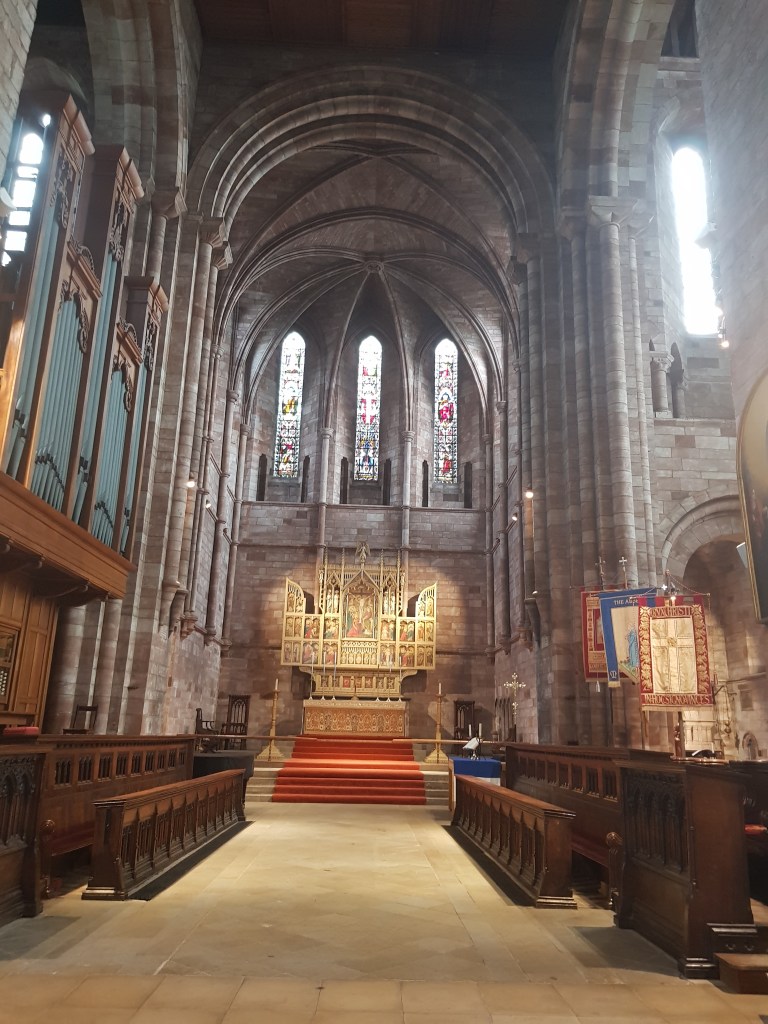
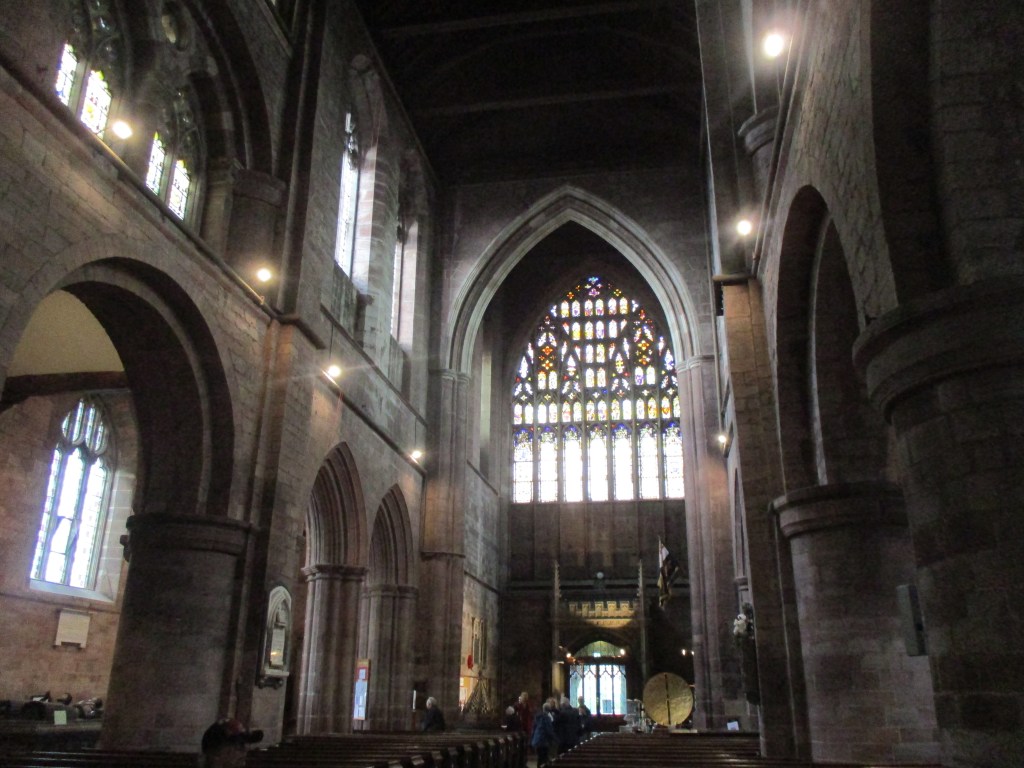
After being given a run down of some of the history of the Abbey I was given a map with important things to note marked on it and then left to my own devices. The Abbey was founded as a Benedictine Monastery by Roger de Montgomery in 1083. I was a little surprised that the Abbey wasn’t as large as I had imagined but this can be explained by Henry VIII and his dissolution of the monasteries destroying much of the original building.
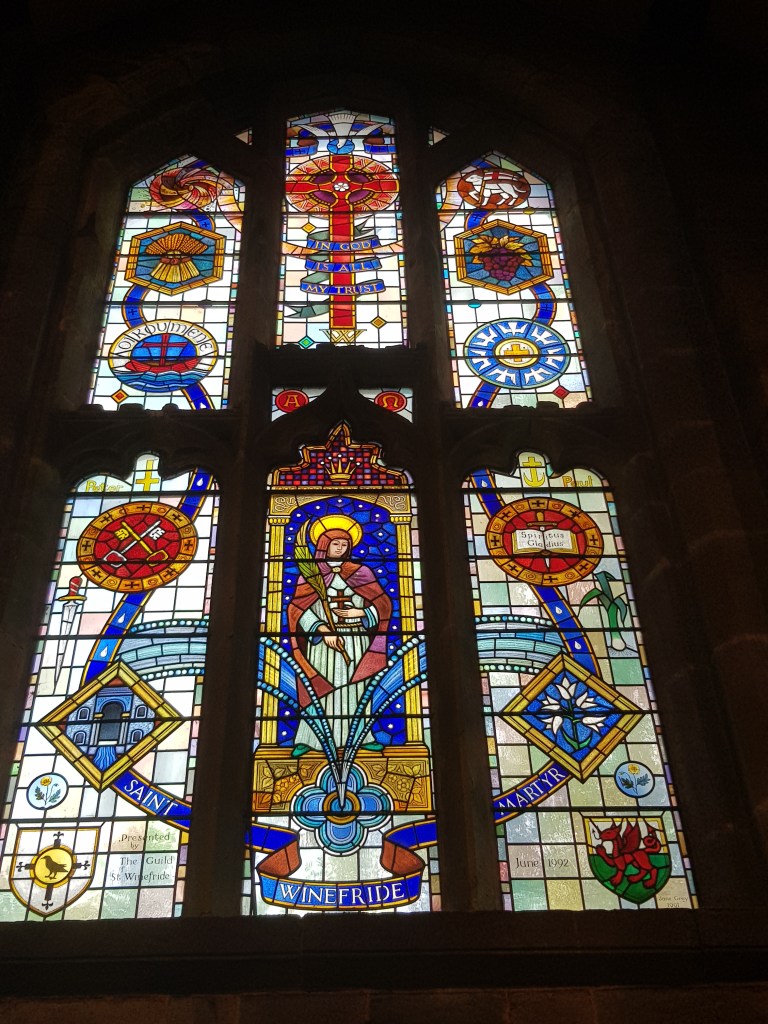
There’s lovely stained glass of course – I particularly liked this commemoration of St. Winefride dating from 1992 and made by a local artist, Jane Grey.
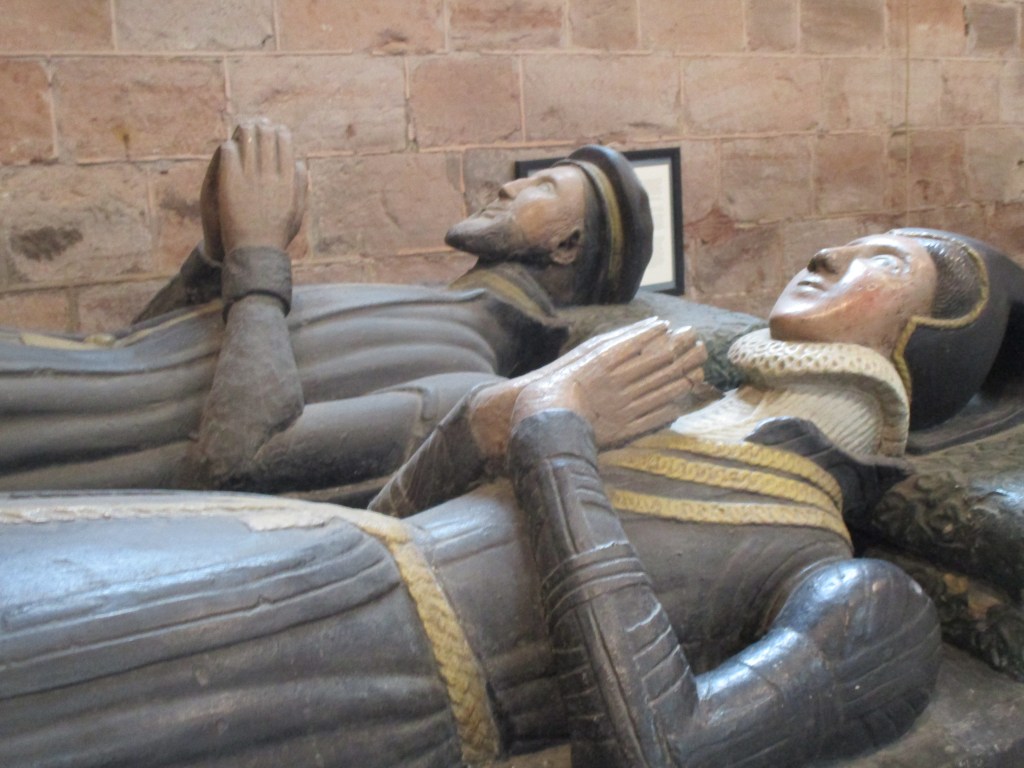
There are also an awful lot of tombstones and monuments. One of those is of Richard Onslow and his wife Katherine. Richard was speaker of the House of Commons during Elizabeth I’s reign. Shrewsbury has been party to two parliaments – the very first parliament where the “commons” had a legal standing took place here in 1283 under Edward I. Another parliament summoned by Richard II took place here in 1398.
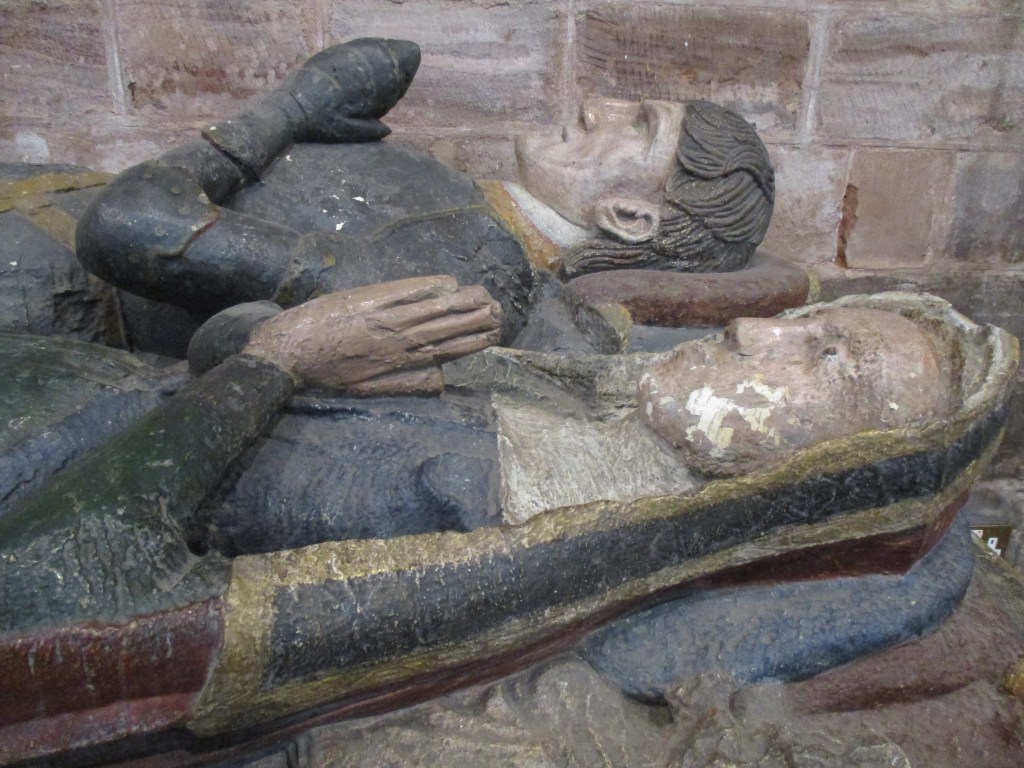
This slightly battered monument is of William and Anne Charlton. William had fought in France for Henry VIII and died in 1532.
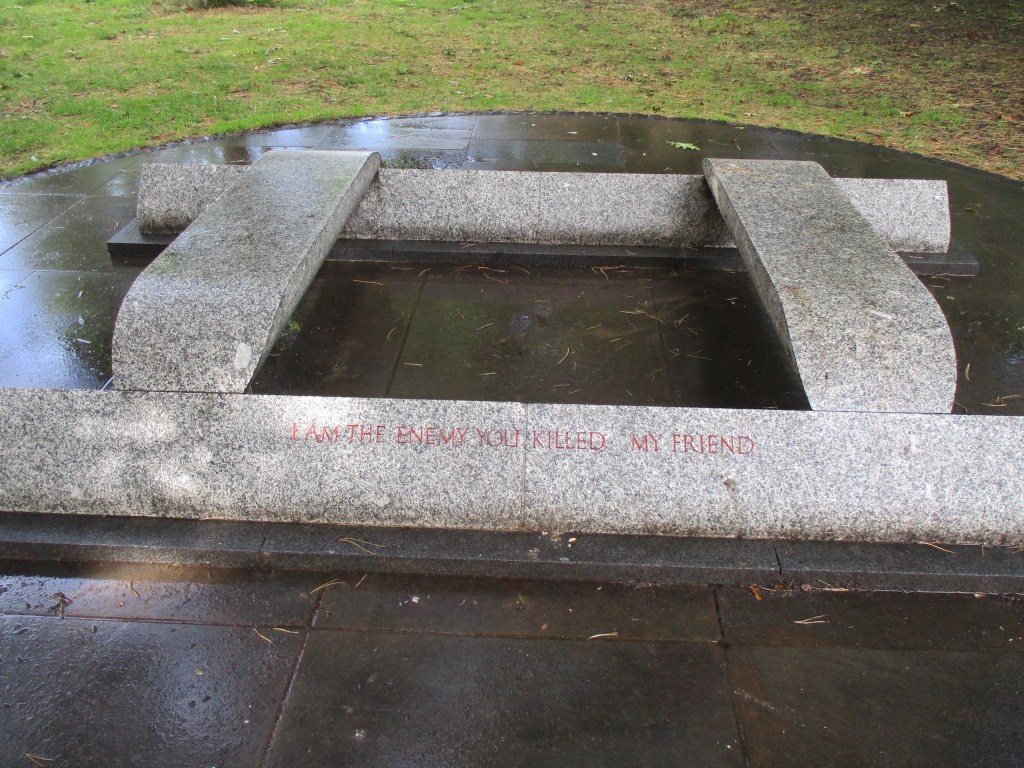
When you’re finished walking around the Abbey don’t forget to wander around the grounds outside. At the back of the Abbey in the shade of the trees you can find this memorial to the First World War poet Wilfred Owen who came from the area. It was placed here in 1993, created by Paul de Monchaux to mark the centenary of Owen’s birth.
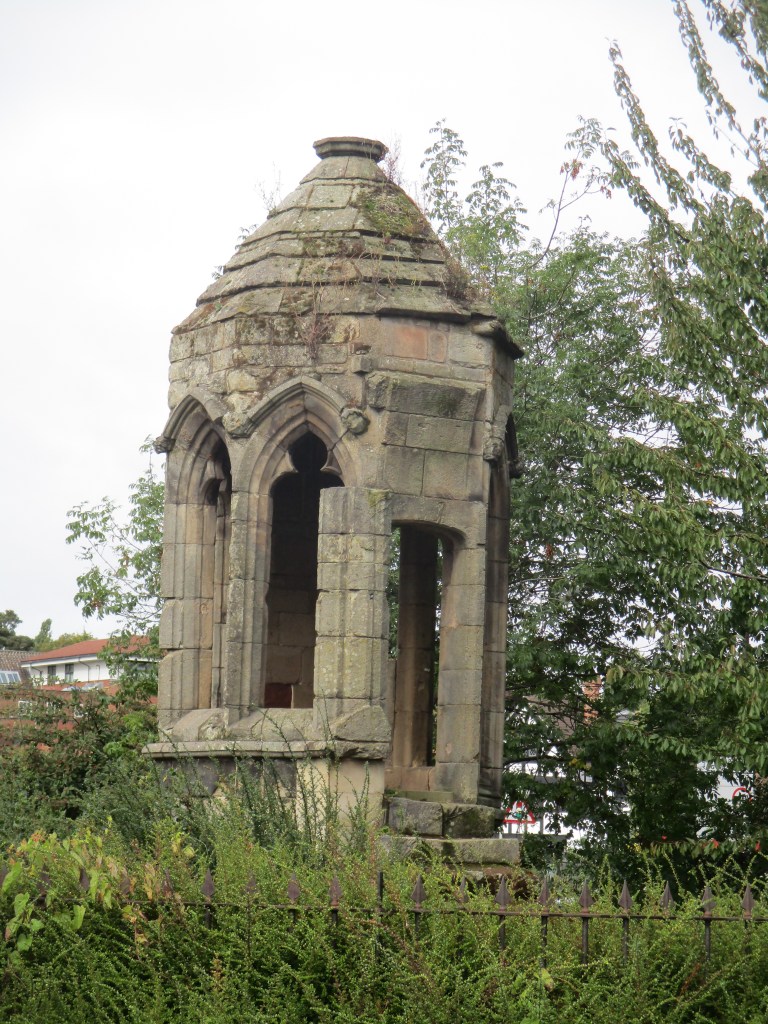
One last thing to look for is just over the road from the Abbey. This is the refectory pulpit, now surrounded by a car park. This was actually part of the Abbey grounds giving you an idea of how large an area it dominated. The area around it was demolished when Thomas Telford built the road that stands there now, though the road actually opened after Telford’s death. I don’t know why it was spared but it certainly looks impressive.
Entry to the Abbey is free but donations welcome – I bought a guidebook. Check opening times before you travel but generally they are open every day. They are also dog friendly and may even produce a treat for your four legged friend.
 Louise Jayne's Blog