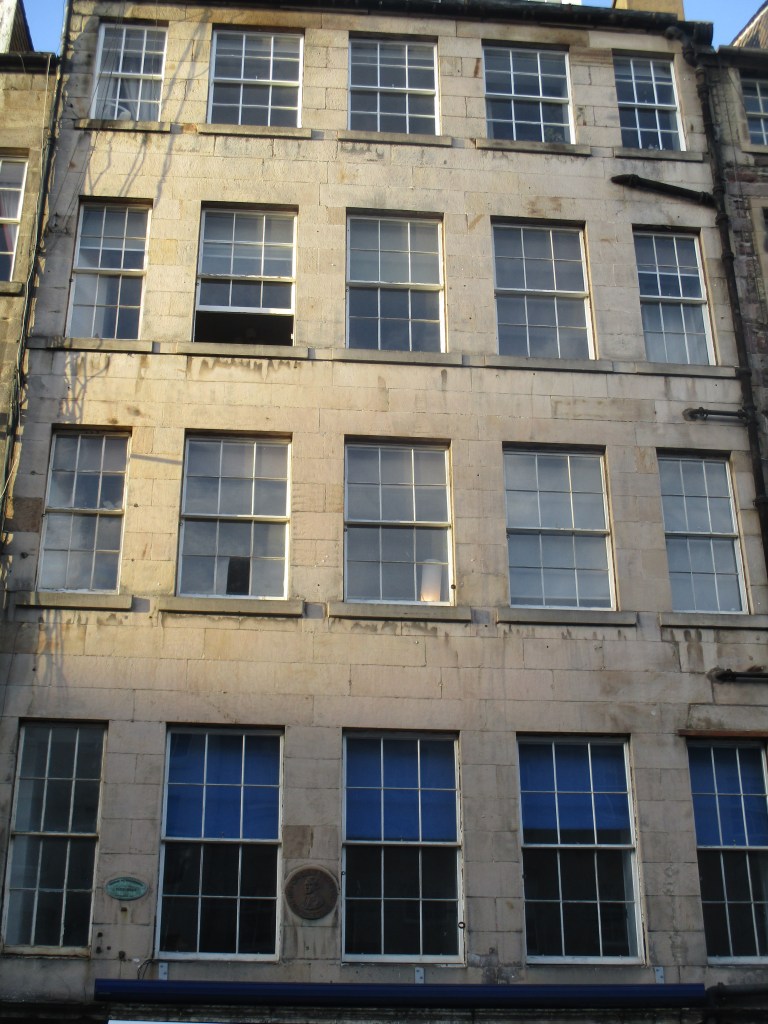
This building was the site of the Elsie Inglis Hospice, a maternity hospital created by Dr. Elsie Inglis and Dr. Jessie McLaren MacGregor in 1904. They were among the first female students of medicine in Scotland and the hospice was run by an all female staff to serve the poorest women in Edinburgh and beyond. I made a special pilgrimage here because my great-grandmother was one of those poor, unwed women who gave birth here – to a son who would only live a few weeks.
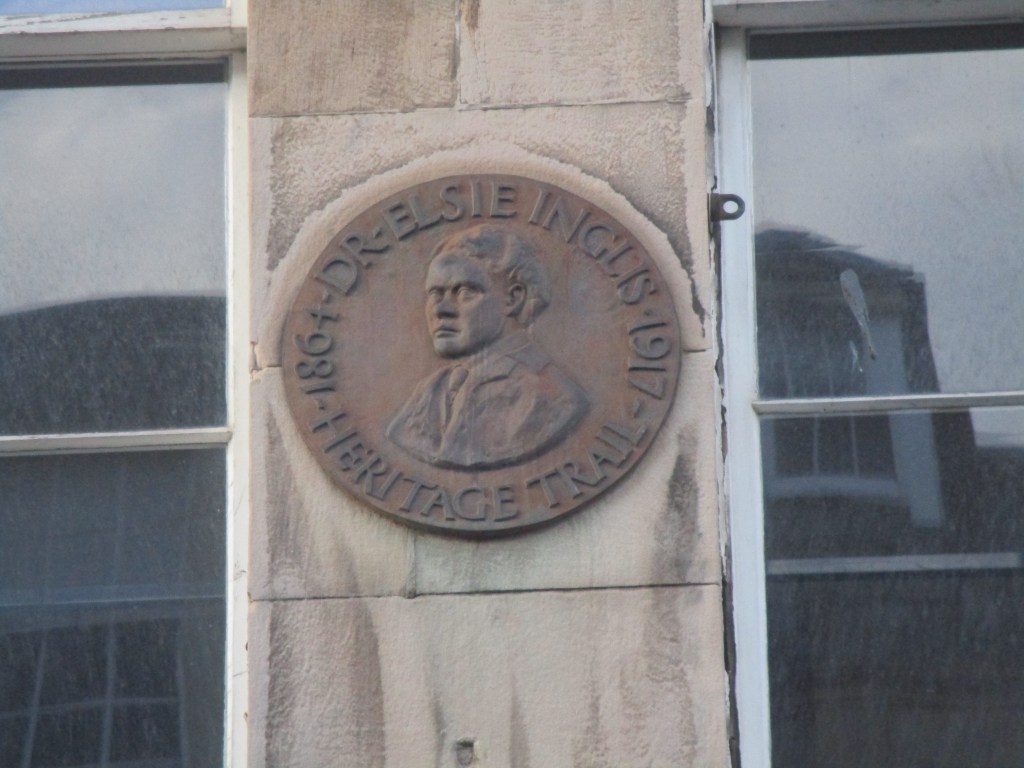
Elsie Inglis was a remarkable woman. As well as fighting against all the sexist attitudes you would expect working as the first female doctor many people would have seen she was described as being Scotland’s answer to England’s Millicent Fawcett in the suffragette movement. At age 50 when the First World War broke out she created the Scottish Women’s Hospitals, medical units staffed with all female volunteers that were sent to Belgium, France, Serbia and Russia. Inglis herself went with the team to Serbia where she was eventually taken prisoner. After being repatriated back to Scotland she then headed out to the team in Russia.
She became the first woman to be awarded the Order of the White Eagle by the Crown Prince Alexander of Serbia and a memorial foundation was erected in her memory in Mladenovac, Serbia. There is supposedly a statue in the works to be placed in Edinburgh but things have been delayed due to typical bureaucratic dodginess over the awarding of money for the project.
Not an ad, but if you want to read/listen to a biography on Inglis then Dr. Elsie Inglis by Lady Frances Balfour can be purchased on Amazon (and other sites I’m sure) but also listened to for free on Spotify as it’s now out of copyright (this was what I did).
 Louise Jayne's Blog
my dad was born here in 1924. Peter Inglis. No relation to Elsie but a coincidence none the less. I was born close by at Simpsons Maternity Pavilion opposite George Herriots in 1961.
you don’t get much more local than that.
LikeLike
Very local indeed!
LikeLike